
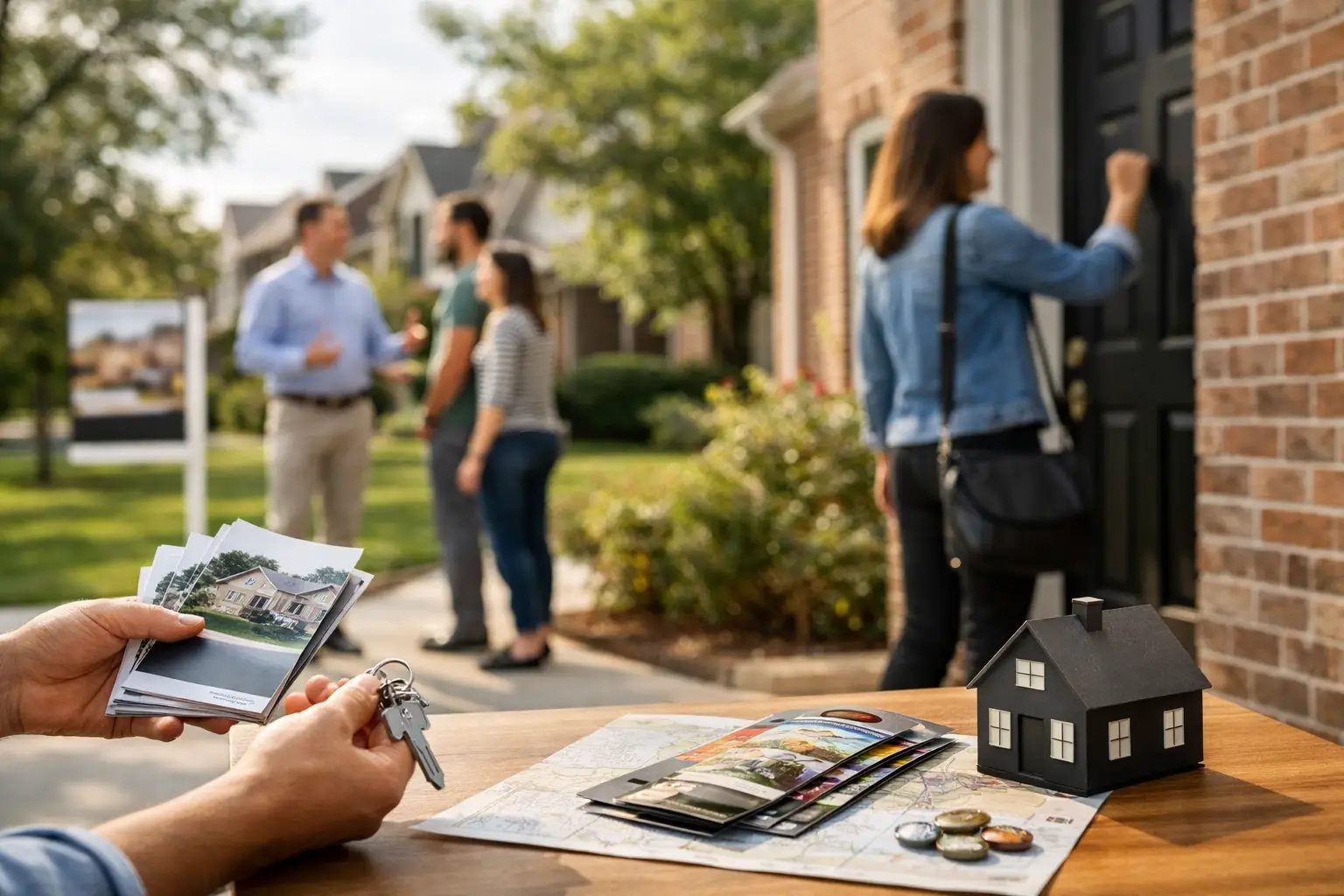
A homeowner sees your name in a trusted local publication, hears your founder discuss the community on a business podcast, then notices your brand supporting a neighborhood event. By the time they need your service, choosing you feels familiar. That is the real power behind the best neighborhood marketing tactics: repeated, relevant visibility that makes your business the obvious local choice.
For Tampa-area businesses, broad reach alone is rarely the finish line. A campaign that reaches everyone can still feel invisible to the people most likely to buy. Neighborhood marketing puts your message in the places where high-value customers live, gather, make recommendations, and build trust. It turns attention into recognition, and recognition into calls, visits, consultations, and referrals.
Why Neighborhood Visibility Wins High-Value Customers
People do business with companies they recognize, especially when the purchase involves their home, health, finances, family, or reputation. A local law firm, med spa, financial advisor, home services company, or specialty retailer does not need to be famous across the country. It needs to be remembered by the right households when the right need appears.
That takes more than a single ad or an occasional social post. Neighborhood influence is built through consistency. The strongest local campaigns combine a clear message with credible media and community presence, so your brand appears established long before a prospect starts comparing options.
The trade-off is focus. You may reach fewer total people than with a broad digital campaign, but the audience is more relevant and the exposure is more meaningful. For businesses with a defined service area or premium customer profile, that is a smart exchange.
7 Best Neighborhood Marketing Tactics for Local Growth
1. Target affluent neighborhoods with premium print placement
Well-designed neighborhood publications remain a powerful way to earn attention at home. Unlike a fast-scrolling feed, a local magazine or direct publication can sit on a kitchen counter, coffee table, or office desk for weeks. That repeated physical presence gives your brand more time to register.
The creative matters as much as the placement. Run a polished ad with one strong promise, a recognizable visual identity, and a direct next step. Avoid cramming every service, special offer, and credential into one box. A premium audience responds better to clarity and confidence than clutter.
Choose neighborhoods based on more than ZIP code. Consider household income, home values, lifestyle fit, proximity to your location, and whether residents are likely to need your offer. A luxury remodeler, for example, should not simply target the largest possible mailing area. It should show up consistently in communities where renovation budgets and referral networks are strong.
2. Build authority through local storytelling
Customers want proof that your business belongs in the community, not just that it can buy ad space there. Tell stories that show your local connection. Feature the problem you solve, the people you help, the standards you bring to the work, and the reason your team cares about the market.
Business podcast appearances, founder interviews, editorial-style features, and community spotlights give your message a human voice. They also create a credibility advantage over competitors who only promote discounts. A homeowner may forget a coupon, but they remember the company owner who explained a useful perspective with confidence and personality.
Keep the story customer-centered. Instead of saying you are the best, explain how you help a local family make a stressful decision easier, how you protect a client’s investment, or why you hold your team to a higher standard. Strong brand stories create recall without sounding like a hard sell.
3. Make community sponsorships visible before, during, and after the event
Sponsoring a school fundraiser, youth sports team, charity gala, or neighborhood gathering can create genuine goodwill. But a logo on a banner is not a full marketing strategy. The best sponsorships extend beyond one afternoon.
Choose events that match your audience and brand values. Then build a simple visibility plan around them: announce your involvement in local media, create an on-site experience that is useful or memorable, capture photos and testimonials with permission, and continue the conversation afterward. A financial planning firm might sponsor a charity event tied to family wellness. A local restaurant could support a school initiative while offering a community-focused tasting experience.
Be selective. If an event attracts the wrong audience or provides no meaningful chance to be seen, it may be better as a charitable donation than a growth investment. Both have value, but they serve different goals.
4. Use direct mail that feels worth opening
Direct mail works when it arrives with relevance, quality, and a reason to respond. Generic postcards with a loud discount can generate a short-term spike, but they often do little for premium brand perception. For affluent neighborhoods and professional service firms, a refined design and helpful message tend to travel farther.
Consider mail that introduces your expertise, shares a seasonal local insight, offers a useful checklist, or invites residents to a limited community event. The offer does not always need to be a price reduction. A complimentary assessment, consultation, planning session, or educational resource can attract prospects who value quality over the lowest bid.
Mail performs best as part of a coordinated campaign. When residents have already seen your name in a neighborhood publication or heard you on a local podcast, the piece in their mailbox feels less like an interruption and more like a familiar invitation.
5. Create a neighborhood-specific offer without cheapening your brand
A local offer gives people a clear reason to act now, but it should reinforce your positioning. The goal is not to train customers to wait for a discount. It is to create a relevant entry point.
A home services company could offer priority scheduling for a select service area. A wellness practice could host a neighborhood introduction day. A real estate professional might provide a private home-value review tailored to one community. The offer should feel exclusive, useful, and easy to understand.
Use one clear call to action. Ask people to book, call, visit, or request information. When an ad tries to do all four, response often drops because the next move is unclear.
6. Turn satisfied customers into local proof
Neighborhood marketing gains momentum when customers become your credibility engine. Reviews, referrals, testimonials, and word-of-mouth recommendations carry extra weight because people trust nearby peers who have already made the decision.
Build a simple process for requesting feedback after a successful job, appointment, or purchase. Ask what the customer valued most, not just whether they were satisfied. Their answer may reveal the language your next campaign needs. A client who says, They explained everything clearly and showed up when they said they would, has just handed you a stronger message than a generic claim about great service.
Where appropriate, feature customer stories by neighborhood or service type. Respect privacy, secure permission, and focus on the outcome. Social proof works best when it feels specific and believable.
7. Coordinate your media so every touchpoint reinforces the next
The most effective neighborhood campaigns do not treat print, podcasts, mail, community events, and digital follow-up as separate roads. They connect them. The same core message, visual style, and customer promise should appear across each channel.
For example, a quarterly neighborhood publication ad can establish awareness. A podcast interview can add authority. Direct mail can provide the next action. Event visibility can create a real-world connection. Digital retargeting or email follow-up can help interested prospects return when they are ready. Each piece does a different job, but together they build brand recall faster.
This approach also makes your budget work harder. Instead of producing disconnected assets for every vendor, create a campaign platform that can travel across channels. One strong story can become a print message, interview topic, event conversation, and follow-up offer.
Measure the Signals That Matter
Neighborhood marketing is measurable, but not every result appears as an immediate online conversion. Ask every new lead how they heard about you, track branded searches and direct traffic, monitor calls and consultation requests, and pay attention to referral volume in target communities.
Use campaign-specific phone numbers, landing pages, QR codes, or offer language when appropriate, but do not rely on one tracking method alone. A prospect may see a print ad in January, hear your name from a neighbor in March, and contact you in May. Their decision was influenced by multiple touches.
Look for leading indicators as well as closed sales. Increased name recognition, more mentions of your business in consultations, better-quality inquiries, and stronger referral patterns show that your brand is gaining ground. Over time, the goal is simple: when someone in your target neighborhood asks who they should call, your business should be part of the first conversation.
Local growth rarely comes from shouting louder than every competitor. It comes from showing up with purpose, earning trust through the right channels, and staying visible long enough for the neighborhood to remember you. Put your marketing on the right road, and all roads can lead back to your business.