

Connecting brands to communities is the most direct path from transactional customer relationships to lasting brand loyalty. Community marketing, the recognized industry term for this practice, describes the strategy of building or participating in groups where customers share identity, interests, and experiences tied to a brand. 67% of consumers feel more connected to brands through community experiences than through traditional social media alone. That number signals a structural shift in how purchase decisions get made. Brands like Mars and Sephora have already restructured their marketing operations around this reality, and the results show in retention, referrals, and revenue.
Why connect brands to communities: the measurable case
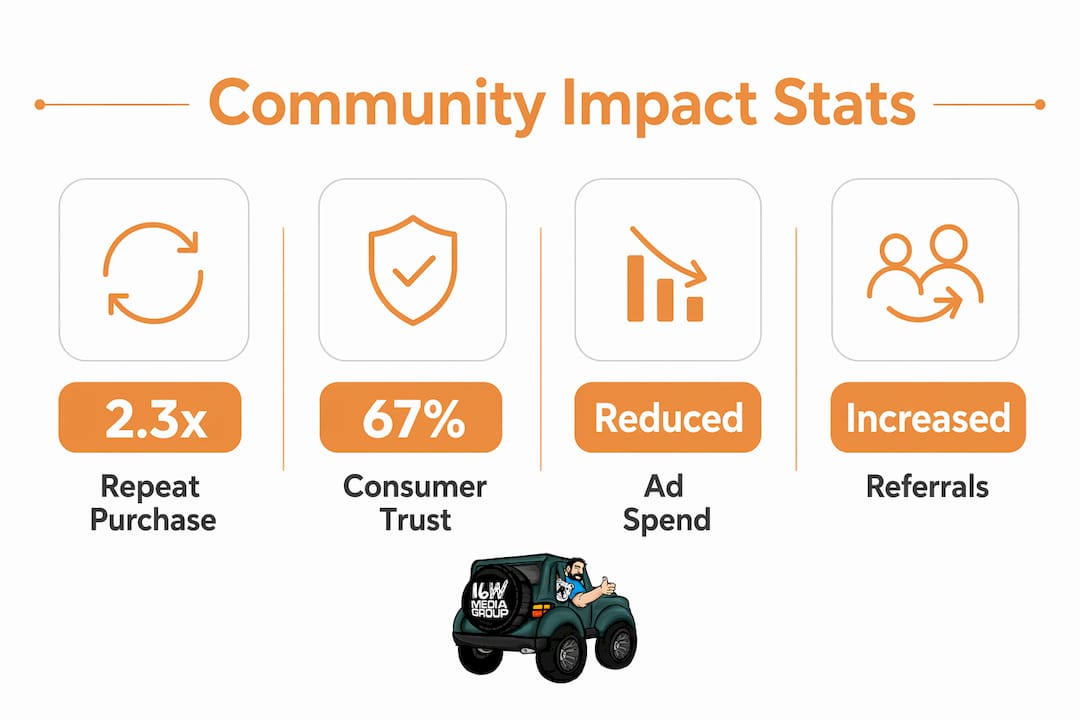
The business case for brand-community connection is grounded in purchase behavior, not sentiment. Repeat purchases become 2.3x more likely when customers feel genuine trust through community ties. That multiplier compounds over time because retained customers spend more, refer more, and cost less to serve.
Community also changes how content works. Community-generated content delivers authenticity and scale that no internal content team can replicate. When real customers share their experiences publicly, the credibility of that content far exceeds anything a brand publishes about itself.

The referral dynamic is equally significant. Successful community programs reduce dependence on paid acquisition by generating organic referrals and peer support at scale. Fewer paid impressions needed to drive the same revenue means margin improvement, not just engagement metrics.
Here is how the core benefits stack up across key performance areas:
| Benefit area | Community-driven outcome |
|---|---|
| Customer retention | 2.3x higher repeat purchase likelihood |
| Content production | Authentic user content at scale |
| Acquisition cost | Lower paid spend through organic referrals |
| Consumer preference | 67% prefer community connection over social media |
| Brand trust | Peer validation outperforms brand messaging |
The pattern is consistent: brands that invest in community see compounding returns across loyalty, content, and cost efficiency simultaneously.
How do brand communities create authentic engagement?
Traditional marketing broadcasts a message and waits for a response. Community marketing creates conditions where members talk to each other, and the brand becomes the context rather than the center of every conversation. Brands that facilitate peer-to-peer interaction rather than driving every exchange see measurably more authentic engagement. The distinction matters because authenticity is what converts skeptical prospects into committed buyers.
Three principles define how effective brand communities operate:
- Connection: Members join because they share something real, an interest, a lifestyle, a problem they are solving. Sephora’s Beauty Insider Community works because members genuinely want to talk about beauty routines, not because Sephora told them to.
- Collaboration: The brand invites members to co-create, whether through product feedback, content contributions, or event participation. Modern consumers want to co-create with brands rather than receive marketing passively.
- Communication: Conversations flow between members, not just from brand to member. The brand’s role is to facilitate, not to dominate.
The most common failure mode is treating community as a sales channel too early. Brands that push promotions into community spaces before trust is established destroy the peer dynamic that makes communities valuable in the first place. Members leave, engagement collapses, and the brand is left with a ghost town of inactive followers.
Pro Tip: Measure community health by tracking how often members interact with each other, not just how often they engage with brand posts. Peer-to-peer activity is the leading indicator of a community that will actually drive retention.
What frameworks build a successful brand community?
Brand trust mediates community loyalty according to research across 441 respondents, meaning the community itself is the mechanism through which trust gets built and loyalty follows. That finding points to a specific structural requirement: communities need to be designed around member value, not brand objectives.
The foundational elements of a sustainable brand community follow a clear pattern:
- Shared identity: Members need a reason to belong that goes beyond the product. Harley-Davidson’s HOG (Harley Owners Group) community is the textbook example. HOG membership creates switching costs that no competitor can undercut with a price promotion because the identity value of belonging exceeds the functional value of the motorcycle.
- Rituals and shared practices: Regular events, recurring content formats, and community traditions give members reasons to return. These rituals create the behavioral habit of engagement.
- Member roles: Successful communities allocate roles, moderators, advocates, contributors, and newcomers. Role differentiation creates a progression path that keeps long-term members invested and gives new members a clear on-ramp.
- Facilitation over control: Brands that try to control community narratives consistently underperform those that facilitate open conversation. The facilitator model scales because members do the work.
The measurement framework matters as much as the structure. Follower count and post reach are vanity metrics in a community context. The metrics that predict business outcomes are referral volume, repeat purchase rate, peer-to-peer interaction frequency, and CRM-integrated engagement data tied to conversion and retention timelines.
| Vanity metric | Business-relevant metric |
|---|---|
| Follower count | Referral volume from community members |
| Post likes | Repeat purchase rate among active members |
| Reach | Peer-to-peer interaction frequency |
| Impressions | CRM-linked conversion from community touchpoints |
The shift from vanity to business metrics is where most community programs either prove their value or get defunded.
How can brands practically connect with local communities?
Local community connection operates on a different scale than national brand communities, but the principles are identical and the results are often faster. Local audiences have higher trust baselines because the brand is physically present in their world. That proximity accelerates the relationship-building that national brands spend years trying to manufacture.
Mars restructured its entire marketing operation around this insight. The company built demand performance squads that blend marketing, sales, insights, and data functions into integrated teams focused on community-first strategies. The organizational model is the point: community marketing requires cross-functional commitment, not a single social media manager posting on behalf of the brand.
Practical strategies for connecting brands to local audiences include:
- Community media placements: Local magazines, neighborhood newsletters, and community-focused publications reach audiences who are already invested in their local area. These placements carry editorial credibility that digital ads cannot replicate. Explore community magazine advertising for a breakdown of why local print still drives engagement.
- In-person events and sponsorships: Physical presence in community spaces creates the kind of shared experience that digital channels cannot. A brand that sponsors a local event becomes part of a memory, not just an impression.
- Podcasts and audio content: Podcasts build brand trust through sustained, intimate engagement that no display ad achieves. A local brand podcast that features community stories positions the brand as a community participant, not an advertiser.
- User-generated content programs: Invite local customers to share their experiences through structured campaigns. The content they produce is more credible to their neighbors than anything the brand creates.
- Influencer partnerships: Local micro-influencers with genuine community ties drive higher conversion rates than national influencers with larger but less relevant audiences. A guide on identifying local influencers can sharpen this approach.
Pro Tip: Integrate your community engagement data directly into your CRM from day one. Brands that connect community participation to purchase history can prove ROI to leadership and identify their highest-value community members for targeted retention programs.
The community-based advertising strategy that wins in local markets combines media presence with genuine participation. Showing up in the community magazine and sponsoring the neighborhood event creates a compound effect that neither tactic achieves alone.
Key takeaways
Connecting brands to communities drives loyalty, referrals, and retention at a scale that traditional broadcast marketing cannot match, because peer trust converts and compounds in ways that paid impressions never will.
| Point | Details |
|---|---|
| Community multiplies retention | Trusted community ties make repeat purchases 2.3x more likely than standard brand relationships. |
| Peer interaction is the signal | Track member-to-member engagement, not just brand post reach, to measure real community health. |
| Facilitation beats control | Brands that guide conversations rather than dominate them see higher authenticity and sustained growth. |
| Local proximity accelerates trust | Local brands benefit from existing community trust, making relationship-building faster and cheaper. |
| Metrics must tie to business outcomes | Referral volume and CRM-linked conversion rates prove community ROI far better than follower counts. |
The long game most brands still refuse to play
I have watched brands pour six-figure budgets into paid social, see diminishing returns every quarter, and then ask why their customers feel no loyalty. The answer is always the same: you never gave them anything to belong to.
Community is not a campaign. It is not a Facebook group you launch in Q3 and measure in Q4. The brands that get this right, Harley-Davidson, Sephora, Mars at scale, treat community as infrastructure. They build it before they need it, and they protect it from short-term commercial pressure when leadership wants to monetize it too fast.
The uncomfortable truth I have seen play out repeatedly is that the brands most resistant to community investment are the ones most dependent on paid acquisition. They have built a business model that requires constant spending to stay visible, and community threatens that model because it works differently. It is slower to start and faster to compound.
What I tell every marketing director I work with is this: your community is your local media strategy made human. The channels matter less than the relationships. Pick the formats your audience already uses, show up consistently, give members genuine value before you ask for anything, and then get out of the way and let them talk to each other. That is where the loyalty actually forms.
The brands that build real community now are creating a competitive moat that no ad budget can buy around.
— Mike
How 16wmediagroup helps brands connect with local communities
16wmediagroup specializes in putting Tampa-area brands inside the community conversations that drive real purchase decisions. Through community-focused publishing, podcast production, and local advertising campaigns, 16wmediagroup creates the media presence that turns a brand into a recognized community participant.

If you are ready to move beyond paid impressions and build the kind of local presence that compounds over time, the local advertising campaign guide is the right starting point. For a full picture of how media, publishing, and community engagement work together, explore 16wmediagroup’s services and see how integrated campaigns are built for local brand growth.
FAQ
Why should brands connect with communities instead of just advertising?
Community connection creates trust and peer validation that advertising cannot replicate. 67% of consumers feel more connected to brands through community experiences than through traditional social media or advertising alone.
What is the difference between community marketing and social media marketing?
Community marketing prioritizes member-to-member interaction and shared identity, while social media marketing typically focuses on brand-to-consumer messaging. True community success is measured by how members interact because of the brand, not just how they engage with brand content.
How do brands measure the ROI of community engagement?
The most reliable metrics are referral volume, repeat purchase rate among active community members, and CRM-linked conversion data. Follower counts and post reach do not predict business outcomes the way peer interaction frequency and retention rates do.
How can small local businesses build brand communities?
Local businesses can start with community media placements, in-person event sponsorships, and structured user-generated content programs. Local proximity is an advantage because existing neighborhood trust accelerates relationship-building faster than national brands can achieve remotely.
What is the biggest mistake brands make with community building?
The most common failure is treating community as a sales channel before trust is established. Pushing promotions into community spaces too early destroys the peer dynamic that makes communities valuable, leading to disengagement and member attrition.