

A media planning checklist is a structured framework that guides marketers and business owners through every critical decision required to launch, manage, and optimize a local advertising campaign. Without this framework, budgets get wasted, audiences get missed, and results become impossible to measure. Tools like Salesforce, Improvado, and Shopify each document the planning process differently, but the core stages remain consistent: set objectives, research your audience, select channels, allocate budget, schedule placements, and track performance. This article walks you through each step so your next local campaign runs with precision from day one.
1. Define clear, measurable business objectives
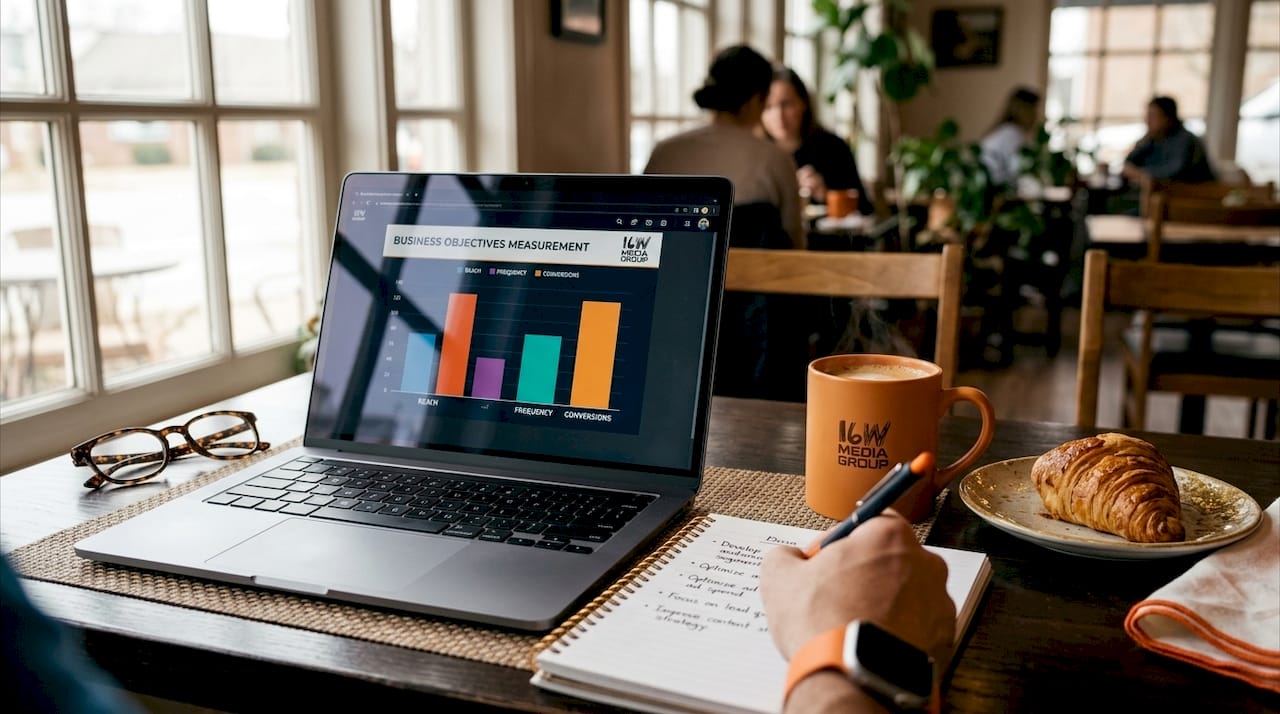
Every effective media plan starts with a single question: what does success look like? Vague goals like “increase awareness” produce vague results. Define objectives using specific metrics such as a 20% increase in website traffic, 50 new leads per month, or a 15% lift in foot traffic to a Tampa storefront. Salesforce’s 8-step process treats goal-setting as the non-negotiable first gate before any channel or budget decision is made.
Your objectives also determine which measurement model you use later. A brand awareness goal calls for reach and frequency metrics. A conversion goal calls for cost-per-acquisition and return on ad spend. Getting this wrong at step one cascades into every section of the plan.
2. Conduct deep audience research with local context
Audience research for a local campaign goes beyond demographics. You need to understand where your customers spend time physically and digitally, what local events influence their behavior, and which media they trust. A restaurant owner in Tampa, for example, benefits more from knowing that their core customer listens to local sports radio on the commute than from knowing their national age bracket.
Build audience profiles that include local behavioral data: neighborhood, commute patterns, community affiliations, and preferred local media. This research directly informs channel selection in step five. Skipping this step is the single most common reason local campaigns underperform.
3. Analyze competitors and local market conditions
Competitor analysis in local advertising means identifying which channels your direct competitors use, how frequently they advertise, and what messaging angles they own. If a competitor dominates local radio, you may find more white space in community podcasts or regional print. This is not about copying. It is about finding the gaps.
ISBA confirms that a well-crafted media brief shapes objectives and collaboration dynamics, and competitor context belongs in that brief. Review competitor ad spend patterns quarterly. Local market conditions shift faster than national ones, especially around seasonal events, sports seasons, and community milestones.
4. Build your media mix around the 5 M’s framework
The 5 M’s framework covers Mission, Money, Message, Media, and Measurement. Improvado identifies this model as a consistent guide for ensuring all strategic elements are addressed before execution begins. Each “M” acts as a checkpoint that prevents you from jumping to channel selection before your message is defined or your budget is set.
For local advertisers, the Media component deserves special attention. Local campaigns benefit significantly from community media like regional newspapers, local radio, and podcasts, which deliver higher engagement and trust than broad national placements. A local HVAC company running ads on a neighborhood podcast will often outperform the same company running generic display ads on a national network.
Pro Tip: When building your media mix, assign each channel a funnel role before you assign it a budget. This prevents the common mistake of spending awareness dollars on conversion channels and vice versa.
5. Align channels to funnel stages, not just audience size
Salesforce emphasizes that paid social and video serve awareness goals, while search and retargeting drive conversions. Treating all channels as interchangeable is one of the most expensive mistakes in local media planning. A Facebook video ad and a Google search ad are not competing for the same job.
Here is a practical breakdown of channel roles for local campaigns:
- Awareness: Local radio, community podcasts, Facebook and Instagram video, display advertising on local news sites
- Consideration: Email newsletters, YouTube pre-roll, local blog sponsorships, community magazine features
- Conversion: Google Search, retargeting display, direct mail with a specific offer, SMS campaigns
Cross-channel message consistency matters as much as channel selection. A customer who hears your radio ad, sees your Facebook post, and then searches your brand name should encounter the same core message across all three touchpoints. Inconsistency at this stage erodes trust and reduces conversion rates.
6. Allocate budget using the 70/20/10 split
A 70/20/10 budget structure allocates 70% to proven core channels, 20% to testing new channels or formats, and 10% to flexible reallocation based on real-time performance. This structure prevents the common trap of locking your entire budget into a fixed plan before you know what works. It also funds the learning that makes future campaigns more efficient.
For a local business with a $5,000 monthly ad budget, this means $3,500 goes to your highest-performing channels, $1,000 tests a new format like podcast sponsorships or geofenced mobile ads, and $500 stays liquid to shift toward whatever is working mid-campaign. Budget flexibility and real-time reallocation are the mindset shifts that separate static plans from high-performing campaigns.
Pro Tip: Reserve your 10% flex budget in a separate line item from the start. If you fold it into core spend, it disappears before you ever use it for optimization.
7. Schedule placements using flighting, pulsing, or continuous models
Three scheduling strategies define how you pace your ad spend over time. Flighting runs ads in concentrated bursts with gaps between them, which suits seasonal businesses or product launches. Pulsing maintains a low baseline with peaks during key periods, which works well for businesses with year-round demand and seasonal spikes. Continuous scheduling runs ads at a steady rate throughout the year, which suits businesses with consistent demand and sufficient budget.
Shopify recommends a 6 to 12 month rollout plan that paces spend to avoid early budget exhaustion and accounts for key local dates. A Tampa-based retailer, for example, would pulse heavily around the holiday season, the back-to-school period, and local events like Gasparilla, while maintaining a lighter continuous presence in slower months.
8. Set up tracking and attribution before launch
Improvado recommends configuring tracking pixels, conversion events, and attribution models before a campaign goes live. Setting these up after launch scrambles your data and makes optimization guesswork. This is not a technical afterthought. It is a planning requirement.
Attribution setup includes deciding which model you use: last-click, first-click, linear, or data-driven. Each model tells a different story about which channels deserve credit for a conversion. For local campaigns running across radio, social, and search simultaneously, a linear or position-based model typically gives a more accurate picture than last-click alone.
Pro Tip: Run a full tracking audit on a test conversion before your campaign launches. Confirm that every pixel fires, every UTM parameter populates correctly, and every conversion event registers in your analytics platform.
9. Implement UTM naming conventions and QA every link
UTM naming inconsistency is a leading cause of attribution errors. Fixing UTM consistency improves channel-level accuracy by 5 to 15%, and monthly attribution audits improve ROI visibility by 20%. Those are not minor gains. They represent the difference between knowing which channels work and guessing.
A 14-rule UTM QA approach covers presence, format, and consistency of parameters across every link in your campaign. Create a naming convention document before your campaign launches and share it with every team member and agency partner touching the campaign. One inconsistent UTM tag from a vendor can corrupt an entire channel’s data for the duration of the flight.
10. Monitor performance and optimize with real-time data
Improvado frames campaign launch as a starting point, not a finish line. The most effective local advertisers review performance data weekly during active flights and make budget reallocations based on what the data shows, not what the original plan assumed. This requires that your tracking setup from steps eight and nine is functioning correctly.
Set up a weekly performance review cadence that covers three questions: which channels are hitting their KPI targets, which channels are underperforming relative to spend, and where should the flex budget move this week. Regular workflows with quality gates improve speed and consistency in media planning and support scalability as your campaigns grow. For a deeper look at executing these steps in a local market context, the local advertising planning guide from 16wmediagroup covers the full workflow with local-specific examples.
Key takeaways
A media planning checklist works because it forces every strategic decision into a defined sequence, preventing the budget waste and measurement failures that come from skipping steps.
| Point | Details |
|---|---|
| Start with objectives | Define specific, measurable goals before selecting any channel or setting any budget. |
| Use the 70/20/10 split | Allocate 70% to proven channels, 20% to testing, and 10% to real-time reallocation. |
| Align channels to funnel stages | Assign each channel an awareness, consideration, or conversion role before spending. |
| Set up tracking before launch | Configure pixels, UTM parameters, and attribution models before the campaign goes live. |
| Optimize weekly, not monthly | Review performance data every week and reallocate flex budget based on live results. |
Why most local media plans fail before they start
I have reviewed hundreds of local advertising plans over the years, and the failure point is almost never the creative or the channel selection. It is the sequence. Business owners jump from “we need to advertise” directly to “let’s run Facebook ads,” skipping the objective-setting, audience research, and measurement setup that make any channel worth using. The media planning checklist exists precisely to prevent that shortcut.
The second most common failure is treating the plan as a contract rather than a starting hypothesis. I have seen local businesses in competitive markets like Tampa burn through their entire quarterly budget in six weeks because they refused to reallocate away from a channel that was clearly not performing. A plan is a starting point. The data you collect in the first two weeks of a campaign is more valuable than anything you wrote in the planning document.
What I find genuinely underused in local advertising is the combination of community media and digital retargeting. A podcast sponsorship on a local show builds the kind of trust that no display ad can replicate. Pair that with a retargeting campaign that follows up on website visitors, and you have a two-stage sequence that works with the way local consumers actually make decisions. The media mix role in brand growth is something more local advertisers need to take seriously in 2026.
The checklist is not bureaucracy. It is the difference between a campaign that teaches you something and one that just spends money.
— Mike
How 16wmediagroup helps you execute every step
Building a media plan from scratch takes time, expertise, and access to the right channels. 16wmediagroup specializes in localized advertising strategies that cover traditional media, digital platforms, community magazines, and podcasts, all tailored to the specific market dynamics of your region.
Whether you need help setting campaign objectives, selecting the right channel mix for a Tampa-area audience, or configuring attribution before your next flight, 16wmediagroup’s team handles the full workflow. Explore the full range of media planning services to see how a professionally managed local campaign compares to going it alone. For businesses focused on local growth, the localized marketing strategies guide is a strong next step.
FAQ
What is a media planning checklist?
A media planning checklist is a step-by-step framework covering objective-setting, audience research, channel selection, budget allocation, scheduling, and measurement that guides marketers through building an effective advertising campaign. It prevents critical steps from being skipped and keeps campaigns aligned with business goals.
How many steps are in a standard media planning process?
Salesforce documents an 8-step process covering goals, audience, competitors, channel mix, budget, scheduling, forecasting, and optimization. Most local campaigns can execute effectively within this structure with some adaptation for community-specific channels.
What is the best budget split for a local media plan?
The 70/20/10 split allocates 70% to proven core channels, 20% to testing new formats, and 10% to flexible reallocation. This structure funds both consistency and learning without locking the entire budget into a fixed plan.
How do I track which channels are driving results?
Configure tracking pixels, UTM parameters, and conversion events before launch, then run monthly attribution audits across all active channels. Monthly audits improve ROI visibility by 20% by catching naming inconsistencies and pixel errors before they corrupt your data.
What scheduling model works best for local advertisers?
Pulsing works well for most local businesses because it maintains baseline visibility year-round while concentrating spend around seasonal peaks, local events, and product launches. Flighting suits businesses with distinct on and off seasons where continuous spend would be wasteful.