
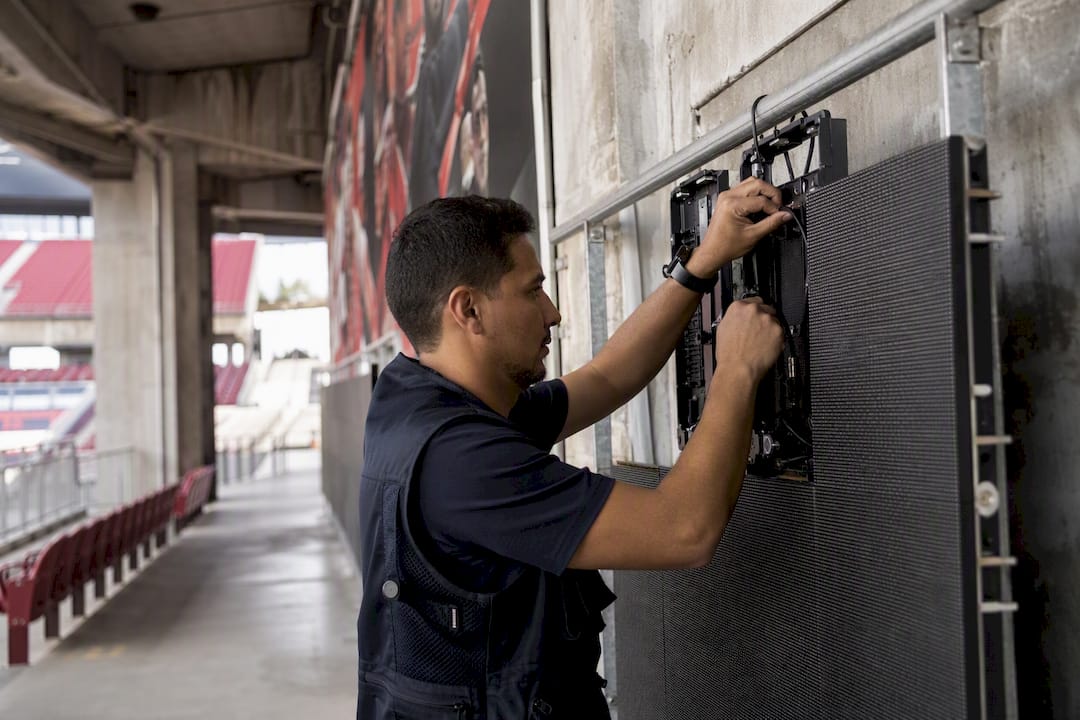
Stadium advertising in Tampa runs from entry-level placements costing a few thousand dollars to season-long premium packages costing several hundred thousand dollars or more, according to industry pricing benchmarks. Most local businesses land somewhere in the middle, and the fastest path to a real number is a direct conversation with team sales or a Tampa media partner who already knows the rate cards.
That range is wide because the market is wide. A concourse banner at Steinbrenner Field costs nothing like a scoreboard package at Raymond James Stadium during football season. Even format-specific benchmarks swing widely: LED ribbon boards typically run in the low to mid five-figure range, scoreboards and jumbotrons cost more, and naming rights can reach into the multi-million-dollar annual range, per AdQuick’s stadium advertising data. Digital signage at the Tampa Convention Center, by contrast, rents by the day, which gives smaller advertisers a much lower entry point.
Here’s the prioritized starting point for most Tampa business owners:
- Lowest cost, fastest start: convention center digital signage or single-game concourse buys.
- Mid-range visibility: ribbon boards, dasher boards, or in-venue video loops for a partial season.
- Highest cost, highest reach: broadcast-visible scoreboard packages or exclusivity/naming deals.
Start by calling the venue’s team sales office or a local agency that already holds relationships there. Cold-calling a stadium switchboard rarely gets you a quote fast.
Key Takeaways
Stadium advertising in Tampa covers a wide cost spectrum from entry-level placements to premium season-long inventory, and the fastest way to get a specific number is going through team sales or a local media partner.
| Point | Details |
|---|---|
| Know your price range | Budget from modest amounts per game for entry-level placements to several hundred thousand dollars or more per season for premium placements. |
| Match format to goal | Choose broadcast-visible spots for awareness, concourse signage for promo codes and dwell time. |
| Confirm who controls inventory | Tenant teams, not venue authorities, often hold the actual advertising rights at Raymond James Stadium. |
| Budget beyond media cost | Add a 20 to 35 percent buffer for support fees, content changes, and permits like the Tampa Convention Center’s 27% fee. |
| Get expert help for complex buys | 16wmediagroup negotiates venue relationships, production specs, and measurement setup for Tampa businesses. |
Table of Contents
- Stadium Advertising Tampa Cost by Format and Visibility Tier
- What Do Tampa’s Major Venues Actually Charge?
- What Drives the Price of Stadium Advertising?
- How Do You Actually Buy Stadium Ads in Tampa?
- How Far in Advance Should You Book Stadium Advertising?
- What Do Creative Production and File Specs Cost?
- How Do You Measure Whether Stadium Ads Are Working?
- How Should You Budget for a Stadium Campaign?
- When Should Tampa Businesses Bring in a Local Media Partner?
- Let 16wmediagroup Handle Your Stadium Ad Buy From Quote to Launch
- Frequently Asked Questions
- Sources
Stadium Advertising Tampa Cost by Format and Visibility Tier
Not every placement buys you the same thing, and price tracks visibility almost perfectly. Before you request a quote, it helps to know what you’re actually shopping for.
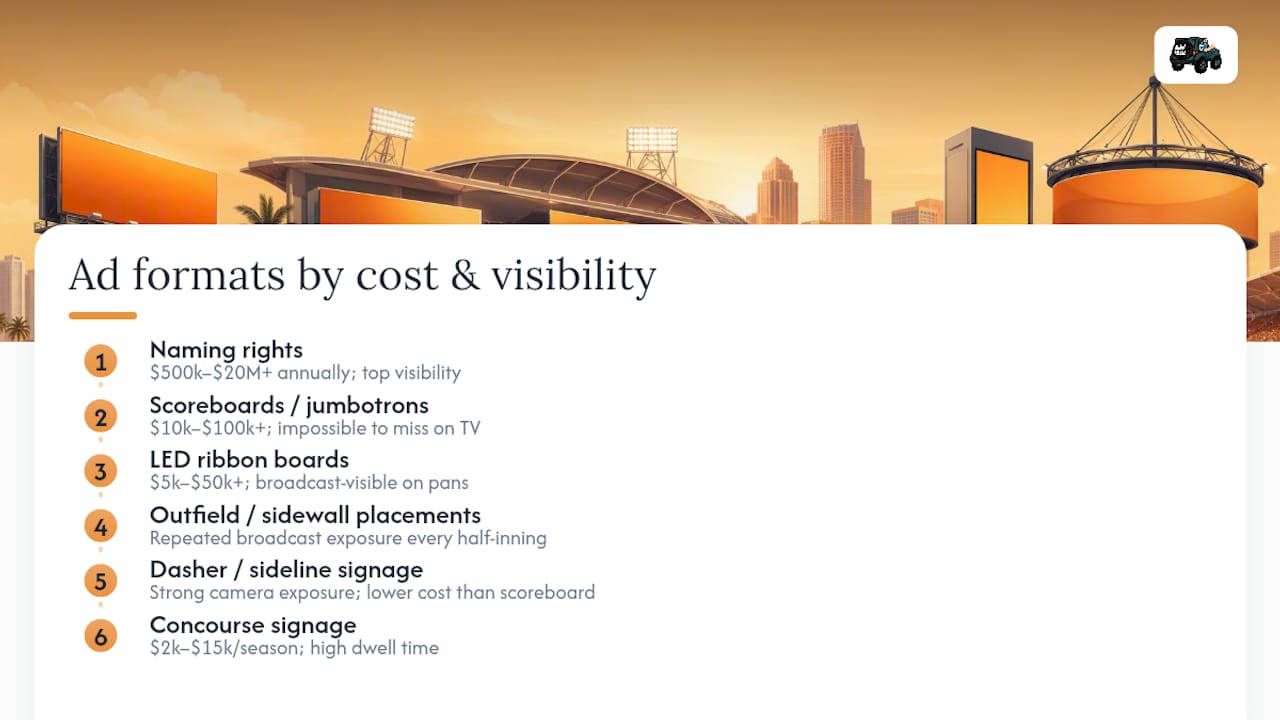
LED ribbon boards wrap the lower bowl and rotate multiple advertisers throughout a game. They’re broadcast-visible during camera pans, which is why they command $5,000 to $50,000-plus depending on game count and exclusivity, per AdQuick.
Scoreboards and jumbotrons sit at the top of the price ladder because they’re impossible to miss, in-venue or on TV. Expect $10,000 to $100,000-plus for a meaningful package.
Dasher boards and sideline signage (more common at soccer, hockey, and some baseball configurations) offer strong camera exposure at a lower cost than a full scoreboard buy, making them a reasonable middle option for regional brands.
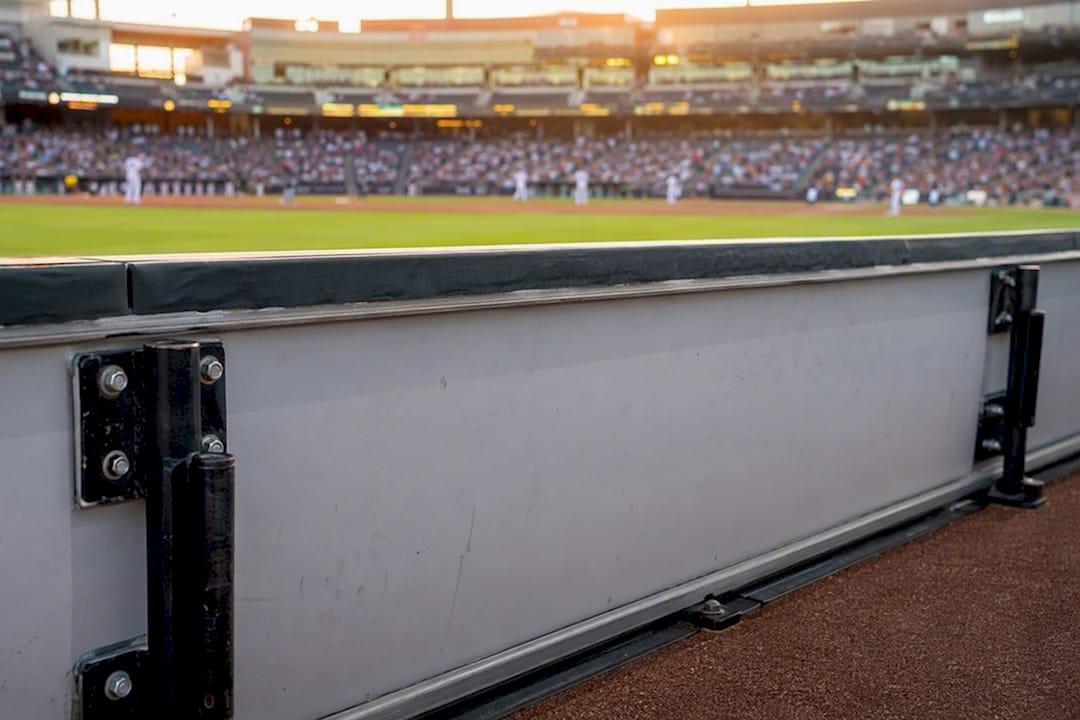
Outfield and sidewall placements, familiar to anyone who’s watched a Rays game, get repeated broadcast exposure every half-inning. They’re popular with businesses that want steady, predictable visibility rather than a single big flash.
Concourse signage trades broadcast reach for dwell time. Fans walk past it slowly, often while waiting in line, which makes it effective for QR codes, menus, or promotions people actually stop to read. It’s also one of the more affordable tiers, often $2,000 to $15,000 per placement per season.
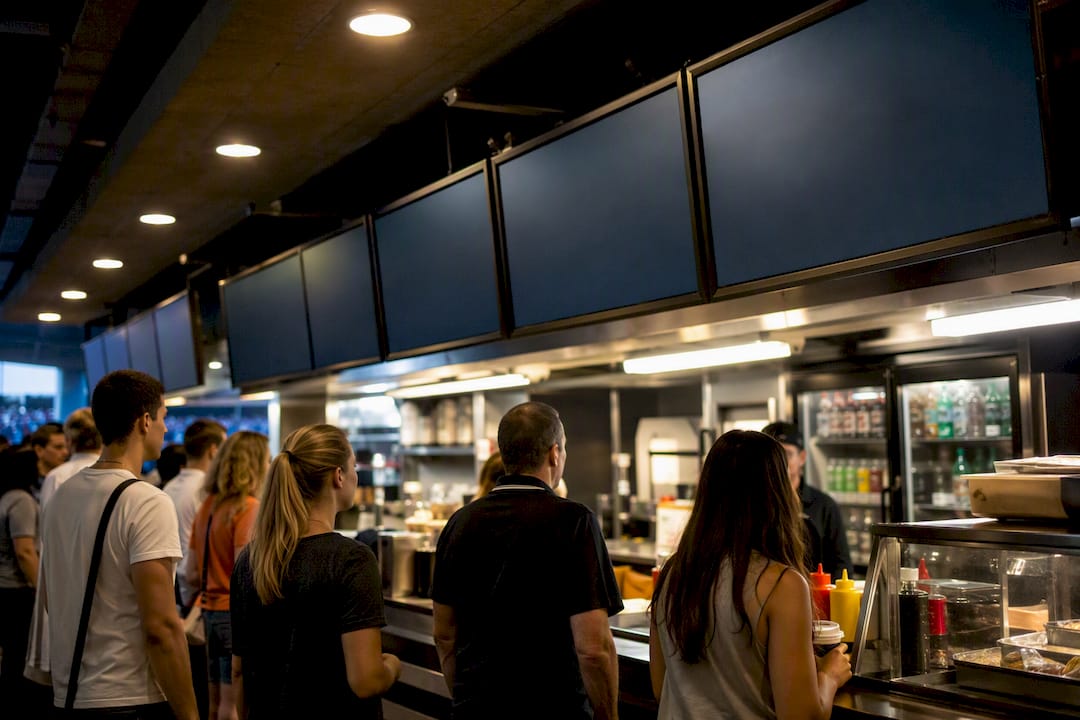
In-seat and ticketing media (app placements, seat-back ads, mobile ticket screens) reach fans directly during downtime in the game.
Experiential activations, think branded photo booths or product sampling stations, work well for businesses selling something people want to touch or taste before buying.
Naming rights sit at the top of the pyramid, often $500,000 to $20 million-plus annually, and realistically apply only to major regional or national brands, not most local advertisers.
A quick-service restaurant chain expanding across the Tampa Bay area typically does better with concourse signage and a promo code than with a scoreboard buy. A regional bank or auto dealer chasing brand awareness leans toward ribbon boards or outfield walls, where broadcast repetition builds recognition over a season.
What Do Tampa’s Major Venues Actually Charge?
Tampa’s four major venues each operate under different ownership and access rules, which changes both the price and how you buy. Here’s what’s publicly known and what to expect when you ask for a quote.
| Venue | Example placement | Sample price signal | Buying route |
|---|---|---|---|
| Tampa Convention Center | LED wall digital signage | $2,750 per day (LED wall), plus a 27% digital signage support fee | Direct with venue’s digital signage provider |
| Raymond James Stadium | Scoreboard/ribbon board (broadcast-visible) | Not publicly listed; controlled by tenant teams | Team sales office or authorized media partner |
| Steinbrenner Field | Concourse, scoreboard, outfield wall | Not publicly listed; limited-sale arrangement in 2025 | Team sales (limited inventory window) |
| Tropicana Field | Outfield, concourse, sponsor packages | Not publicly listed; request venue-specific quote | Team sales or authorized agency |
The Tampa Convention Center is the one venue with a genuinely public rate card, and it’s worth studying even if you never advertise there, because it shows how these fees stack. LED walls rent for $2,750 per day, video walls for $2,250, and LED ePosters for $1,500, but a 27% digital signage support fee applies on top of the base rental, plus a $500 charge for content changes after the initial setup. That support fee alone can turn a $2,750 day rate into something closer to $3,500 once you add it in.
Raymond James Stadium seats 65,857 and expands for major events, giving it the largest single-day reach of any Tampa venue, according to market data on stadium capacity. But capacity doesn’t equal access. Advertising rights at Raymond James are largely controlled by the tenant teams rather than the stadium authority, so calling the venue directly often leads nowhere. Your realistic path is the team’s sales office or a media partner who already has a relationship there.
Steinbrenner Field became a temporary story in its own right when the Rays played there in 2025. Reporting from Sports Business Journal found the Rays had only limited permission to sell regular-season inventory across the concourse, scoreboard, and outfield walls, a reminder that venue-sharing arrangements can create short-term openings with unusual restrictions attached. If a similar arrangement happens again, expect a narrow sales window and fewer guaranteed placements than a standard season.
Tropicana Field remains a significant Tampa Bay market venue for sponsorship packages, but pricing isn’t published anywhere reliable. Treat any number you see online as a starting point for a conversation, not a quote, and go directly to the venue’s sponsorship team for anything specific to your business.
What Drives the Price of Stadium Advertising?
A quote for the “same” placement can vary by a factor of ten depending on a handful of variables. Knowing them lets you ask sharper questions instead of accepting the first number you hear.
- League and team profile. An NFL scoreboard package costs more than a minor-league equivalent because the audience and broadcast footprint are bigger.
- Market size. Tampa sits in a mid-to-large media market, which puts local rates above small-market venues but well below New York or Los Angeles.
- Placement visibility. Broadcast-visible spots (scoreboards, outfield walls) always cost more than concourse or in-seat placements.
- Season length and number of events. More games mean more impressions, but also a bigger total spend; per-game unit cost usually drops as volume rises.
- Exclusivity. Being the only advertiser in your category at a venue costs meaningfully more than sharing rotation with competitors.
- Broadcast exposure. A placement that appears on local or national TV carries a premium over one that only in-venue attendees see.
- Production and change fees. Every venue tacks on line items for creative updates, rush turnarounds, and technical support, and these add up fast if you don’t plan for them.
Buys are typically structured per game, per season, or occasionally multi-year, and each structure changes your unit economics. Industry commentary on stadium pricing notes that pricing is notably opaque compared to digital ad auctions, and multi-game or season-length commitments almost always lower the per-unit rate versus a single-game buy.
Pro Tip: Ask venues about bundling across formats, off-peak game dates (weeknight games versus marquee weekend matchups), and whether you can lock in a creative change window upfront. All three levers routinely shave real money off a first quote.
How Do You Actually Buy Stadium Ads in Tampa?
You have three realistic paths, and each fits a different kind of buyer.
- Go direct to the team or venue sales office. This works best if you already know exactly what you want and have the internal bandwidth to negotiate, produce creative, and manage the relationship yourself.
- Work with a local media or OOH agency. An agency that already has standing relationships with Tampa venues can often get faster answers, better bundled rates, and handle production and permits on your behalf.
- Buy available inventory programmatically. Some digital out-of-home inventory, particularly at venues like the Tampa Convention Center, can be booked through DOOH platforms for shorter, more flexible campaigns.
Each route trades speed for control differently:
- Venue-direct tends to offer the most transparency on rate cards but the least flexibility on minimum spend, since teams generally want season-length or multi-game commitments.
- Agency-managed buys usually cost a management fee on top of media, but they save time and often unlock inventory or discounts an individual advertiser wouldn’t see on a first call.
- Programmatic DOOH is the fastest to launch and the easiest to test at a small budget, but it’s largely limited to digital signage rather than in-bowl sports inventory.
If your business is testing stadium advertising for the first time, an agency relationship or a small programmatic buy is almost always the lower-risk entry point. Once you know which format performs, a direct venue relationship makes more sense at scale. A Tampa marketing agency guide to accelerating brand growth walks through how integrated media buys, including sponsorships, typically get structured for local brands.
How Far in Advance Should You Book Stadium Advertising?
Season packages generally need to be locked in months before the season starts, since venues sell inventory to returning sponsors first. Single-event buys move faster, sometimes within a few weeks, but only if inventory happens to be open.
Production adds its own runway. Most venues want final creative files a set number of business days before your first air date, and any content change after that initial submission typically triggers a fee, exactly the kind of $500 per-change charge the Tampa Convention Center lists on its rate card.
Major events complicate timing further. Around events like the Super Bowl, the NFL and host city establish clean zones that restrict outdoor advertising near the venue, and businesses inside those zones need special permits just to display existing signage, let alone launch a new campaign. If your business operates anywhere near a major Tampa venue during a marquee event, check clean zone rules early rather than assuming your standard signage is exempt.
- Season packages: lock in months ahead, before sponsor renewal windows close.
- Single-game buys: can sometimes be secured within weeks, inventory permitting.
- Creative deadlines: plan for a fixed cutoff before your air date, with fees for anything after.
- Major-event permits: confirm clean zone rules well before an event like the Super Bowl reaches Tampa.
What Do Creative Production and File Specs Cost?
Media placement is only part of your budget. Digital signage vendors typically specify exact file types, resolutions, and loop lengths, and missing the spec means a rejected file and a rushed reshoot.
Most Tampa digital displays expect standard video formats (MP4 or similar) at defined resolutions matched to the screen, with loop lengths often set in a 10 to 15 second range for rotating ad panels. Static LED ePosters usually take high-resolution image files instead. Get the exact specs from the venue before you brief a production team, not after.
Common line items beyond the media buy include:
- Design or video production fees, often billed hourly by an outside vendor.
- Content change fees after your first submission, which the Tampa Convention Center itemizes as a flat charge per change.
- Rush or after-hours fees if you need a turnaround faster than the standard window.
- Sync or integration costs if your ad needs to coordinate with in-game moments or other sponsors’ rotations.
If you’re producing broadcast-quality video for a scoreboard or jumbotron placement, a breakdown of TV commercial production costs is a useful reference for budgeting pre-production, shoot day, and post-production separately, since stadium video specs often mirror broadcast-grade requirements.
Pro Tip: Build your creative to the venue’s exact spec sheet before your first submission. Every round of “please resize this” after the initial delivery is a billable change, and those add up faster than the media cost itself.
How Do You Measure Whether Stadium Ads Are Working?
Stadium advertising doesn’t come with built-in analytics the way digital ads do, so you need to build measurement into the campaign before it launches, not after.
Reasonable measurement tactics include:
- Estimating gross impressions from attendance figures and, where relevant, broadcast or streaming viewership.
- Using QR codes or unique promo codes tied specifically to the stadium placement, so redemptions trace back to that spend.
- Geo-fenced mobile attribution that flags device activity near the venue and tracks later store visits or app opens.
- Simple brand-lift surveys run before and after a campaign flight.
For local advertisers, the most useful KPIs are usually the most concrete ones: store visits, promo-code redemptions, and branded search lift during and after the campaign window. If your placement includes broadcast exposure, treat it separately from pure in-venue reach. Broadcast-visible ribbon boards and scoreboard packages justify a higher effective reach premium precisely because they get counted twice, once for the in-stadium crowd and once for the audience watching at home. A pure concourse or in-seat placement should be measured against in-venue traffic alone, not inflated with broadcast assumptions it never earned.
How Should You Budget for a Stadium Campaign?
A workable budget formula looks like this: media cost + production cost + agency or management fee + a contingency buffer for changes and permits. Skip any one of those four and you’ll likely blow past your planned spend the first time a content change fee or rush charge shows up.
- Start with the published or quoted media rate for your target placement and format.
- Add production costs based on your creative complexity, simple static image versus full video spot.
- Add an agency fee if you’re working through a media partner, typically a percentage of media spend.
- Build in a 20 to 35 percent contingency buffer for support fees, content changes, and permit costs, a range consistent with how venues like the Tampa Convention Center structure their own fee stack on top of base media rates.
As a worked example: a $2,750 daily LED wall rental at the Tampa Convention Center becomes roughly $3,500 once the 27% support fee is added. Run that placement for a five-day event and your media line alone approaches $17,500 before production or contingency. Compare that cost against your expected foot traffic or attendee count for the event to get a rough cost-per-impression figure you can measure against other local channels, like community magazine advertising rates or podcast sponsorships.
Hold a separate line item for measurement setup (promo codes, tracking links, or survey tools) so it doesn’t get absorbed into the general contingency and disappear before you actually need it.
When Should Tampa Businesses Bring in a Local Media Partner?
Hiring a local agency makes the most sense once a buy gets complicated: broadcast-inclusive inventory, multi-venue campaigns, or anything touching a major event’s clean zone rules. A single concourse banner for a slow season doesn’t need outside help. A scoreboard package spanning football season, paired with a promo-code tracking system and coordinated creative, usually does.
A capable Tampa media partner typically handles:
- Media negotiation with team sales offices, since advertising rights are frequently controlled by tenant teams rather than the venue itself.
- Creative production to exact venue specs, avoiding the change-fee traps built into most rate cards.
- Permit and clean-zone navigation for campaigns running near major events.
- Measurement and attribution setup, so the campaign produces a real answer, not just a gut feeling, by the time it ends.
A regional service business layering a stadium buy on top of an existing community magazine campaign gets a materially different result than one running the stadium spot in isolation. Repetition across channels is what turns a single game-day glance into actual brand recall.
If you’re weighing whether to manage a buy yourself or bring in help, a guide to Tampa’s top advertising companies walks through what to look for in a partner before you sign anything.
A Media Planner’s Checklist Before You Walk Into a Venue Meeting
Before I sit down with any team sales rep, I bring three things: my target placement type, my season or game-count range, and a hard ceiling on total spend including fees. Walking in without a ceiling is how a $10,000 conversation turns into a $40,000 invoice.
I always ask directly whether the venue authority or the tenant team controls the inventory I want, since that single answer determines who I actually need to negotiate with. I ask about the content-change policy before I ask about the base rate, because that’s where budgets quietly blow up. And I never sign anything tied to a major event date without confirming clean zone rules first.
For a first-time test buy, I recommend a short, single-format placement, concourse signage or a short digital signage flight, with a promo code baked in from day one. It’s the cheapest way to learn what stadium advertising actually does for a specific business before committing to a season.
Let 16wmediagroup Handle Your Stadium Ad Buy From Quote to Launch
16wmediagroup is the alternative to chasing down team sales offices and venue rate cards on your own, we already hold the relationships and know which fees are negotiable before you sign anything. Instead of spending weeks figuring out whether Raymond James Stadium or the Tampa Convention Center fits your budget, you get a media plan built around your actual goals and a real number to work with.
Our team handles the parts that trip up most first-time stadium advertisers: negotiating directly with venue and team sales contacts, producing creative that matches exact technical specs so you avoid change fees, managing permit and clean-zone requirements around major events, and building the promo-code or geo-fencing setup that actually proves your campaign worked. We also connect stadium exposure to complementary local channels, community publishing, podcasts, and traditional media, so a single season of ribbon board visibility turns into a bigger, more durable brand presence across Tampa.
If you’re ready to see what a realistic stadium advertising budget looks like for your business, start with our local advertising campaign planning guide or reach out through our services page to get a media plan built around your numbers.
Frequently Asked Questions
How much does stadium advertising cost in Tampa?
Costs typically range from about $1,000 per game for entry-level placements to more than $250,000 per season for premium, broadcast-visible inventory, according to AdQuick’s stadium pricing data. Tampa Convention Center digital signage offers a lower-cost daily option starting near $2,750 plus fees.
Who do I contact to buy ads at Raymond James Stadium?
Advertising rights are largely controlled by the tenant teams rather than the venue authority, so your best route is the team’s sales office or an authorized media partner, not the stadium management directly.
Is stadium advertising cheaper at Steinbrenner Field or Tropicana Field?
Neither venue publishes public rate cards. Steinbrenner Field had a limited, temporary sales arrangement during the Rays’ 2025 stay, while Tropicana Field requires a direct sponsorship inquiry for current pricing.
What extra fees should I budget beyond the base media rate?
Expect a venue support fee (the Tampa Convention Center charges 27%), content-change fees, rush fees, and production costs for creative that matches exact technical specs.
Is it better to buy stadium ads directly or through an agency?
Direct buys offer more rate transparency but usually require season-length commitments. An agency typically secures better bundled pricing and handles production and permits, which suits most first-time Tampa advertisers better than going it alone.
Sources
- Tampa Convention Center Digital Signage Pricing
- Stadium, Arena & Sports Team Advertising | Plan, Buy & Measure | AdQuick
- Rays can sell ‘limited’ ads at Steinbrenner Field
- Raymond James Stadium upgrade (management & rights note)