

A media house is an organization that controls one or more media channels and monetizes audience attention through advertising inventory, content creation, and distribution. The term covers a wide spectrum: digital platforms like Meta and Google (YouTube), traditional broadcasting houses like NBC or CBS, magazine publishers like Condé Nast, and integrated agencies that combine strategy with execution. What unites them is a single commercial logic. They build or aggregate audiences, then sell access to those audiences through ad slots, sponsorships, or content partnerships. For any business trying to grow brand awareness or drive customer engagement, understanding how a media house operates is the first step toward spending smarter.
What is a media house and how does it differ from a media agency?
A media owner is the entity that controls a media channel and sells ad inventory to advertisers, monetizing audience attention directly. That is the clearest definition of a media house in its purest form. A media agency, by contrast, does not own channels. It buys inventory on behalf of advertisers, negotiating rates and placing campaigns across multiple media owners.
The distinction matters because conflating these roles leads to misaligned expectations and wasted budgets. Here is how the four primary roles break down across the advertising supply chain:
| Role | Controls | Primary Revenue Source |
|---|---|---|
| Media owner | The channel itself (TV station, website, app) | Ad inventory sales (CPM, sponsorships) |
| Publisher | Editorial brand and content | Subscriptions, native advertising |
| Platform | Tech infrastructure hosting user content | Programmatic advertising, data licensing |
| Media agency | Client relationships and buying power | Agency fees, trading margins |
Each role occupies a distinct position. A publisher like The Atlantic builds editorial credibility and sells premium placements. A platform like YouTube hosts creator content and monetizes it programmatically. A media agency like GroupM or Publicis buys across all of the above on behalf of brands.
Separating these roles clarifies the advertising supply chain and improves media planning effectiveness. When you know exactly who controls what, you negotiate from a position of knowledge rather than assumption.
Pro Tip: Before signing any contract, ask your vendor directly: “Do you own the channel, or are you buying inventory from someone else?” That single question reveals whether you are dealing with a media owner or a media agency, and it changes your negotiation entirely.
How do media houses create value through audience engagement?
Media houses today act more like ecosystem designers than simple content distributors, integrating multiple audience touchpoints for sustained engagement. That shift is not cosmetic. It reflects a fundamental change in how advertising revenue gets generated.

Deeper audience engagement measured by time spent, interactions, and in-app purchasing leads to higher advertising revenue and reduces churn. A viewer who watches three hours of content per day on a platform is worth exponentially more to advertisers than one who visits once a week. This is why media houses invest heavily in features that keep audiences inside their ecosystems.
Here is how leading media organizations build those ecosystems in 2026:
- Podcasts and audio content. Spotify adding chat features to its podcast experience is a direct play to increase time spent and social interaction within a single platform.
- Community features. Comment sections, fan clubs, and subscriber-only forums convert passive viewers into active participants who return daily.
- Integrated commerce. Shoppable content on platforms like TikTok Shop turns content consumption into a purchase event, creating a new revenue layer beyond traditional advertising.
- Creator partnerships. Disney+ and Netflix integrating creator content into their libraries extends content volume without proportional production cost.
- Cross-format distribution. A single story told as an article, a short video, a podcast episode, and a social post reaches audiences across every consumption habit.
Measurement in this model goes well beyond reach. Shares, downloads, comments, and session length are the metrics that actually predict advertising performance. A media house that reports only impressions is giving you an incomplete picture of its value.
Pro Tip: When evaluating a media house’s audience quality, ask for time-spent data and return visit frequency, not just monthly unique visitors. High reach with low engagement is a warning sign, not a selling point.
What operational platforms support media house activities?
Media operations platforms centralize workflows for media planning, approvals, compliance, and real-time performance reporting. Without this infrastructure, even well-funded media organizations produce inconsistent creative, duplicated briefs, and campaigns that miss compliance requirements.
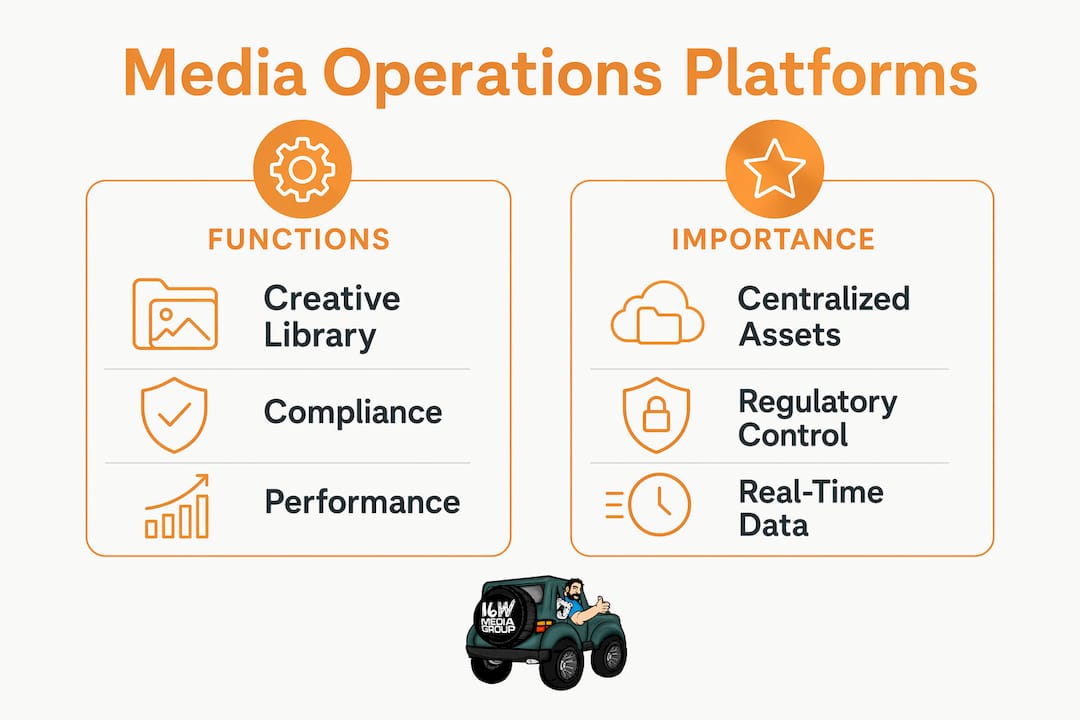
The operational layer of a media house typically integrates four core functions:
| Function | What It Does | Why It Matters |
|---|---|---|
| Creative library | Stores approved assets centrally | Prevents outdated or off-brand materials from running |
| Audience tracking | Monitors engagement across channels | Feeds real-time optimization decisions |
| Budget controls | Manages spend against plan | Reduces overspend and improves ROI accountability |
| Role-based permissions | Limits access by team function | Protects brand standards and compliance requirements |
Centralized media operations prevent duplicated work and inconsistent creative standards, speeding iterations and improving brand cohesion. For advertisers, this means your campaign assets stay consistent whether they run on a community magazine, a podcast, or a regional digital placement.
Operational transparency also supports advertiser-agency collaboration. When both parties access the same performance dashboard, disputes about delivery and attribution shrink significantly. The best media house partnerships in 2026 are built on shared data, not competing spreadsheets.
How should you evaluate and select a media house or media agency?
A media agency pitch framework helps advertisers evaluate potential partners, covering capabilities, culture, commercial terms, and alignment to brand goals. Skipping this process and selecting a vendor based on reputation alone is one of the most expensive mistakes a marketing team can make.
Use these criteria when assessing any media house or media agency:
- Capabilities audit. Can they execute across the channels your audience actually uses? A firm that excels at print but has no digital infrastructure is the wrong partner for a social-first campaign.
- Commercial transparency. Ask for a breakdown of agency fees, media buying rates, and any trading margins. Transparent commercial negotiations are a baseline requirement, not a premium feature.
- Responsibility mapping. Separate strategy, creative production, media buying, and measurement into distinct line items. Brands that map responsibilities explicitly reduce overpayment and eliminate scope confusion.
- Data ownership. Confirm in writing that you own your campaign data, audience insights, and performance reports. Some vendors retain data as a negotiating asset.
- Cultural alignment. A thorough pitch process ensures not just buying power but also cultural and strategic alignment, which is vital for long-term campaign success.
- Staffing quality. Ask who will actually manage your account day to day. Senior talent in the pitch room and junior staff on execution is a common bait-and-switch.
Because “media house” branding can mask divergent underlying services, clear contractual mapping of responsibilities reduces risk and ensures value alignment. A firm calling itself a creative media firm, a content production house, or a digital media company may offer entirely different service mixes under similar labels.
Practical applications of media houses in advertising and community engagement
Effective media house campaigns coordinate multiple formats and community features to sustain brand engagement and maximize ROI. The mechanics of that coordination are what separate campaigns that build lasting brand equity from those that generate a short spike and disappear.
For local businesses in competitive markets like Tampa, the multi-channel approach looks like this in practice:
- A community magazine placement reaches high-value households with a physical, trusted format that digital ads cannot replicate.
- A coordinated podcast sponsorship extends the same message to an engaged audio audience during commute hours.
- Social video content repurposes the campaign creative for platforms where younger demographics spend their time.
- A regional digital display campaign retargets website visitors who saw the print placement but did not convert.
The key to making this work is centralized measurement. Each channel feeds data into a single reporting view, so you can see which touchpoints drive the most conversions and reallocate budget in real time. Media houses that offer integrated reporting across traditional and digital channels give advertisers a genuine competitive advantage over those running siloed campaigns.
Community engagement adds a layer that pure advertising cannot buy. When a media house publishes local stories, hosts community events, or runs a neighborhood-focused magazine, it builds the kind of trust that makes its advertising placements more credible. Readers who trust the publication are more likely to act on the ads within it. That trust transfer is the real value proposition of a community-focused media organization.
Key takeaways
A media house creates value by controlling audience attention across multiple channels and converting that attention into advertising revenue through structured inventory, content ecosystems, and transparent operational workflows.
| Point | Details |
|---|---|
| Core definition | A media house controls channels and monetizes audience attention via ad inventory and content. |
| Role clarity matters | Distinguishing media owners, publishers, platforms, and agencies prevents budget waste and scope confusion. |
| Engagement drives revenue | Time spent, shares, and return visits predict ad performance better than reach alone. |
| Operations determine consistency | Centralized platforms prevent duplicated briefs and keep creative standards consistent across channels. |
| Selection requires rigor | Evaluate capabilities, commercial transparency, data ownership, and responsibility mapping before signing. |
Why most businesses pick the wrong media partner
I have watched businesses spend significant budgets on media partnerships that delivered almost nothing, and the pattern is almost always the same. They selected a vendor based on a polished pitch deck and a recognizable name, without ever asking the fundamental question: what exactly are you responsible for delivering?
The label “media house” gets applied to organizations with wildly different capabilities. A firm that calls itself a full-service media organization might own no channels at all. It might be reselling inventory it buys from third parties at a markup, with no proprietary audience and no real data transparency. I have seen this happen with both national agencies and local vendors.
What actually works is treating the selection process like a procurement exercise, not a creative audition. Map every deliverable to a named team member. Confirm data ownership in the contract before the first invoice. And build the relationship around shared reporting, not quarterly review decks that summarize what already happened.
The media houses that deliver consistent results are the ones that operate with transparency as a default, not as a concession. If a vendor resists showing you their buying rates or explaining their fee structure, that resistance is the answer you need.
— Mike
How 16wmediagroup helps businesses get media right
16wmediagroup works with local businesses across Tampa and beyond to build media strategies that actually connect brands with the right audiences. Whether you need a local advertising campaign built from scratch or a coordinated plan across podcasts, community publishing, and regional digital placements, 16W brings the operational structure and local market knowledge to execute it well.
16wmediagroup’s services span traditional media, digital advertising, podcast production, and community magazine publishing, giving businesses a single partner for multi-channel campaigns without the coordination overhead of managing multiple vendors. If you are ready to stop guessing which channels reach your best customers and start running campaigns with measurable results, 16wmediagroup is built for exactly that.
FAQ
What is a media house in simple terms?
A media house is an organization that controls media channels and sells advertising inventory to brands that want to reach specific audiences. It can include broadcast networks, digital platforms, magazine publishers, and integrated agencies.
How is a media house different from an advertising agency?
A media house owns or controls the channels where ads run, while an advertising agency typically buys space on those channels on behalf of clients. Some firms operate as both, but the distinction determines who controls pricing and inventory.
What services does a media house typically offer?
Most media houses offer some combination of ad inventory sales, content production, audience targeting, campaign planning, and performance reporting. The specific mix varies widely depending on whether the firm is a media owner, publisher, platform, or integrated agency.
How do I choose the right media house for my business?
Evaluate capabilities, commercial transparency, data ownership terms, and responsibility mapping before committing. A structured agency pitch process that covers culture, staffing, and technical agility reduces the risk of a poor fit.
Why does audience engagement matter for media house advertising?
Higher engagement metrics like time spent and return visit frequency signal a more attentive audience, which translates directly into better ad performance and higher advertiser ROI. Reach without engagement is an unreliable predictor of campaign results.