

A media kit is defined as a curated collection of brand materials, audience data, and advertising options designed to help potential partners say “yes” without a single back-and-forth email. Business owners and marketers use media kits to present their brand’s value to advertisers, sponsors, and collaborators in one clean, professional package. Understanding what is a media kit means understanding the difference between pitching and proving. A well-built kit removes friction from partnership decisions and positions your brand as a credible, ready-to-work entity. In 2026, the best media kits are digital, audience-centric, and built around measurable outcomes rather than vague brand promises.
What is a media kit, and how does it differ from a press kit?
The distinction matters more than most marketers realize. A press kit targets journalists and editors with brand background, executive bios, and press releases. A media kit targets advertisers and potential partners with audience data, engagement metrics, and pricing options. The content emphasis is fundamentally different, and sending the wrong one to the wrong audience costs you credibility.
Press kits answer the question: “Who are you?” Media kits answer: “Why should I spend money with you?” A press kit might include a founder’s story and product photos. A media kit includes your audience demographics, monthly reach, and ad format options with rates. Both documents serve your brand, but they serve different rooms in the same house.

The confusion between the two is understandable because many brands combine elements of both into a single document. That approach works only when the audience is clearly defined upfront. A journalist does not need your CPM rate. An advertiser does not need your press release history.
Pro Tip: Maintain two separate digital resources: a press kit for editorial contacts and a media kit for advertising and sponsorship conversations. Label each clearly so recipients know exactly what they are reading.
What to include in a media kit: the core components
A modern media kit lives or dies by the quality of its audience data. High-performing media kits highlight detailed audience profiles covering demographics, psychographics, geographic distribution, and engagement rates. Raw follower counts no longer convince serious advertisers. Conversion figures and past campaign results do.
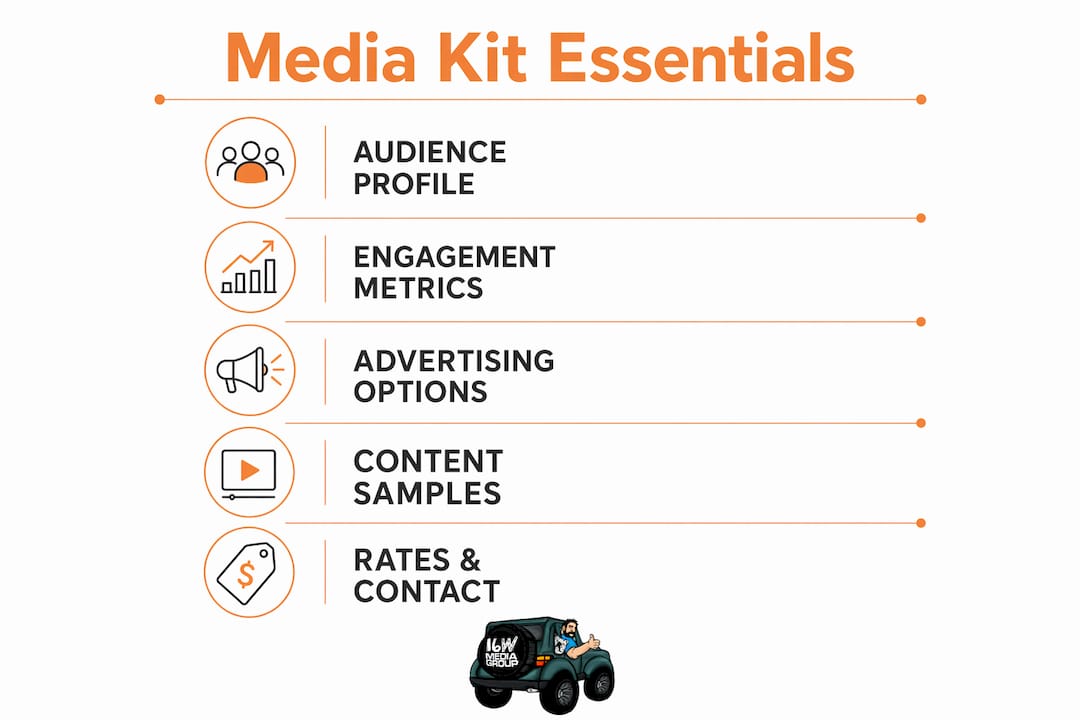
The non-negotiable components of a strong media kit include:
- Brand overview: A concise positioning statement that tells your story with emotional clarity, not a dry corporate history. Use language that connects your brand to a specific audience and a specific problem you solve.
- Audience profile: Age, gender, income level, location, interests, and buying behavior. The more specific, the more useful. Advertisers want to know they are reaching the right people, not just a lot of people.
- Engagement metrics: Open rates, click-through rates, social engagement percentages, and website traffic sources. These numbers reduce partner risk by showing real audience behavior.
- Content samples and case studies: Past campaigns, sponsored posts, or editorial features that demonstrate what a partnership looks like in practice. Show, do not tell.
- Advertising options and rate card: Formats available (newsletter placements, podcast sponsorships, social posts, print ads), specs aligned with Interactive Advertising Bureau standards, and clear pricing.
- Visual assets: Logos, brand photography, and video samples. Name every file descriptively, using labels like “brand-logo-horizontal-white.png” rather than “IMG_4872.png.” High-resolution images of at least 2000×2000 pixels are the professional standard.
- Contact information: A named contact, direct email, and a clear call to action. Never make a potential partner hunt for how to reach you.
Understanding audience segmentation is the foundation of a strong audience profile section. Advertisers respond to specificity, not generality.
Pro Tip: Keep your media kit text selectable, not locked inside image files or non-editable PDFs. Selectable text lets partners copy your stats, contact details, and ad specs directly, which reduces friction and speeds up the decision process.
How should you format and distribute a media kit?
Format determines whether your kit gets read or ignored. Professional media kits exist in two formats: a concise downloadable PDF under 5MB for email delivery, and a permanent web-based hub that hosts multimedia assets like videos, logos, and interactive rate cards. Each format serves a different moment in the partnership conversation.
The PDF works for first contact. It is easy to attach, forward, and print. Keep it under 5MB so it clears corporate email filters without issue. The web-based version works for deeper engagement. It allows you to update pricing, swap out case studies, and add new metrics without resending files to every contact in your database.
A web-based media kit also solves the version control problem. When your Q3 rates change, you update one page instead of chasing down every PDF you sent in the past six months. Partners who bookmark your media kit page always see current information.
Design and usability rules that separate professional kits from amateur ones:
- Use mobile-friendly layouts. Many partners review kits on phones during travel or between meetings.
- Keep the PDF to 8–12 pages maximum. Longer kits signal poor editing, not thoroughness.
- Use clean typography and consistent brand colors. Visual noise kills credibility faster than weak metrics.
- Host video samples and audio clips online rather than embedding them in the PDF. Embedded media inflates file size and often fails to play.
- Tailor a version of your kit for specific campaigns or events. A kit built for a summer sponsorship opportunity outperforms a generic kit sent to the same contact.
Effective media outreach depends on sending the right materials at the right moment. A well-formatted kit is the difference between a partner who responds the same day and one who never opens the attachment.
Successful media kits function as a self-scan checkout for partners by being clean, current, and accessible. That description is worth taking literally. Every element should be findable in under 30 seconds.
How to create a media kit that drives real results
Most teams build a media kit before defining what they want it to achieve. That is the single most common mistake. Aligning structure to intent produces better results than assembling a collection of files and hoping for the best.
Follow these steps to build a kit with a clear purpose:
- Define your primary goal. Are you securing paid advertisers, attracting event sponsors, or pitching editorial partnerships? Each goal changes what you lead with. Sponsors want audience reach and brand alignment. Advertisers want conversion data and ad format options.
- Research your audience before writing a single word. Pull your analytics from every channel: website, email, social, and podcast. Identify the data points that matter most to your target partners, then build your audience profile around those specific numbers.
- Write a positioning statement that tells a story. Use emotionally grounded language that connects your brand to a real audience need. “We reach Tampa homeowners aged 35–55 who spend on home improvement” is more useful than “We are a community-focused media brand.”
- Gather content samples that prove your claims. Select two or three past campaigns that show measurable outcomes. Include the brand name (with permission), the format used, and the result achieved.
- Design for the decision-maker, not the designer. Clean layouts, clear headings, and scannable data tables serve the person who has 90 seconds to decide whether to forward your kit to their marketing director.
- Set a review schedule. Update your kit every quarter at minimum. Stale metrics and outdated pricing signal that your brand is not actively managed.
- Measure success by outcomes, not opens. Track how many kit recipients convert to discovery calls, signed agreements, or paid placements. That number tells you whether your kit is working.
Reviewing your media planning checklist before building your kit helps you align every component with your broader advertising goals. Understanding the full range of digital media channels also helps you present a more complete picture of your reach to potential partners.
Pro Tip: Include a one-page summary at the front of your kit that covers your top three audience stats, your primary ad format, and your contact. Decision-makers often read only the first page. Make it count.
Podcast brands benefit from including podcast engagement metrics in their kits. Download numbers alone are not enough. Average listen duration, listener demographics, and host-read ad performance rates tell a far more compelling story to sponsors.
Key Takeaways
A media kit is a strategic sales tool, not a static document, and its effectiveness depends entirely on clear goals, current data, and a format that removes friction from the partnership decision.
| Point | Details |
|---|---|
| Define the goal first | Build your kit around one primary objective: advertisers, sponsors, or editorial partners. |
| Lead with audience data | Demographics, engagement rates, and past campaign results outperform raw follower counts. |
| Use two formats | Offer a PDF under 5MB for email and a web-based hub for multimedia and live updates. |
| Keep text selectable | Locked PDFs and image-based text slow partners down and reduce the chance of a deal. |
| Update every quarter | Stale metrics and outdated pricing signal an unmanaged brand to serious advertisers. |
Why most media kits fail before they are ever read
The media kits I see fail most often share one trait: they were built to impress internally, not to persuade externally. Someone spent hours on the design and almost no time on the data. The result looks polished but says nothing a serious advertiser actually needs to hear.
A media kit is not a brochure. It is a professional resume for partnerships, and like any resume, it needs to answer one question immediately: “Why should I choose you over every other option?” If your kit does not answer that question within the first 30 seconds of reading, it will not get a second look.
The shift I have seen work consistently is treating the media kit as a sales tool rather than a brand artifact. That means leading with your strongest audience metric, not your brand history. It means including a rate card even when pricing feels uncomfortable to share. It means writing a positioning statement that speaks to a partner’s business goals, not just your own brand values.
At 16wmediagroup, the brands that close partnerships fastest are the ones with kits that make the decision easy. Clean data, clear options, and a direct contact. No mystery, no friction, no follow-up required just to get basic information. That is the standard worth building toward.
How 16wmediagroup helps you build a kit that works
A professionally built media kit accelerates every partnership conversation you will ever have.
16wmediagroup works with local businesses and media brands to create media kits that reflect real audience data, clear advertising options, and the kind of storytelling that makes partners pay attention. Whether you need a full kit built from scratch or an existing one updated to 2026 standards, the team at 16wmediagroup brings the media planning expertise and local market knowledge to make it count. Start the conversation and find out how a stronger media kit can open doors your current materials are leaving closed.
FAQ
What is a media kit used for?
A media kit is used to present your brand’s audience data, advertising options, and partnership value to potential sponsors and advertisers. It replaces multiple back-and-forth emails by giving partners everything they need to make a decision in one document.
How is a media kit different from a press kit?
A press kit targets journalists with brand background, bios, and press releases. A media kit targets advertisers with audience metrics, engagement rates, and pricing. The two documents serve different audiences and should be maintained separately.
What should a media kit include?
A media kit should include an audience profile, engagement metrics, content samples, advertising formats and rates, visual assets, and a direct contact. Engagement rates and past campaign results carry more weight with advertisers than follower counts alone.
How long should a media kit be?
A media kit PDF should run 8–12 pages maximum. A web-based version can be longer, but every section must earn its place. Shorter, focused kits consistently outperform longer, unfocused ones.
How often should you update your media kit?
Update your media kit at least once per quarter. Outdated metrics and stale pricing signal to potential partners that your brand is not actively managed, which reduces trust before a conversation even begins.