

Community media is defined as an independent, community-owned form of media that operates outside commercial and political influence, giving local businesses a direct line to audiences who already trust the channel. Unlike national broadcast networks or algorithm-driven social platforms, community media serves a specific geography, culture, or interest group. That specificity is exactly why local business owners and marketers should pay close attention. When you ask why choose community media, the answer comes down to three things: trust, relevance, and permanence.
UNESCO affirms that community media’s independence from advertisers and political influence is its primary differentiator. That independence creates authentic community connection that commercial channels simply cannot replicate. For a local business in a competitive market like Tampa, that authenticity is a real marketing asset, not a soft concept.
Why choose community media over commercial channels?
Community media builds trust through proximity. A neighborhood radio station or local magazine carries the credibility of a neighbor, not a corporation. Research confirms that trust builds through proximity, context, and civic engagement, not raw reach metrics. That distinction matters because a business with 500 genuinely engaged local readers outperforms one with 50,000 passive social media followers who never convert.
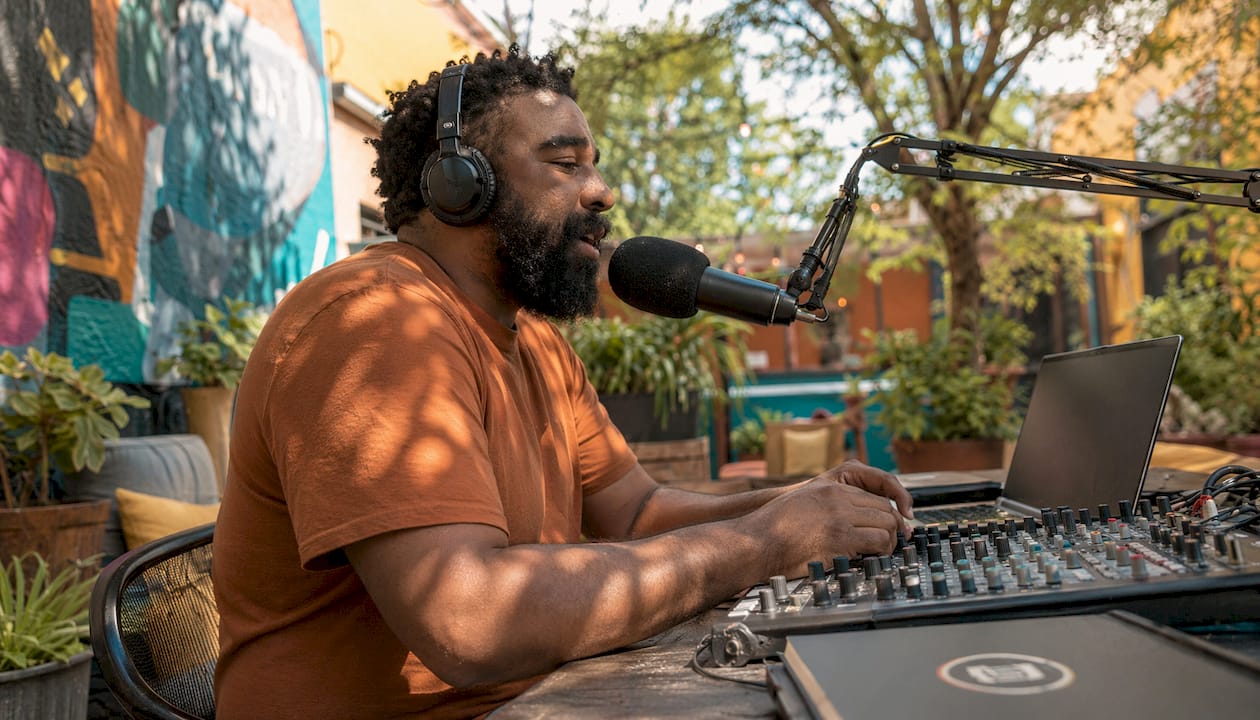
The benefits of community media go beyond credibility. Community media provides permanence that algorithm-driven platforms lack, preserving brand messages for sustained discovery. A feature in a community magazine or a podcast episode on a local station stays findable for months or years. A social media post disappears in hours.
Community media also links institutions and residents in a way that creates a “halo effect” of accountability that national platforms cannot replicate. When your business appears in a trusted local outlet, that trust transfers to your brand. That is the core advantage of local media over commercial alternatives.
Pro Tip: Track engagement quality, not just impressions. Ask your community media partner for listener call-ins, reader letters, or event attendance tied to your campaign. Those signals reveal real community impact.
What are the main types of community media platforms?
The types of community media platforms span print, broadcast, and digital formats. Each format serves a distinct audience need and offers different engagement styles for local businesses.
| Platform type | Format | Engagement style | Best for |
|---|---|---|---|
| Community radio | Audio broadcast | Real-time, conversational | Broad local reach, event promotion |
| Local newspapers | Print and digital | In-depth, long-form | Trust-building, detailed brand stories |
| Community TV | Video broadcast | Visual, storytelling | Product demos, civic campaigns |
| Podcasts | On-demand audio | Intimate, niche | Thought leadership, loyal audiences |
| Community websites | Digital text and video | Interactive, searchable | SEO, ongoing content visibility |
| Social media groups | Digital discussion | Peer-to-peer | Hyperlocal word-of-mouth |
All of these formats share one governance trait: non-profit or community-controlled ownership. That structure keeps editorial decisions in the hands of the community, not advertisers. For a business owner, that means your ad or feature sits alongside content the audience already trusts.
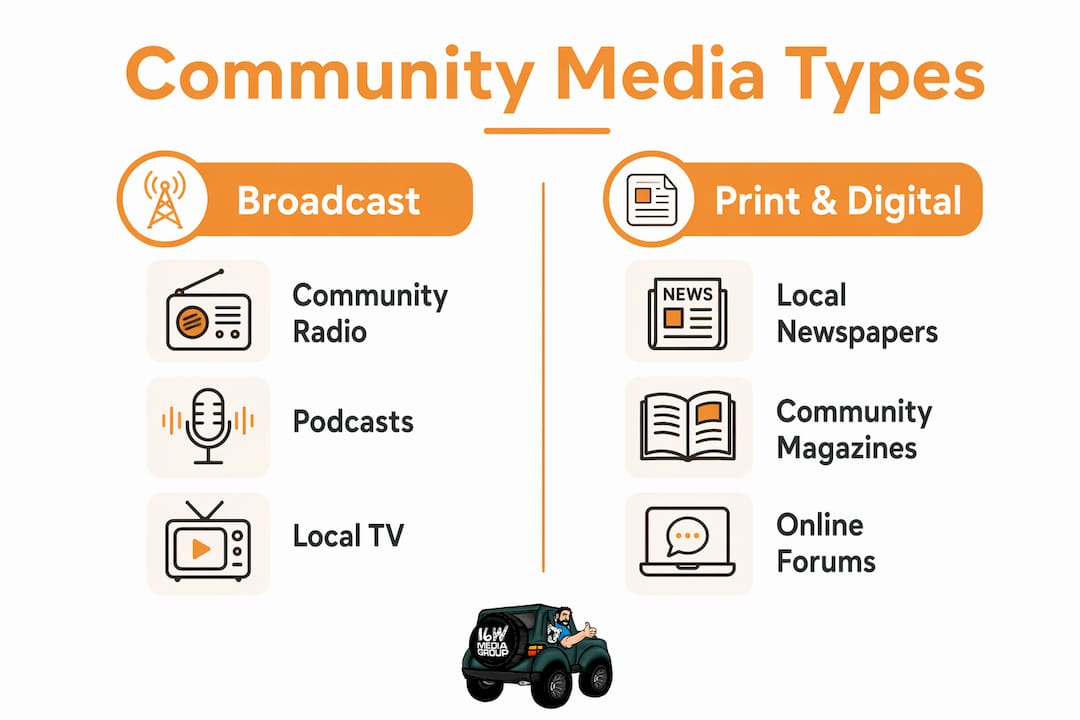
Community radio and local newspapers tend to reach the broadest cross-section of a local population. Podcasts and community websites attract more specific interest groups, which can be a strength when your product targets a defined demographic. One study found that community media in local languages reached 600,000 people across 12 districts. That scale proves localized media can deliver mass outreach without sacrificing relevance.
Understanding how to choose local media channels for your specific business is the practical next step after identifying which platform types align with your audience.
How does community media support sustainable development and brand goodwill?
Community media does more than carry ads. It functions as civic infrastructure, raising awareness on health, environment, and social issues that matter to local residents. When your business aligns with that mission, you gain goodwill that no paid campaign can manufacture.
Research shows that community radio engagement significantly increases acceptance and intent to adopt sustainability behaviors among listeners. A study with 300 listeners in Bangladesh documented measurable behavioral change. That finding means community media does not just inform people. It shifts attitudes and actions.
For businesses in sectors like food, health, home services, or retail, this behavioral influence is directly relevant. A local business that sponsors a community radio segment on healthy eating or environmental responsibility connects its brand to values the audience already holds. That connection is more durable than a display ad.
The funding gap in community media also creates a business opportunity. Less than 1% of international donor aid targeted media and information initiatives between 2016 and 2022. Community media is chronically underfunded, which means local business sponsorships carry significant weight and visibility. Your support stands out because it is rare.
Pro Tip: Co-create content with community media outlets rather than simply buying ad space. A sponsored segment you help shape delivers far more brand authenticity than a 30-second spot.
Understanding how media incentives affect coverage helps businesses make smarter decisions about where and how they invest in local media partnerships.
What criteria should businesses use to select community media partners?
Choosing the right community media partner requires more than checking audience size. The following criteria separate effective partnerships from wasted budgets.
-
Verify editorial independence. Confirm the outlet operates without advertiser control over content. Independence is the foundation of the trust your brand wants to borrow.
-
Assess local knowledge depth. Local editors and reporters with deep knowledge of demographics, history, and community concerns are the engine of audience trust. Ask how long the editorial team has covered the area.
-
Measure community participation. Look for outlets where residents contribute content, call in, write letters, or attend events. High participation signals genuine community ownership, not just a local-sounding brand.
-
Match audience demographics to your customer profile. A community podcast serving young professionals differs from a neighborhood print magazine serving families. Align format and audience before committing budget.
-
Evaluate partnership models. Options include sponsorship, display advertising, co-created editorial content, and event partnerships. Participatory content creation deepens brand legitimacy more than simple paid ad placements. Prioritize formats that let your brand contribute to the conversation.
-
Avoid reach-only metrics. A community outlet with 2,000 deeply engaged listeners outperforms a regional station with 20,000 passive ones. Engagement quality predicts conversion far better than raw numbers.
A community-based advertising strategy built on these criteria will consistently outperform campaigns that treat community media like a smaller version of commercial broadcast.
Key Takeaways
Community media delivers trust, permanence, and civic alignment that commercial platforms cannot match, making it the strongest channel for local businesses building long-term brand visibility.
| Point | Details |
|---|---|
| Independence drives trust | Community media’s freedom from advertiser control creates the credibility local brands need to borrow. |
| Platform variety matters | Radio, print, podcasts, and digital groups each serve distinct audiences and engagement styles. |
| Civic alignment builds goodwill | Sponsoring community media connects your brand to values residents already hold. |
| Participation beats ad buys | Co-created content delivers deeper brand legitimacy than standard paid placements. |
| Partner selection is critical | Prioritize editorial independence, local knowledge, and engagement quality over raw audience size. |
What I’ve learned about community media that most marketers miss
Most local business owners I talk with treat community media as a budget option. They assume smaller reach means smaller results. That thinking gets it exactly backwards.
Commercial platforms sell you access to attention. Community media gives you access to trust. Those are fundamentally different things, and trust converts at a higher rate. A listener who hears your business mentioned on a station they have listened to for 10 years responds differently than someone who sees your retargeted ad for the third time this week.
The other mistake I see constantly is treating community media as a one-way channel. Businesses buy a spot, run it, and measure nothing. The real opportunity is participatory. When you help shape a segment, sponsor a community event covered by the local outlet, or contribute expertise to a community podcast, you become part of the story. That is when brand legitimacy actually forms.
The evolving media environment in 2026 makes this more urgent, not less. Algorithm changes on major platforms have made organic reach unpredictable. Community media does not have that problem. Its audience shows up because of the relationship, not because an algorithm served your content. That stability is worth more than most marketers price it.
Prioritize long-term local relationships over short-term virality. The businesses I have seen build durable brand equity in competitive local markets are the ones that invested in community channels before they needed them.
— Mike
How 16wmediagroup helps local businesses get community media right
Local businesses that want to act on the advantages of community media need more than good intentions. They need a media plan that matches the right channels to the right audience.
16wmediagroup works with local businesses across competitive markets to build integrated media strategies that include community radio, local publishing, podcasts, and digital channels. The agency’s approach centers on context-driven placement, meaning your brand appears where your audience already trusts the source. The 2026 local advertising guide covers the specific tactics that drive results across community media formats. If you are ready to build a media presence that lasts beyond the next algorithm update, 16wmediagroup offers a direct path to get started. Reach out through the services page to discuss a plan built around your market.
FAQ
What is community media?
Community media is an independent, community-owned form of media that operates without commercial or political control. UNESCO defines its primary differentiator as independence from advertiser and political influence.
How does community media differ from commercial media?
Commercial media optimizes for broad reach and advertiser revenue. Community media prioritizes local relevance, editorial independence, and participatory content that serves a specific geography or interest group.
Why should local businesses support community media?
Local businesses benefit from the trust and credibility community media carries with its audience. Aligning with trusted local outlets transfers that credibility to your brand in a way paid advertising on commercial platforms cannot replicate.
What types of community media work best for small businesses?
Community radio, local magazines, and podcasts are the most accessible entry points. The best fit depends on your audience demographics and whether you prioritize broad local reach or deep engagement with a specific interest group.
How do I measure the impact of community media advertising?
Track engagement quality indicators such as event attendance, direct inquiries, and customer referrals tied to specific campaigns. Raw impression counts understate community media’s value because they miss the trust-driven conversion advantage.