

Local brand loyalty is one of the most direct paths to sustainable revenue growth. Customers who feel genuinely connected to a local business spend more, return more often, and refer their neighbors. Consumers often choose local brands specifically to support domestic businesses, and many say local brands fit their needs better. That is not a price story. It is a trust and identity story, and it is one your business can own.
The benefits of building local brand loyalty compound quickly, including higher customer retention and repeat purchase rates, greater willingness to pay more than national chains, word-of-mouth referrals, stronger community credibility beyond what advertising can buy, and resilience during economic uncertainty when consumers tighten their trust circles.
Stat to know: Customers referred by loyal local shoppers tend to be more loyal, have a higher customer lifetime value, and spend more than other customers.
How authenticity and localness drive real customer loyalty
Authenticity is the engine behind local loyalty, and localness is the fuel. Research confirms that local brands achieve sales advantages by signaling authenticity, which directly reinforces consumer trust and purchase intent. In the craft beer industry, for example, localness fully mediated the relationship between brand identity and sales performance. Consumers did not just prefer local beer. They trusted it more.
What does “localness” actually mean in practice? It goes well beyond putting a neighborhood name in your tagline. Genuine localness requires verifiable proof of community engagement: transparent service, visible community involvement, and consistent local presence. Slap a zip code on an ad and call it local, and customers will see through it fast.
The components that actually move the needle:
- Community roots: Local ownership, local hiring, and visible ties to the area
- Local proof points: Participation in neighborhood events, partnerships with nearby organizations, and staff who are recognizable faces in the community
- Consistent messaging: Localized storytelling that reflects shared values and real experiences, not polished corporate copy
- Marketing tactics that reinforce authenticity: Pricing and product variety that signal quality, not just geographic proximity
A study validating local ownership preference found that consumers consider a store being locally owned an important selection attribute, and that preference carries a strong positive relationship with willingness to pay a premium. The brand value of local ownership is real and measurable.
Community-building strategies that turn customers into advocates
The most durable local loyalty comes from treating your location as a hub for shared interests, not just a place to transact. Shopify’s community retailing research is direct on this: strong community building avoids a sales-first approach and focuses on delivering value to members. When customers feel the community is genuine, they become advocates who recommend your business when you are not in the room.
Practical strategies that work in U.S. local markets:
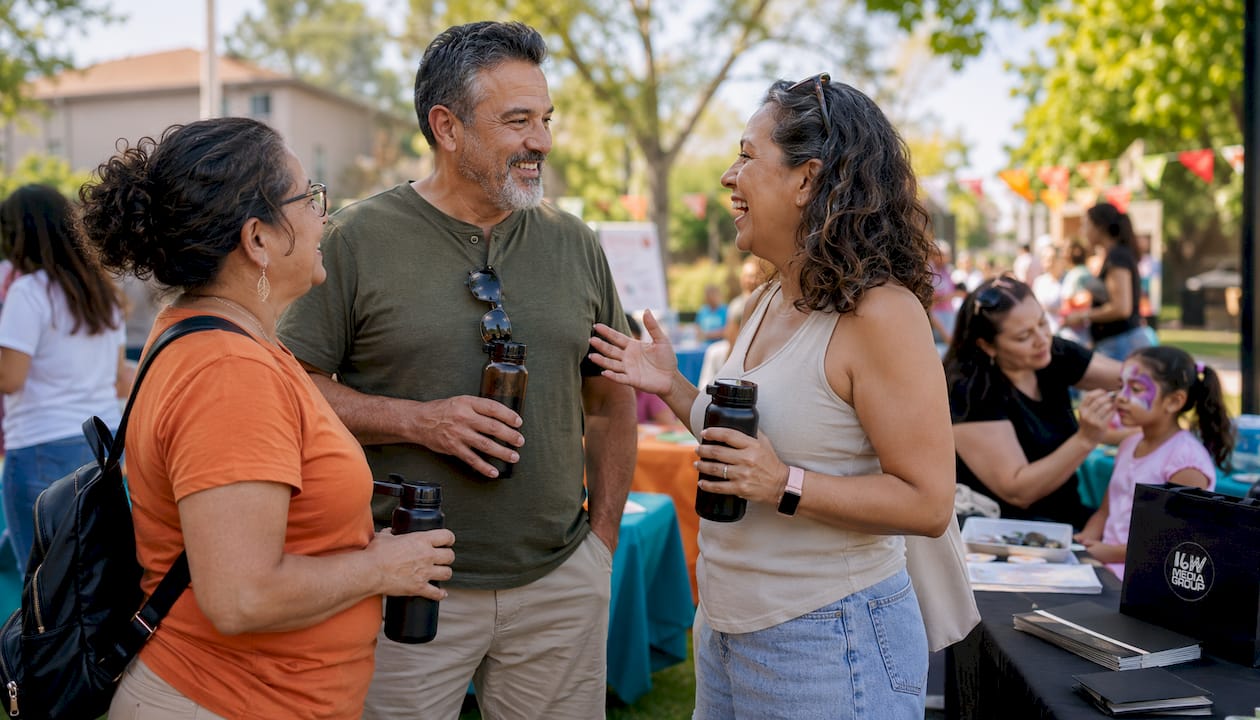
- Host in-store and local events: Live experiences strengthen brand affinity after attendance, and attendees generate social media content that extends your reach organically
- Launch user-generated content campaigns: Invite customers to share their own stories tied to your brand and neighborhood
- Recruit local ambassadors: Real people from your community carry far more persuasive weight than polished influencer content
- Partner with complementary local businesses: Cross-promotions create new connections within the local ecosystem without competing for the same customer
- Engage online with the same energy as in-person: A community is not limited to physical space; taking offline experiences online multiplies your touchpoints
Community-focused messaging builds loyalty by making a brand feel connected to customers’ daily lives. Broad national campaigns get attention. Local campaigns earn loyalty. The difference is whether customers see themselves in your story.
Pro Tip: Don’t sell at community events. Create space for people to engage, share feedback, and feel part of what you are building. The business that listens at a neighborhood gathering converts more loyalists than the one handing out coupons.
How to implement localized loyalty initiatives that actually stick
Effective local loyalty programs run on two layers. The first is local presence signals: local SEO, geofencing, and hyperlocal advertising that put your brand in front of the right people at the right moment. The second is structured community participation: events, user-generated content, and ambassador programs that turn impressions into relationships. Local loyalty marketing combines digital intelligence with geographic precision to build trust and emotional connection.
Here is how to build that system step by step:
- Audit your local presence: Check your Google Business Profile, local directory listings, and location-based keywords before launching anything else
- Design incentives that feel personal: Community events, local cross-promotions, and recognizing familiar staff outperform generic point-based rewards every time
- Coordinate local teams with brand guidelines: Employees closest to customers are your best asset; give them tools and clear parameters to act on local insights
- Use geomarketing tools: Geofencing delivers targeted messages when customers enter your store or event space, making outreach feel timely rather than intrusive
- Create neighborhood-specific content: Tailored local stories, even when shared under a consistent brand structure, widen impact and build trust that spreads across communities
| Initiative component | Intended outcome |
|---|---|
| Local SEO and directory optimization | Visibility in “near me” searches and map results |
| Geofencing and hyperlocal ads | Timely, relevant outreach at the point of decision |
| Community events and activations | Emotional connection and post-event brand affinity |
| Ambassador and UGC programs | Authentic peer recommendations that convert |
| Local cross-promotions | Expanded reach within the existing community ecosystem |
The most common pitfall is treating localness as a creative style rather than a trust-building system. Neighborhood references in ad copy without any verifiable local proof will not hold. Customers notice the gap between what a brand claims and what it actually does in the community.
Pro Tip: Layer your local presence signals with structured community participation. Presence gets you found. Participation gets you trusted. You need both working together for loyalty to compound.
Measuring whether your local loyalty efforts are working
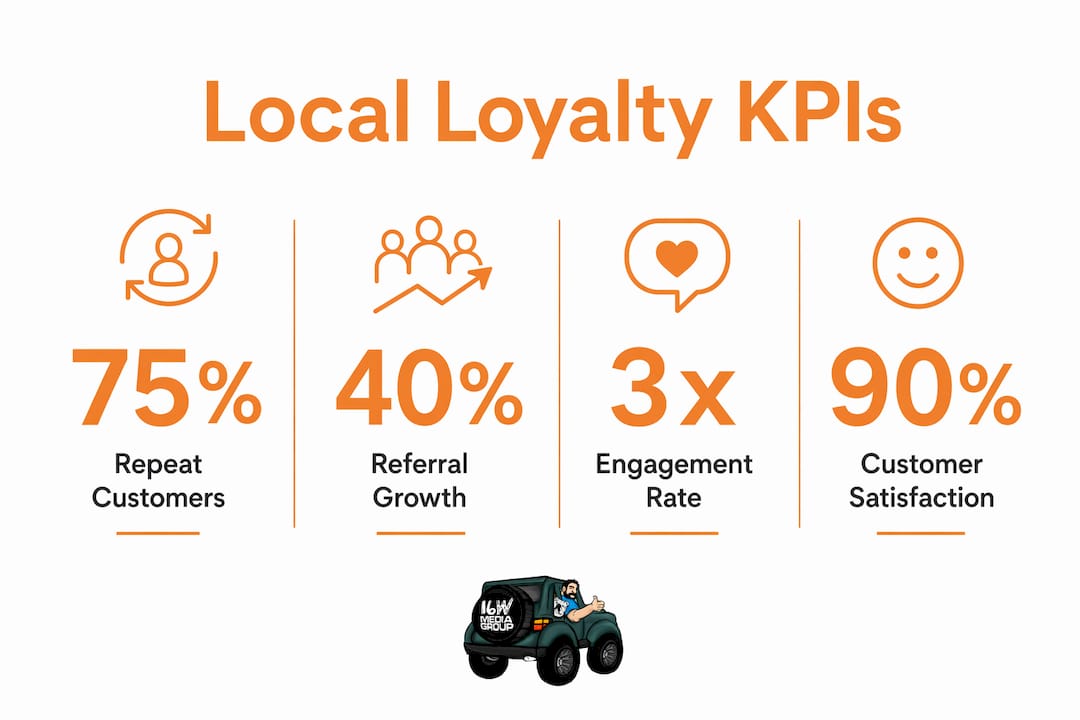
You cannot improve what you do not track. The key performance indicators for local brand loyalty go beyond simple sales figures. Repeat purchase rate, customer lifetime value, and local advocacy behaviors (referrals, reviews, event attendance) give you a complete picture of how loyalty is actually building.
Qualitative measures matter just as much. Customer feedback, community sentiment, and how customers describe your brand in conversation reveal whether your authenticity signals are landing. Localness increases authenticity perceptions, which then directly supports sales. That means your measurement targets should specifically track authenticity cues, not just transaction volume.
Evaluation techniques worth building into your process:
- Net Promoter Score at the local level: Ask customers specifically whether they would recommend you to neighbors, not just anyone
- Repeat visit and purchase tracking: Segment by geography to identify which neighborhoods are most loyal
- Social listening for local mentions: Monitor community groups, local Facebook pages, and neighborhood apps for organic brand references
- Event attendance and post-event conversion: Track whether community events translate into new or returning customers
- Review volume and sentiment on local platforms: Google Business Profile reviews are a direct signal of community trust
Stat to know: Increasing retention rates modestly can substantially increase profits, which means that gains in local loyalty measurement and optimization pay off over time.
The challenge most local businesses face is inconsistent data collection. Start with two or three metrics you can track reliably, then build from there. Consistency beats comprehensiveness in the early stages.
Why local loyalty is the foundation of long-term business sustainability
Local brand loyalty does more than drive repeat sales. It builds the kind of community capital that protects a business during slow seasons, competitive pressure, and economic uncertainty. When consumers feel uncertain, they tighten their trust circles and lean toward what feels familiar and accountable. A business with deep local roots becomes the default choice precisely because it has already earned that trust.
The sustainability case is straightforward. Loyal local customers generate referrals, and referred customers spend more and stay longer than customers acquired through advertising. That referral engine reduces your cost of customer acquisition over time, which means more margin to reinvest in the community engagement that keeps the cycle going. Advocacy built on genuine trust is more durable than any paid campaign.
There is also a competitive moat that local loyalty creates. A national chain can match your price or your product. It cannot replicate the fact that your staff knows customers by name, that you sponsored the local little league team, or that your brand story is woven into the neighborhood’s identity. That kind of presence takes years to build and is nearly impossible to copy quickly.
Real-world examples of local brand loyalty programs that work
The most instructive examples of local loyalty programs share one trait: they prioritize genuine participation over promotional pressure.
Green Bean, a UK-based children’s activity brand, built its loyal customer base by physically showing up in local spaces, including bookshops, museums, and shopping centers, to create experiences for families. Early events in Manchester brought together children, parents, and grandparents for storytelling and shared activities. The result was a feedback loop where community presence informed product development, and that responsiveness generated what the founder described as “huge loyalty, huge advocacy.” The lesson for U.S. local businesses: go spend time with your customers in their spaces, not just yours.
Sunlight Sports, a U.S. outdoor retailer, structured its community engagement around local nonprofit fundraising. Money raised at store events went directly to local organizations, which strengthened the brand’s identity as a retailer committed to giving back. Customers made connections with each other and with the brand simultaneously, turning a transaction into a shared purpose.
The cinematic storytelling approach used by media-forward brands offers another angle. When a brand’s story is told through real community voices and local visuals, rather than polished national creative, it lands with an authenticity that generic advertising simply cannot replicate. Customers recognize their neighborhood, their neighbors, and their values in the content, and that recognition is what converts passive awareness into active loyalty.
For local businesses in competitive markets like Tampa, community-based advertising strategies that combine local storytelling with targeted media placement consistently outperform broad awareness campaigns in building the kind of loyalty that sustains a business year over year.
Ready to build loyalty that lasts in your market?

16wmediagroup works with local businesses to create localized brand advertising strategies that connect with real communities and drive measurable loyalty. From community magazines and podcasts to hyperlocal digital campaigns, we build the media presence that turns neighbors into advocates. Explore our local advertising best practices or view our full services to see how we can localize your message and grow your loyal customer base.
Key takeaways
Local brand loyalty grows from authentic community engagement, not advertising volume, and the businesses that invest in genuine local presence consistently outperform those chasing reach alone.
| Point | Details |
|---|---|
| Local preference is about fit, not price | McKinsey data shows 36% choose local to support domestic businesses; only 13% cite affordability. |
| Localness drives sales through authenticity | Research confirms localness increases authenticity perceptions, which directly translates into higher sales. |
| Referred customers are more valuable | Referred customers are 18% more loyal, have 16% higher lifetime value, and spend 13% more. |
| Retention gains compound fast | A 5% increase in retention can grow profits by 25% to 95%, making loyalty investment highly efficient. |
| Community participation beats advertising pressure | Sustainable loyalty comes from genuine local involvement, not repetitive promotional messaging. |