

The fastest way to land sponsors is to pitch engagement-first activations that deliver leads or audience access, not a logo on a banner. Start with three idea categories: in-person engagement, digital and content partnerships, and in-kind menus. Then build a short sponsor menu tied to measurable outcomes before you send a single email.
TL;DR:
- Sponsors are more likely to renew when sponsorship packages include measurable outcomes like leads, sign-ups, or social media impressions, not just logo displays.
- In-person engagement opportunities such as booths, family activities, and demo zones generate stronger brand recognition because they actively involve attendees.
- Digital sponsorships like newsletter slots, webinars, and podcasts offer valuable visibility, especially for brands seeking reach without staffing a physical presence.
- Smaller organizations should focus on low-effort, high-impact asks like signage or raffle prizes, while larger sponsors can support full activation zones.
- Tracking success with simple metrics and clear reporting timelines increases sponsor satisfaction and makes renewal more likely.
Table of Contents
- Community Sponsorship Ideas Organized by Activation Type
- Build Sponsorship Packages and Menus That Sell
- Identify the Right Sponsors and Build an Outreach Plan
- Two Copyable Sponsorship Menus You Can Use This Week
- Measuring and Reporting Sponsor Outcomes
- Common Sponsorship Mistakes and a Ready-to-Use Checklist
- Bringing Sponsors Into Online Communities and Virtual Events
- How Local Media Amplifies Sponsor Value
- Package Your Sponsors Into Real Local Media Exposure
- Sources
Community Sponsorship Ideas Organized by Activation Type
Sponsors rarely say no to a good idea. They say no to a vague one. The organizers who fill sponsor tables fastest are the ones who show up with a menu, not a pitch. Here’s how to sort your options by effort and payoff, so you can build a list that fits your event’s actual size.
In-person engagement sponsorships
These put a sponsor’s name in front of people who are already paying attention, which is why they convert better than static signage.
- Welcome sponsor: greets attendees at check-in, gets first-impression branding, and can hand out a small item or coupon.
- Family-activity sponsor: funds a kids’ zone, craft table, or photo booth. Parents linger there, which means longer brand exposure.
- Booth activation: gives the sponsor a physical footprint to demo a product or run a sign-up sheet.
- Demo zone: works well for retailers, fitness brands, or tech companies that need hands-on interaction to close a sale.
Program and series sponsors
Recurring events give sponsors a longer runway and a lower cost per impression.
- Seasonal series sponsor: backs an entire concert series, farmers market season, or lecture series with one payment.
- Youth sports jersey or practice-shirt sponsor: puts a logo on something kids wear repeatedly, in practice and in photos parents share.
- Field or court banner sponsor: a low-maintenance, high-visibility option for venues with regular foot traffic.
Digital and content sponsorships
Not every sponsor wants a folding table in the sun. Digital slots suit brands that want reach without staffing a booth.
- Newsletter slot: a dedicated line or block in your community email, ideal for local service businesses.
- Sponsored webinar or Q&A: positions the sponsor as a subject-matter contributor, not just an advertiser.
- Sponsored podcast segment: works especially well if your organization already records interviews or recaps, since it turns sponsor messaging into content people actually want to hear.
In-kind and volunteer support
Cash isn’t the only currency. Equipment loans, catering, printing, and prize donations all have real market value, and they often come from businesses that would never write a check.
Pro Tip: Translate every in-kind donation into its cash equivalent before you assign a recognition tier. Donated catering worth $500 should get the same signage and shoutout as a $500 check sponsor, no more and no less.
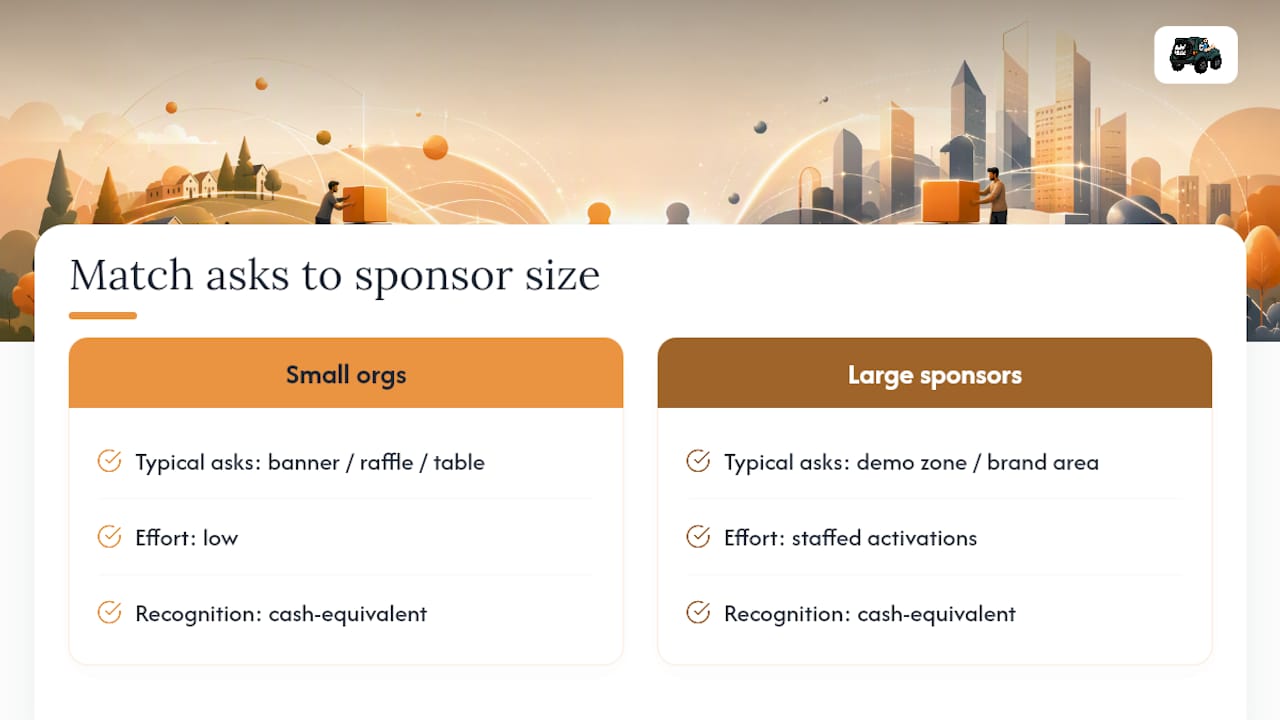
Small organizations should lean on low-effort asks: banner space, a raffle prize, a table at an existing event. Larger sponsors with staff to spare are better candidates for full activations like a demo zone or a branded activity area. Matching the ask to the sponsor’s size keeps your pipeline realistic instead of a wish list nobody wants to fund.
Build Sponsorship Packages and Menus That Sell
A package sells when it’s tied to what the sponsor actually wants: leads, brand recall, or goodwill in a specific neighborhood. Before you write a single price, ask each prospect what success looks like to them, then build the tier around that answer instead of guessing.
A simple three-tier structure works for most community events:
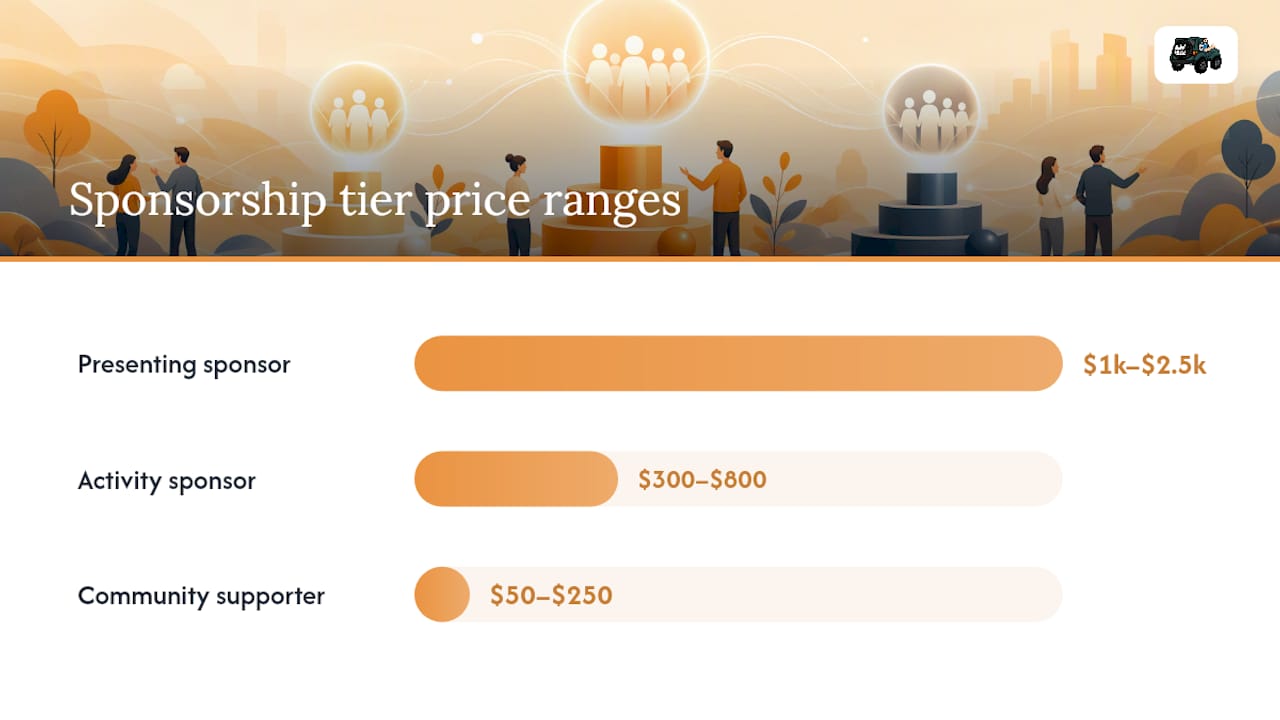
- Presenting sponsor ($1,000 to $2,500 or equivalent in-kind): logo on all materials, stage mention, dedicated newsletter feature, and a booth or activation space.
- Activity or program sponsor ($300 to $800): naming rights to one activity, signage at that station, and a social media shoutout.
- Community supporter ($50 to $250 or in-kind donation): name listed on a shared banner and one social media mention.
Every tier needs a fulfillment promise attached: when logos go up, when the recap goes out, and what data the sponsor receives afterward. A one-page offer sheet should state the ask, the benefits, and the reporting timeline in plain language, so there’s no ambiguity about what the sponsor is buying.
Pro Tip: Write your reporting commitment directly into the offer sheet, not just the contract. Sponsors renew when they know exactly when to expect proof of value, not just when they receive it.
Identify the Right Sponsors and Build an Outreach Plan
Size matters less than fit. A local business with genuine overlap in your audience will convert faster and renew longer than a big-name brand with no local presence. Prioritize prospects using three filters: relevance to your attendees, reach within your specific catchment area, and whether they can physically activate at your event.
Finding the right names doesn’t require a marketing database:
- Pull member lists from your local chamber of commerce.
- Scan local business directories and Facebook community groups for active advertisers.
- Ask your board and volunteers who they already buy from, since personal relationships shortcut cold outreach.
- Watch social media for businesses already commenting on or attending similar community events.
Once you have a list, use a three-stage cadence instead of a single cold pitch. Open with a short note that shares your audience size and demographics. Follow with a tailored ask that names one specific benefit relevant to their business. Close with a follow-up that reiterates your reporting timeline, since that promise alone convinces hesitant sponsors more than a lower price would.
Two Copyable Sponsorship Menus You Can Use This Week
Real menus, not templates, make outreach faster. Example youth sports sponsorship pages commonly structure offers around presenting, gold, silver, and bronze tiers, each with a specific price band and deliverable list. Here’s a version built for a single community event and one for an ongoing season.
One-off event menu:
- Presenting sponsor ($1,500+): logo on all signage, stage announcement, booth space.
- Activity sponsor ($400 to $700): naming rights to one zone or activity.
- Booth sponsor ($200 to $350): a 10×10 space with signage included.
- In-kind sponsor: equivalent recognition based on the documented value of donated goods.
Seasonal or series menu: modeled on practical local-league templates, sponsors pick from season sponsor, jersey sponsor, or practice-shirt sponsor, each with a deadline for submitting logo files and a recognition method tied to the length of the commitment.
Set a firm asset deadline, usually two to three weeks before print or launch, and confirm invoicing terms in writing before any signage goes up.
Measuring and Reporting Sponsor Outcomes
Sponsors renew when they can see what their money did. You don’t need expensive software to prove it. Direct interaction formats like booths and sign-up sheets tend to generate stronger lead outcomes than passive logo placement, especially when paired with prompt follow-up.
Track five simple metrics: attendance at the sponsored activity, leads captured, unique link clicks, social media impressions, and coupon or offer redemptions.
- Send a highlights recap within 48 to 72 hours of the event.
- Send a follow-up measurement note around 30 days out, once redemption or lead data settles.
- Use unique URLs, QR codes, a dedicated tracking phone number, or a simple sign-up sheet to attribute results to that specific sponsor.
Common Sponsorship Mistakes and a Ready-to-Use Checklist
The most common failure isn’t a bad pitch. It’s a logo-only ask with no follow-up plan, sent to a prospect who has no real connection to your audience. Fulfillment gaps, missed deadlines, and silence after the event kill renewals faster than any pricing mistake.
Run every proposal through this checklist before you hit send:
- Does this sponsor’s audience overlap with mine?
- Are deliverables and deadlines spelled out in writing?
- Is there a named contact person on both sides?
- Have I scheduled the post-event report before the event even starts?
Pro Tip: Build your thank-you and renewal cadence into your calendar the same week you sign a sponsor, not the week after the event ends. A handwritten note plus a data recap within a month is what turns a one-time sponsor into a three-year one.
Bringing Sponsors Into Online Communities and Virtual Events
Digital communities can carry sponsors without turning into ad space, as long as the format adds real value. Higher Logic recommends formats like sponsored webinars, sponsor-hosted office hours, featured newsletter slots, and sponsor directory listings, all clearly labeled as sponsored content.
Set limits before you launch: cap promotional posts, require educational value in any sponsor-hosted session, and give sponsor hosts clear guidelines. Small teams can start with a monthly sponsor spotlight or a small ad slot inside a digest email, which costs almost nothing to run and still delivers real visibility.
How Local Media Amplifies Sponsor Value
Sponsorship packages get stronger when they’re paired with actual storytelling, not just signage. A sponsored podcast segment or a feature in a community publication does something a banner never will: it gives the sponsor a narrative, not just a name. That’s the gap most small organizers miss. They think bigger logos win sponsors. What actually wins renewals is proof that the sponsor’s name showed up somewhere people were paying attention, whether that’s a community publishing feature or a mention woven into an event recap.
Editorial credibility matters here. A sponsor mentioned inside a genuine community story reads differently than a sponsor whose logo sits on a banner nobody reads twice.
— Mike
Package Your Sponsors Into Real Local Media Exposure
Most organizers stop at signage and a shoutout, then wonder why sponsors don’t renew. A good sponsorship can be turned into an actual media placement through targeted local advertising, community publishing features, and podcast segments that put a sponsor’s name inside a story people finish reading, not just a logo they scroll past.
If you’re already building a sponsor menu for your next event or season, pair it with a local advertising strategy built for measurable exposure instead of guesswork. Reach out to a marketing and media agency to talk through a sponsorship consultation and see what a media-backed package could add to your next pitch.
Sources
- How Community-Led Events Can Attract Better Sponsorships
- JDF Minor Hockey sponsorship opportunities (example menu)
- Seasonal sponsorship menu example (St. Clair Junior Football & Cheer)