

Expect to pay roughly a few hundred to over a thousand dollars per month for a static bus-shelter poster in Tampa, with digital shelters and large-format wraps costing significantly more. Location, format, and how long you commit all move the number. Location, format, and contract length are what actually move that number, and your fastest path to an exact figure is a rate card. Contact HART’s designated advertising provider for site-specific Tampa pricing.
TL;DR:
- Most Tampa bus shelter ads cost between $300 and $700 monthly for static posters in average areas, with premium sites reaching up to $1,100.
- Larger-format wraps and digital screens command substantially higher rates, often exceeding $2,500 per month in top locations.
- Premium corridors like Downtown Tampa, Ybor City, and university zones have higher costs due to increased foot traffic and demand.
- Additional expenses include production, installation, minimum campaign commitments, and contingency funds for reprints or weather-related damage.
- Booking requires engagement with HART’s designated provider, early planning, and creative design suited for Tampa’s weather conditions.
Table of Contents
- How Much Do Bus Shelter Ads Cost in Tampa by Format?
- Which Tampa Corridors Cost More for Shelter Ads?
- What Costs Beyond the Monthly Rental Should I Budget For?
- How Do I Book a Tampa Bus Shelter Ad Campaign?
- How Do I Design Shelter Ads That Hold Up in Tampa Weather?
- How 16wmediagroup Helps Tampa Businesses Buy Shelter Ads
- Is a Bus Shelter Ad Right for Your Tampa Business?
- Ready for a Tampa Transit-Shelter Estimate?
- Quick Links for Tampa Shelter Ad Buyers
- Sources
- FAQ
How Much Do Bus Shelter Ads Cost in Tampa by Format?
Tampa bus shelter ad pricing splits cleanly by format, and each tier serves a different kind of campaign. Here’s how the ranges typically shake out, based on aggregated market data for Tampa street furniture and broader transit advertising benchmarks.
- Static 6-sheet posters: Roughly $300 to $700 per month for standard shelter panels in average-traffic corridors, climbing toward $1,100 in higher-visibility spots. Market listings for Tampa street furniture put bus stop ads around $500 to $1,100 per stop, with bench ads landing lower, near $300 to $500.
- Larger-format wraps: Full-panel or multi-panel shelter wraps cost more to produce and mount, but they dominate a stop visually in a way a single poster can’t. Expect a meaningful premium over standard posters, often pushing into four figures monthly once you factor production.
- Digital shelter displays: Digital screens rotate multiple advertisers through the same unit, which is exactly why they command higher rates. Broader market guidance shows premium and digital placements running $1,500 to $2,500 or more per month, depending on the market and screen count.
A few sample budgets help put this in context. A single static shelter in a moderate corridor might run $400 to $600 monthly, which can serve as an entry point for a first test. A small corridor buy covering three to five shelters along one commute route often lands between $1,500 and $4,000 a month, giving you frequency without a huge geographic spread. Many Tampa markets also enforce a seasonal minimum spend to access prime inventory, so a short one-off flight around a single shelter rarely qualifies for the best rates or the best locations.
Which Tampa Corridors Cost More for Shelter Ads?
Location drives price more than almost any other factor in transit advertising, and Tampa is no exception. Local market planning resources consistently point to a handful of corridors that command premium rates because of foot traffic and dwell time at the stop.
- Downtown Tampa and the Convention Center or Channelside district: Heavy commuter and visitor volume, plus proximity to hotels and event traffic, pushes these shelters toward the top of the price range.
- Ybor City: Nightlife and tourism foot traffic make Ybor shelters attractive for retail, restaurant, and entertainment advertisers willing to pay for visibility.
- University corridors near USF and other campuses: Consistent student and staff ridership creates reliable daily impressions, which keeps demand, and pricing, elevated.
- Suburban corridors in areas like Brandon or outer Hillsborough County: Lower monthly rates, but you trade some reach and frequency for the savings.
If your goal is broad brand awareness across Tampa, a mix of one premium urban shelter and a few suburban placements often beats pouring your whole budget into a single downtown spot. Inventory in the premium corridors also turns over slower and fills up faster, so booking early matters more there than anywhere else on this list.
What Costs Beyond the Monthly Rental Should I Budget For?
The monthly rental is only one line item. Several other costs show up before your ad ever goes up, and skipping them in your budget is the most common mistake first-time buyers make.
- Production and printing. Standard poster panels typically cost the least to print; larger wraps and multi-panel formats cost meaningfully more because of size and weatherproof lamination requirements.
- Installation and removal. Most vendors charge a separate fee to mount and later remove your creative, and complex wraps with reinforced mounting can add to that cost.
- Market minimums. Many Tampa transit programs require a minimum campaign commitment, often measured in months or total spend, before releasing premium inventory to a buyer.
- Contingency for reprints. Tampa’s humidity and rain cycles can shorten the life of a poor-quality print, so budget a small cushion for a mid-campaign refresh if your flight runs several months.
Pro Tip: Build your first budget as a simple line-item list, monthly rental, print cost, install fee, and a 10 percent contingency, then compare that total against a single lump “campaign cost” quote. Vendors sometimes bundle fees in ways that hide which line item is actually driving your price up.
How Do I Book a Tampa Bus Shelter Ad Campaign?
Booking starts with the transit authority itself. HART directs advertisers to its designated provider for site-specific availability and current rate cards, since third-party partners manage the actual shelter inventory across the system.
- Check availability first. Reach out to the designated provider or a local media partner before locking in creative deadlines, since prime corridors fill up.
- Put everything in your quote request. Include your target start and end dates, the corridors you want, your impression or reach goals, and your creative specs (panel size, static or digital).
- Use negotiation levers. Longer flights, multi-site buys, and off-peak timing (avoiding the weeks right before major Tampa events) all tend to soften pricing.
- Plan your lead time. Premium downtown and university-corridor sites often need several weeks to a couple of months of lead time; suburban sites can sometimes move faster.
How Do I Design Shelter Ads That Hold Up in Tampa Weather?
A shelter ad has maybe two or three seconds to register with someone walking or driving past, so the creative has to do its job fast. Stick to one message, one headline, and bold typography with strong contrast, since anything busier gets lost at a glance.
- Material matters. Choose UV-resistant inks and laminate finishes built for sun exposure and heavy rain, both routine in Tampa’s climate.
- Sight lines count. Design for the actual viewing angle and distance at the shelter, not for a screen at your desk.
- Size to the panel spec exactly. A slightly wrong dimension either gets stretched or cropped by the installer.
Pro Tip: If your shelter sits near a bus stop with heavy afternoon sun, ask your producer about anti-glare laminate. It’s a small line-item add that keeps your ad readable during Tampa’s brightest hours. For straightforward single-panel posters, in-house design often works fine; multi-panel wraps are worth outsourcing to a producer who has handled that format before.
How 16wmediagroup Helps Tampa Businesses Buy Shelter Ads
Booking a shelter campaign involves a transit authority, a designated provider, a printer, and an installer, and that’s before you’ve written a single word of creative. Some local media planning and production coordination can help fill in the gaps a shelter buy alone can’t cover.
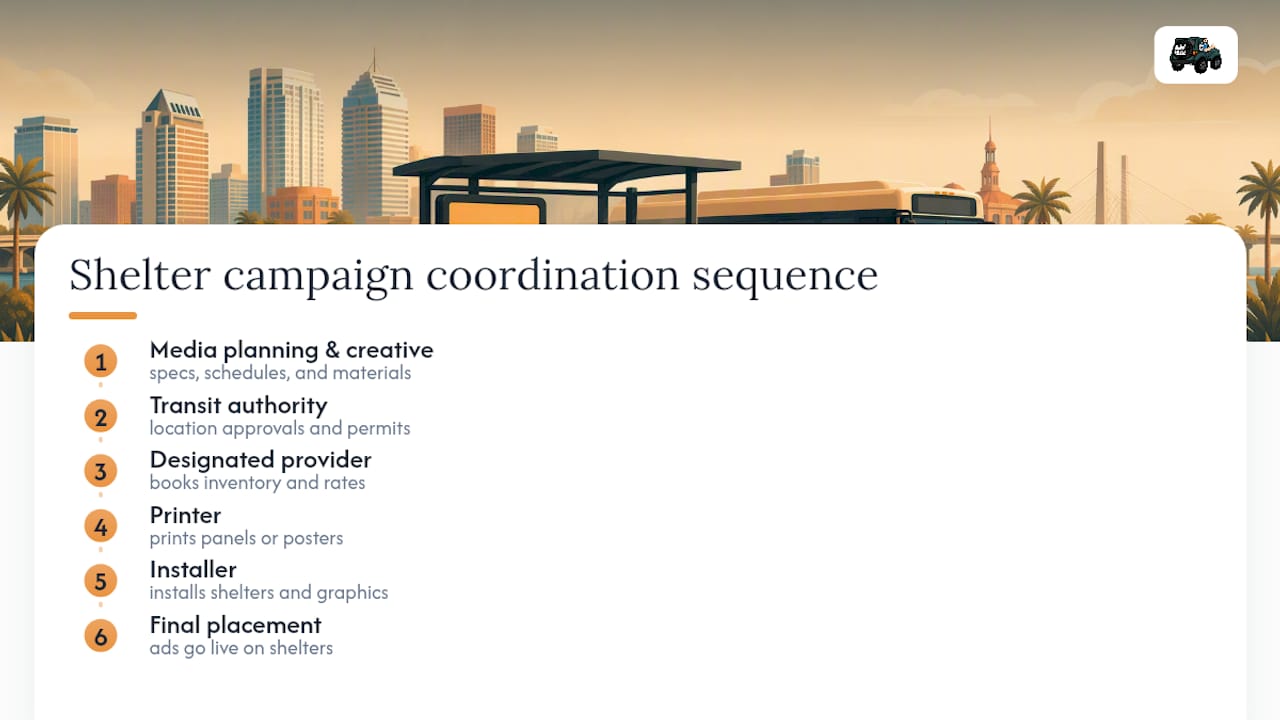
Experience working in the Tampa local market can help requests to providers and installers move faster and with fewer surprises on pricing. For a deeper look at how some planning processes work for other Tampa channels, see localized media planning that wins Tampa.
Is a Bus Shelter Ad Right for Your Tampa Business?
Shelter ads earn their keep when your goal is local awareness, an event push, or driving foot traffic to a nearby retail location. A quick check: do you have a fixed address people can walk to, and a message simple enough for a three-second glance? If not, a community magazine feature or a targeted digital push may serve you better than a shelter buy.
— Mike
Ready for a Tampa Transit-Shelter Estimate?
Some local media agencies can serve as a single point of contact to handle planning, creative, production, booking, and reporting for shelter campaigns, reducing the need to contact multiple vendors separately. 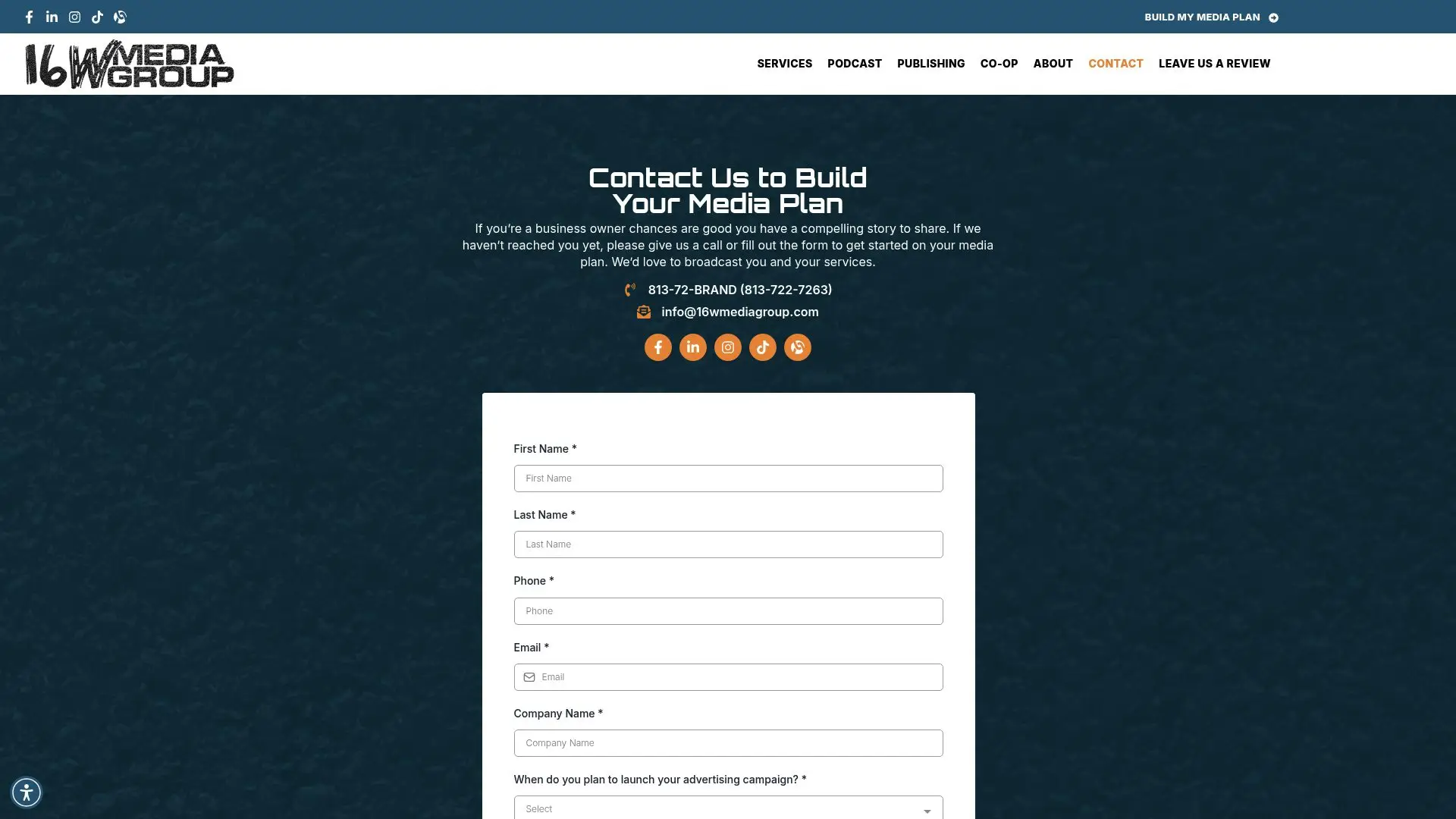
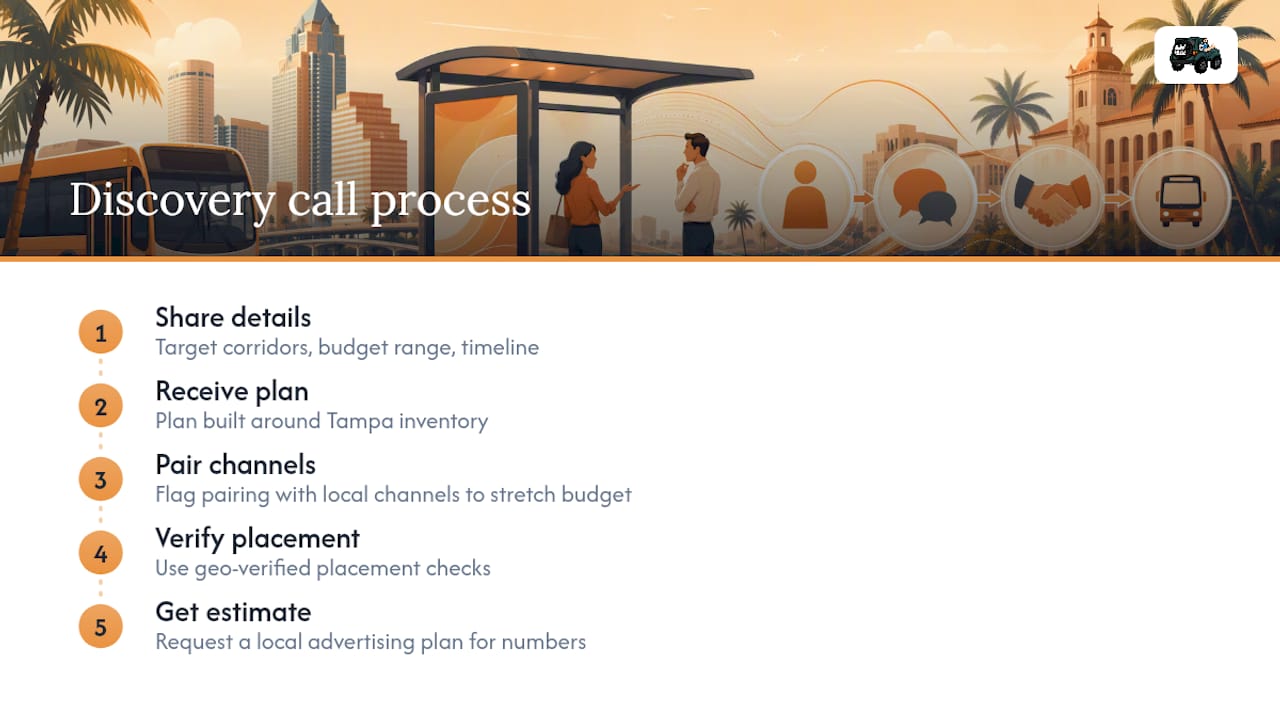
A discovery call starts simply: share your target corridors, budget range, and timeline to receive a plan built around Tampa inventory. We’ll also flag where pairing a shelter buy with another local channel, community publishing strategies, for instance, stretches your budget further. If you’re weighing options against national inventory-checking tools, note that geo-verified placement checks matter for regionally targeted buys. For numbers specific to your business, request a local advertising plan to build a Tampa shelter estimate.
Quick Links for Tampa Shelter Ad Buyers
Start with HART’s transit advertising page for provider contacts, or contact 16wmediagroup directly for a Tampa quote.
Sources
- Transit advertising — HART
- Transit advertising in Tampa, Florida | Local OOH
- How much does a bus stop ad cost? — MyTopInfo
FAQ
How Much Does It Cost to Advertise in a Bus Shelter in Tampa?
Static shelter posters in Tampa generally run roughly $300 to $1,100 per month depending on corridor and format, while digital or wrapped shelters can exceed $2,500 monthly in premium locations.
How Much Does It Cost to Put an Ad on a Tampa Bus?
Bus shelter advertising and bus exterior/interior advertising are priced and booked separately through HART’s designated provider, so an exact bus-ad rate requires its own quote request alongside your shelter pricing.
What Is the Cost of a Bus Shelter Itself, Versus the Ad Space?
The physical bus shelter structure is owned and maintained by the transit authority or its partner; what you’re paying for as an advertiser is the ad panel space inside or on that shelter, not the structure itself.
How Much Does a 30-Second Radio Ad Cost Per Month in Tampa?
Radio ad pricing follows a completely different model, tied to station reach, time slot, and spot frequency, so it isn’t directly comparable to shelter ad monthly rates; 16wmediagroup can build a combined media plan that prices both channels together.
Are There Minimum Spend Requirements for Tampa Shelter Campaigns?
Yes, many Tampa transit advertising programs require a minimum campaign length or spend before releasing premium corridor inventory, which is worth confirming when you request your rate card.