

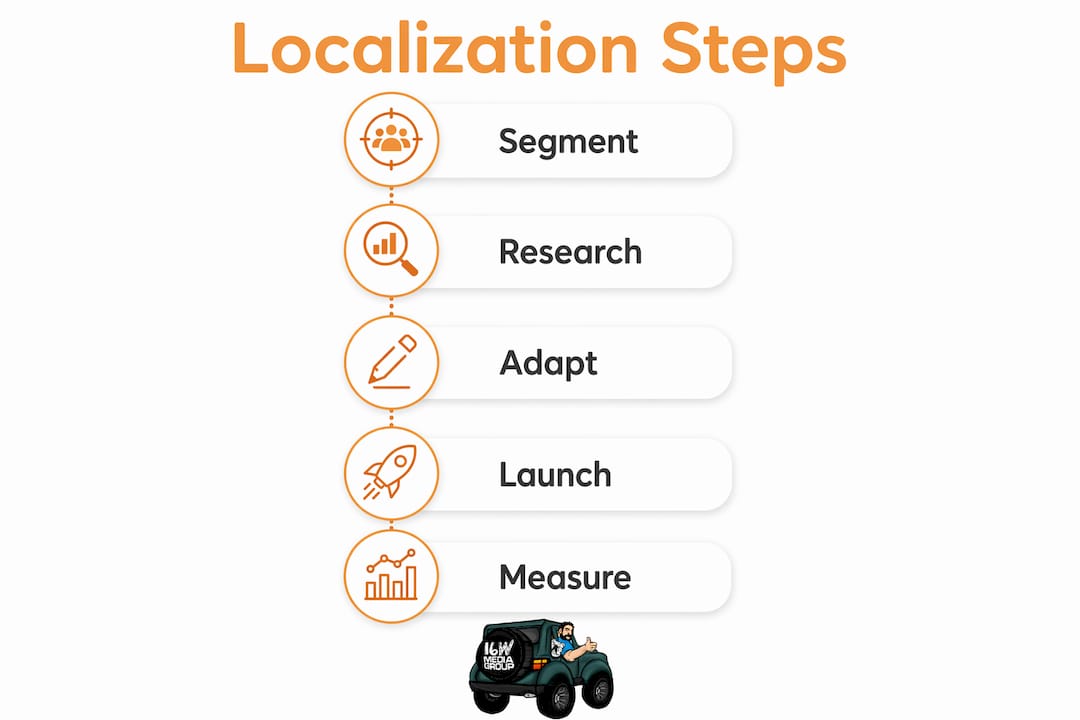
A localized marketing plan is a targeted approach that customizes your messaging, visuals, offers, and channels to match the preferences and behaviors of a specific regional audience. Businesses that get this right see real results. Localized campaigns drive up to 40% higher engagement and conversion rates compared to generic national campaigns. That gap exists because local audiences respond to content that feels made for them, not broadcast at them. This guide walks you through each step of building a regional marketing strategy, from audience segmentation to performance measurement, so you can connect with your community and grow your market presence.
How to create a localized marketing plan: start with audience segmentation
The foundation of any localized marketing plan is knowing exactly who you are targeting and where they are. Without this step, every other effort risks missing the mark.
Start with the data you already own. Your CRM, purchase history, and website analytics reveal geographic clusters of high-value customers. Filter by zip code, city, or metro area to identify where your best buyers are concentrated. Then layer in demographic data like age, income, and household size to build a clearer picture of each segment.

Prioritize segments based on two factors: revenue potential and cultural distance. Revenue potential tells you where to invest first. Cultural distance tells you how much adaptation work each market requires. A neighborhood with a large Spanish-speaking population, for example, needs different messaging than a suburb with a predominantly older, English-speaking demographic.
| Segment | Geography | Key Demographic | Cultural Priority | Revenue Potential |
|---|---|---|---|---|
| Young professionals | Urban core | Ages 25–34, renters | Digital-first, trend-aware | High |
| Family households | Suburban ring | Ages 35–50, homeowners | Value-driven, community-focused | High |
| Retirees | Coastal/golf communities | Ages 60+, fixed income | Trust-based, print-receptive | Medium |
| Hispanic community | Mixed urban/suburban | Bilingual, family-oriented | Language and cultural nuance | High |
Set clear criteria before you finalize your segments. Define the minimum audience size that justifies a separate campaign, the languages spoken, and the local behaviors that distinguish each group. This prevents you from spreading your budget across too many micro-markets at once.
Pro Tip: Use Google Analytics 4’s geographic reports alongside your CRM to cross-reference online behavior with actual purchase data. The overlap reveals your highest-priority local segments faster than either source alone.
What local research should you do before adapting your messaging?
Local intelligence gathering, including competitor review and social listening, must come before you write a single word of localized copy. Skipping this step is the most common reason localized campaigns feel generic or, worse, tone-deaf.
Run local surveys through tools like Google Forms or Typeform to ask customers directly about their preferences, pain points, and the language they use to describe your product category. Monitor local Facebook groups, neighborhood apps like Nextdoor, and regional hashtags on Instagram to hear how your community talks about problems you solve. This is social listening at the local level, and it costs nothing but time.
Build a cultural compliance checklist for each market. This checklist should cover:
- Local holidays and seasonal events that affect buying behavior
- Color and imagery associations specific to the community
- Regulatory requirements for advertising in your category (disclosures, language laws, etc.)
- Community sensitivities or topics to avoid in messaging
- Local competitors and how they position themselves
One concept that separates effective localization from amateur attempts is transcreation. Transcreation means rewriting content to preserve its emotional intent and cultural relevance, not just translating words. A tagline that lands perfectly in English may be awkward, offensive, or meaningless in another language or cultural context. Transcreation fixes that by rebuilding the message from the emotional core outward.
Pro Tip: Hire a local community member or regional freelancer to review your adapted content before launch. They will catch cultural missteps that no algorithm or translation tool will flag.
How do you adapt messaging, visuals, and channels for each market?
Adaptation is where your research pays off. The goal is to make each local audience feel that your brand belongs in their community, not that it parachuted in from a national headquarters.
For messaging, swap generic language for local idioms and references. A Tampa restaurant promoting its happy hour should reference local landmarks or neighborhood names, not generic “downtown vibes.” Adjust your calls to action to match local urgency cues. Communities with strong seasonal patterns, like beach towns or college towns, respond to time-sensitive offers tied to local events.
For visuals, use imagery that reflects the actual demographics and settings of each market. Stock photos of generic suburban families do not resonate in a densely urban neighborhood. Commission local photography or use geo-specific user-generated content when possible. Geo-targeted local SEO also requires location-specific pages with local keywords, maps, and customer reviews, so your visual and written content must work together.
Channel selection is equally critical. The right mix depends on your audience segment:
| Channel | Best for | Local adaptation needed |
|---|---|---|
| Community magazine | Older demographics, homeowners | Local editorial tone, neighborhood focus |
| Geofenced digital ads | Foot traffic, retail, restaurants | Radius targeting, peak-hour scheduling |
| Local podcast sponsorship | Professionals, commuters | Host-read ads with local context |
| Nextdoor/neighborhood apps | Suburban families | Hyper-local copy, community language |
| Local radio | Broad reach, commuters | Regional dialect, local references |
Geofencing campaigns within a 1–5 mile radius, targeting peak hours, maximize foot traffic impact for local stores. That precision makes geofencing one of the highest-return local marketing tactics available to small businesses. Pair it with a community magazine presence through 16wmediagroup to cover both digital and print audiences in the same market.
Balancing brand consistency with local flexibility is the hardest part of this step. Set a brand style guide that defines non-negotiable elements like logo usage, core brand colors, and tone of voice. Everything else, including headlines, imagery, offers, and channel mix, should be fair game for local adaptation.
Pro Tip: Read the local media buying guide from 16wmediagroup to understand when traditional media outperforms digital ads in specific local markets. The answer often surprises business owners who default to digital.
How do you launch and manage localized campaigns efficiently?
Execution is where most localized marketing plans break down. The workflow gets complicated fast when you are running separate campaigns for multiple markets at once.
Follow this sequence for every localized campaign launch:
- Brief creation. Write a market-specific brief that includes the audience segment, key message, cultural notes, approved channels, budget, and timeline.
- Content creation. Develop copy and visuals based on the brief, applying transcreation principles for any translated content.
- Local review. Route the content to a local reviewer, either a community member, regional team member, or agency partner with local expertise.
- Approval and compliance check. Confirm all regulatory requirements are met before final sign-off.
- Scheduling and launch. Use your marketing platform to schedule delivery by segment, channel, and time zone.
- Version control. Archive every approved asset with a version number and market label so you can reuse or update without confusion.
Fractional marketing teams, meaning part-time regional experts or agency partners, help you gain local cultural fluency without the cost of full-time regional hires. This model works especially well for businesses entering new markets or running seasonal campaigns in specific areas.
For automation, CRM platforms like HubSpot or Salesforce Marketing Cloud allow you to segment audiences by geography and trigger localized email sequences automatically. Pair these with a content management system that supports multi-market publishing to keep your workflow from becoming a manual bottleneck.
Set service-level agreements (SLAs) for each step in your workflow. Define how long local review takes, when approvals must be returned, and what happens if a deadline slips. Without SLAs, localized campaigns routinely miss launch windows tied to local events or seasonal peaks.
How do you measure localized marketing performance by region?
Measurement without a baseline is guesswork. Set a 30–90 day baseline of past performance data before launching any localized campaign, then compare it to the 30 days after launch to measure lift. This approach gives you a clean before-and-after comparison that isolates the impact of your localization efforts.
Track these metrics by region:
| Metric | What it measures | Tracking tool |
|---|---|---|
| Engagement rate | Content resonance by market | Social platform analytics |
| Conversion rate | Local offer effectiveness | CRM, Google Analytics 4 |
| Local SEO ranking | Organic visibility by location | Google Search Console |
| Foot traffic lift | In-store impact of digital campaigns | Point-of-sale data, geofencing reports |
| Customer satisfaction score | Post-purchase experience by region | Survey tools, review platforms |
Linking online efforts to offline results is the hardest measurement challenge in local marketing. Use unique promo codes, dedicated phone numbers, or QR codes in print and outdoor ads to track which offline channels drive in-store visits or calls. This bridges the gap between digital campaign data and real-world foot traffic.
Unstructured citations, such as mentions in local podcasts, community newspapers, and neighborhood blogs, boost local SEO and validate your community presence. Track these mentions using Google Alerts or a media monitoring tool. They signal to search engines that your business is genuinely embedded in the local community, which improves your organic rankings over time.
Pro Tip: Review your regional performance data monthly, not quarterly. Local markets shift quickly, and a 90-day review cycle means you miss opportunities to course-correct before a campaign runs its full budget on a message that stopped working.
Key Takeaways
A localized marketing plan succeeds when audience research, cultural adaptation, and regional measurement work together as a single system rather than separate tasks.
| Point | Details |
|---|---|
| Segment before you adapt | Use CRM and geographic data to identify high-priority local audiences before writing any copy. |
| Research precedes messaging | Gather local intelligence through surveys, social listening, and cultural checklists before adapting content. |
| Transcreation over translation | Rewrite content to preserve emotional intent, not just convert words from one language to another. |
| Match channels to the market | Choose media channels based on each segment’s actual media habits, not your personal preference. |
| Measure lift with a baseline | Set 30–90 days of pre-campaign data and compare it to post-launch performance to isolate real results. |
What most localized marketing guides get wrong
Most guides treat localization as a content problem. It is actually an intelligence problem. The businesses I have seen struggle most with local marketing are not the ones with bad creative. They are the ones who launched campaigns before they understood the market.
The single biggest mistake is skipping the local review step to save time. A campaign that offends a neighborhood or misreads a cultural moment does more damage than no campaign at all. I have watched businesses spend significant budgets on campaigns that local residents found tone-deaf, simply because no one on the team had actually talked to people in that community before launch.
Fractional marketing models solve this problem without requiring full-time regional hires. Bring in a local freelancer, a regional agency partner, or a community liaison for the review stage. The cost is minimal compared to the risk of a misstep.
The other thing I would push back on is the obsession with digital-only local marketing. Print and community media still carry enormous trust in many local markets, particularly with homeowners, retirees, and family-oriented demographics. Unstructured local citations in community publications and podcasts build the kind of credibility that a Facebook ad cannot replicate. A mention in a trusted local magazine or a host-read ad on a neighborhood podcast tells the community that a real person vouches for your brand. That signal matters more than most digital marketers admit.
The hyperlocal advertising tactics that work in competitive markets like Tampa prove this point. The brands that win locally are the ones that show up across multiple community touchpoints, not just in a single digital channel.
— Mike
How 16wmediagroup helps local businesses build a regional presence
Local businesses that want to move from a generic marketing approach to a genuine community presence need more than a checklist. They need media partners who understand the local market from the inside.
16wmediagroup builds localized advertising campaigns across traditional media, digital platforms, podcasts, and community publishing, all tailored to specific regional audiences. Their services are built for markets like Tampa, where standing out requires both digital precision and community credibility. Whether you need a full local advertising campaign plan or a media mix that reaches high-value consumers across multiple channels, 16wmediagroup provides the local expertise and media infrastructure to make it work. Reach out to their team to build a plan that fits your market and your goals.
FAQ
What is a localized marketing plan?
A localized marketing plan is a targeted strategy that adapts your messaging, visuals, offers, and channels to match the preferences and behaviors of a specific regional audience. It goes beyond translation to include cultural, behavioral, and channel-level customization.
How do localized campaigns improve conversion rates?
Localized campaigns drive up to 40% higher conversion rates compared to non-localized efforts because they align content with what local audiences already value and recognize. Relevance reduces friction in the buying decision.
What is transcreation and why does it matter?
Transcreation means rewriting content to preserve its emotional intent in a new cultural context, rather than translating it word for word. It prevents messaging from landing as awkward or meaningless in local markets with different cultural references.
How do you measure the success of a localized marketing campaign?
Set a 30–90 day performance baseline before launch, then compare engagement, conversion, and local SEO rankings in the 30 days after launch. Use unique promo codes or QR codes to connect digital campaigns to offline results like foot traffic.
How do small businesses afford localized marketing across multiple markets?
Fractional marketing teams give small businesses access to regional expertise without full-time hiring costs. Partnering with a local media agency like 16wmediagroup also provides built-in community relationships and media infrastructure across multiple channels.