

Choosing local media channels is the strategic process of identifying and selecting media outlets that best engage your community and amplify your brand. Get this right, and you build real visibility with the people most likely to buy from you. Get it wrong, and you spend money talking to the wrong audience on the wrong platform. This guide gives you a clear framework for selecting local media outlets, evaluating their credibility, and aligning your message for maximum community impact.
How to choose local media channels: the core factors
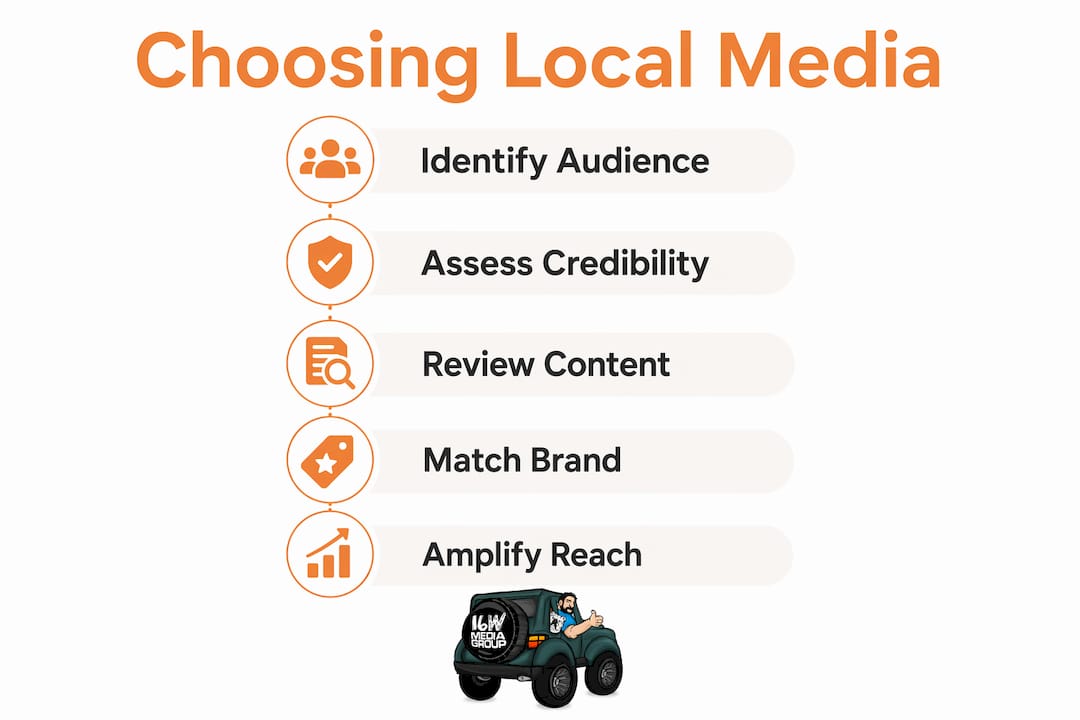
The most important factor in selecting local media channels is audience alignment. Before you pick a single outlet, you need to know who your customers are, where they consume media, and what type of content earns their attention. A restaurant targeting families in a specific zip code needs a different channel mix than a B2B service firm targeting local executives.
Once you know your audience, evaluate each potential outlet against these criteria:
- Audience demographics: Does the outlet reach your actual customers by age, income, location, and interest?
- Media type fit: Print, broadcast TV, radio, digital news, social media, podcasts, and niche trade publications each serve different consumption habits.
- Credibility and transparency: Trustworthy local outlets maintain clear bylines, factual citations, and a visible separation between news and opinion. Outlets that lack these markers are red flags.
- Outlet size vs. engagement: Bigger is not always better. Smaller hyperlocal publications often deliver more engaged, loyal readerships than large regional outlets.
- Campaign alignment: A brand awareness campaign suits broadcast TV or community magazines. A time-sensitive promotion fits social media or email newsletters.
- Editorial calendars: Pitching a story about summer services in january misses the window. Knowing when editors plan themed issues gives you a real advantage.
Watch out for “pink slime” sites. These are partisan-funded outlets disguised as local newspapers, with no transparent ownership and no clear bylines. Placing your brand alongside these outlets damages your credibility by association.
Pro Tip: Before committing to any outlet, read three to five recent issues or episodes. Ask yourself: would my best customer trust this source? If the answer is no, move on.
How do you build a strong local media list?
A media list is your working database of outlets, contacts, and scheduling information. Building one correctly saves you from wasted pitches and missed opportunities.
Follow these steps to build a list that actually works:
- Start with outlet categories. List every relevant media type in your market: local TV stations, AM/FM radio, community newspapers, regional lifestyle magazines, local news websites, neighborhood Facebook groups, and podcasts with a local focus.
- Add journalist beats. A comprehensive media list tracks not just the outlet but the specific reporters who cover business, food, community events, or whatever topic your brand touches. Pitching the right reporter doubles your chances of coverage.
- Record editorial calendars. Many print and digital outlets publish their editorial themes months in advance. Note these dates so your pitches arrive before editors finalize their content.
- Include audience and circulation data. For each outlet, record its estimated reach, primary demographic, and geographic coverage area. This data lets you rank outlets by fit, not just by name recognition.
- Update the list every quarter. Reporters change beats. Outlets launch and fold. A stale media list is worse than no list at all.
The table below shows how to structure your media list entries:
| Field | What to record |
|---|---|
| Outlet name | Full name and media type (print, digital, podcast) |
| Primary contact | Reporter name, beat, and email |
| Audience profile | Age range, income level, geographic focus |
| Editorial calendar | Key themed issues or content windows |
| Reach/circulation | Estimated monthly readers, listeners, or viewers |
Pro Tip: Use Google Alerts set to your city name plus your industry to find journalists already covering your topic. Those reporters are your warmest contacts.
What role does digital and social media play in local channel selection?
Digital media is no longer a supplement to traditional local advertising. It is the primary channel for reaching younger audiences and driving real-time community engagement. The shift requires a specific mindset change.

Most businesses make one critical mistake: they treat social media as a funnel to drive traffic back to their website. Social platforms should be treated as standalone publishing environments with content built specifically for each format. A short video made for Instagram Reels performs differently than a link post pointing to a blog article. Tailoring content to the platform is not optional. It is the difference between being seen and being ignored.
The numbers behind local social media engagement are striking. 94% of viewers who watch local news videos on social media take further action, such as searching for more information. That means social content is not just a brand impression. It is an entry point to deeper research and purchase consideration.
Engagement goes further than views. Among local news social media viewers, 87% like or share content, 81% watch longer versions, and 78% tune into full broadcasts. These behaviors show that strong social content pulls audiences toward your brand across multiple touchpoints.
“Local should be considered a method of producing content that delivers urgency, connection, and trust rather than just a geographic label.” This framing changes how you select media partners. You are not just looking for outlets in your city. You are looking for outlets that create the feeling of community.
Key digital channel options to evaluate for local media strategies include:
- Local news websites and apps: High trust, strong SEO presence, and loyal daily readers.
- Podcasts with a local focus: Podcast engagement strategies show that niche audio content builds deep listener loyalty, making podcasts a strong fit for service-based local businesses.
- Social media platforms: Facebook and Instagram dominate local community groups and event promotion. YouTube works well for longer educational content.
- Email newsletters: Hyper-local newsletters have seen strong growth and deliver high open rates compared to national publications.
For a deeper look at digital media for local businesses, the 2026 guide from 16wmediagroup covers platform-specific tactics in detail.
How to align your brand message with the right local channels
Selecting the right outlets is only half the work. The other half is tailoring your message so it fits each outlet’s audience and format. A pitch that works for a community lifestyle magazine will fall flat on a local news broadcast.
Follow this process to align your message with your chosen channels:
- Match your story angle to the outlet’s audience. Industry-specific and regional lifestyle outlets deliver higher impact than chasing the largest outlet in your market. A local parenting magazine wants a story about family benefits. A business journal wants ROI and growth metrics.
- Time your pitches to editorial calendars. Seasonal content windows are predictable. A home services company should pitch spring renovation stories in january or february, not april when editors have already finalized their content.
- Choose the right content format. Broadcast TV needs strong visuals and a short narrative arc. Podcasts need conversational depth. Print needs a clear headline angle and a quotable spokesperson.
- Build relationships, not one-off pitches. Reporters remember sources who give them accurate, timely, and relevant information. Becoming a reliable local expert in your field earns repeat coverage without additional outreach costs.
- Avoid pitching irrelevant stories. Sending a food story to a business reporter wastes your time and burns a relationship. Always check a reporter’s recent work before reaching out.
Local advertising best practices from 16wmediagroup reinforce one consistent finding: businesses that treat each outlet as a distinct audience, rather than a generic distribution point, earn more coverage and stronger community recognition.
Pro Tip: When you land coverage, share it across your own channels immediately. Amplifying earned media extends its reach and signals to other outlets that your brand is newsworthy.
Local news consumers report nearly three-quarters higher trust in traditional local news outlets compared to generic social media sources. That trust transfers to the brands those outlets feature. Placing your business in a credible local outlet is not just advertising. It is a credibility endorsement.
Key Takeaways
Choosing the right local media channels requires audience alignment, outlet credibility, and message tailoring across every channel you select.
| Point | Details |
|---|---|
| Audience alignment comes first | Match outlets to your customers’ demographics and media habits before anything else. |
| Credibility signals matter | Choose outlets with clear bylines, transparent ownership, and fact-based reporting. |
| Small outlets often outperform large ones | Hyperlocal publications deliver more engaged readers than broad regional outlets. |
| Digital content needs platform-specific formats | Build social content for each platform natively, not as repurposed traditional media. |
| Message tailoring drives results | Match your story angle, format, and timing to each outlet’s audience and editorial calendar. |
What I’ve learned about local media selection that most guides skip
Most advice on selecting local media channels focuses on reach numbers and ad rates. That is the wrong starting point. After working with local businesses across competitive markets, the clearest pattern is this: the businesses that win in local media are the ones that think like journalists, not advertisers.
Journalists ask, “Why does this matter to my reader right now?” Advertisers ask, “Where can I place my message?” Those are fundamentally different questions, and they lead to fundamentally different results. When a local business owner pitches a story that genuinely serves a community need, editors respond. When they send a thinly veiled ad, it goes straight to the trash.
The second thing most guides miss is the value of trust compounding. Local news consumers trust traditional local outlets at a significantly higher rate than generic social media. That trust does not just apply to the news. It applies to the brands those outlets feature. One well-placed story in a credible community publication can do more for your brand than months of social media posting.
The third insight is about patience. Building real media relationships takes time. The businesses I have seen get the most consistent local coverage are the ones who show up repeatedly with relevant, timely, and accurate information. They become the go-to source in their category. That status is worth far more than any single ad placement.
Finally, do not ignore the smaller outlets. A neighborhood newsletter with 3,000 highly engaged subscribers will often outperform a regional publication with 50,000 passive readers. Engagement beats reach every time.
— Mike
How 16wmediagroup helps you select and use local media channels
Building a local media strategy from scratch takes time, research, and relationships that most business owners do not have on day one.
16wmediagroup specializes in exactly this work. The team builds personalized media plans that match your brand to the right mix of traditional outlets, digital platforms, podcasts, and community publications. Whether you need help identifying credible local outlets, building a media list, or creating content tailored to each channel, 16wmediagroup provides the structure and expertise to move fast. Businesses in competitive markets like Tampa have used these local media services to build consistent community visibility and attract high-value customers. Contact 16wmediagroup to start building your local media plan today.
FAQ
What is the most important factor when selecting local media outlets?
Audience alignment is the most important factor. The outlet must reach your actual customers by age, location, income, and interest before any other consideration matters.
How do I know if a local media outlet is credible?
Credible outlets maintain transparent ownership, clear bylines, factual citations, and a visible separation between news and opinion. Outlets missing these markers are not reliable media partners.
Should local businesses focus on digital or traditional media channels?
The strongest local media strategies use both. Traditional outlets like community newspapers and local TV carry high trust, while digital platforms and social media drive real-time engagement and reach younger audiences.
How often should I update my local media list?
Update your media list every quarter. Reporters change beats, outlets launch and close, and editorial calendars shift, so a current list is the foundation of effective media outreach.
What makes hyperlocal outlets worth targeting?
Hyperlocal publications often deliver more engaged and loyal readerships than large regional outlets. A smaller audience that trusts the source and acts on its content is more valuable than a passive large audience.