
The brand loyalty building process is a deliberate, phased approach that converts first-time buyers into repeat customers and, eventually, into vocal advocates for your brand. Industry metrics like Customer Lifetime Value (LTV) and Net Revenue Retention (NRR) are the clearest signals of whether your loyalty efforts are working. Brands that get this right do not compete on price alone. They build emotional connections, communicate with transparency, and design experiences that make customers want to return. This guide breaks down each phase, the tactics that work, and the metrics that tell you the truth.
What are the key phases in the brand loyalty building process?
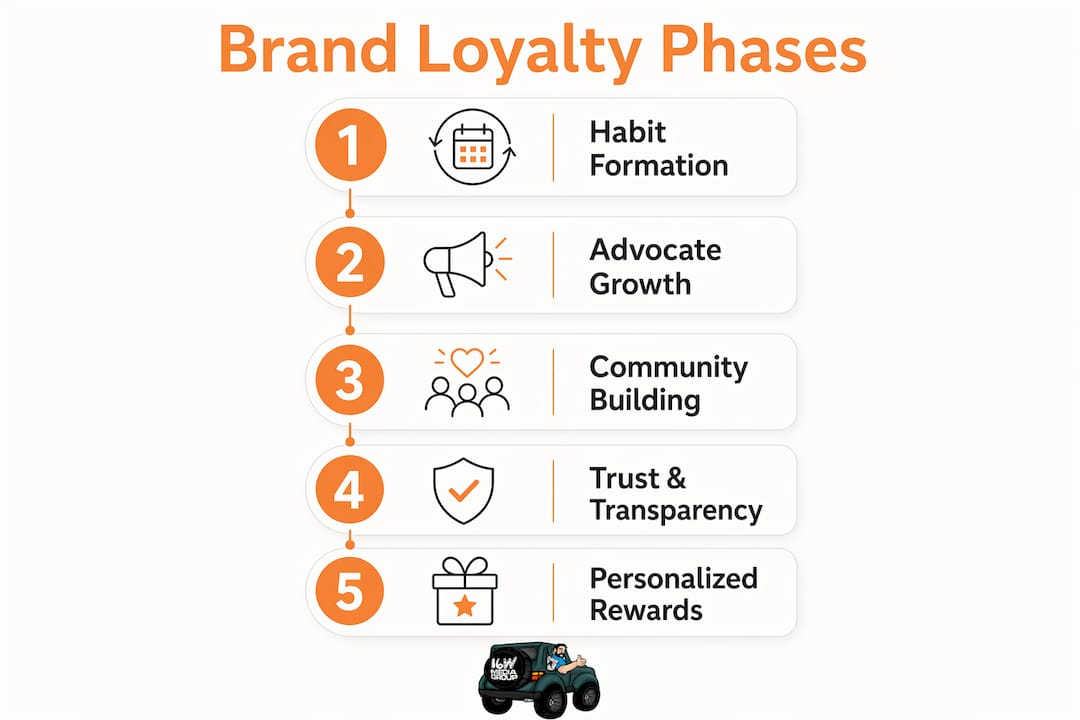
Customer loyalty does not happen after one good experience. It builds in stages, and each stage requires a different approach.

Phase 1: Months 0–3, building the first habit
The first 90 days after a purchase are the most critical window for retention. Your goal is simple: get the customer to buy again. The loyalty phases framework identifies this period as the habit formation stage, where post-purchase communication does the heaviest lifting. Transactional emails, such as order confirmations, shipping updates, and follow-up check-ins, consistently outperform promotional blasts in open rates and trust signals. Starting with optimized post-purchase flows is one of the most cost-effective moves a brand can make early on.
Practical tactics for months 0–3:
- Send a personalized thank-you email within 24 hours of purchase
- Include a product use guide or tip that adds immediate value
- Offer a time-sensitive incentive for the second purchase
- Ask for feedback with a short, one-question survey
Pro Tip: Do not wait until a customer is about to churn to engage them. The first post-purchase email sets the tone for the entire relationship. Make it feel personal, not automated.
Phase 2: Months 6–12, turning customers into advocates
Customers who have purchased two or three times are entering advocate territory. LTV climbs during this window, and word-of-mouth referrals start to appear. The goal shifts from habit formation to deepening emotional connection. Referral programs, exclusive early access, and personalized product recommendations all perform well here. Brands that connect customers to communities during this phase see stronger retention than those relying on discounts alone.
Phase 3: Month 12 and beyond, building a community
At the 12-month mark, your most loyal customers stop thinking of themselves as buyers. They identify with your brand. This is where community formation happens, and it is the most durable form of loyalty because it resists competitor offers. Customers at this stage refer others, defend the brand publicly, and provide the most useful product feedback. Brands that reach this phase have typically invested in consistent communication, transparent storytelling, and reward structures that feel meaningful rather than mechanical.
How to build transparency and emotional connection to earn brand trust
Transparency is not a soft concept. It is a measurable driver of loyalty. 96% of consumers cite transparency as essential to earning their loyalty. That number signals that customers are actively evaluating whether they trust you before they commit to repeat purchases.
Transparency in practice means showing the origin of your product, explaining your pricing decisions, and owning your mistakes publicly when they happen. A brand story that reveals why the company was founded, what problem it solves, and who built it creates a connection that a discount never can. Consistent, authentic publishing across channels reinforces that story over time.
Key behaviors that build trust:
- Respond to customer complaints publicly and within 24 hours
- Share behind-the-scenes content that shows how products are made or sourced
- Publish clear return and refund policies without buried conditions
- Use customer feedback visibly, and tell customers when their input changed something
Pro Tip: Podcasts are one of the most underused trust-building channels for local brands. A short, honest conversation about your brand’s origin or values does more for loyalty than a polished ad. Podcasts drive engagement and trust in ways that traditional media rarely matches.
Customer feedback loops matter as much as the initial story. Brands that gather feedback and respond to it visibly signal that they listen. That signal builds the kind of trust that sustains loyalty through price increases, product changes, and competitive pressure.
What role do personalized loyalty programs play in sustaining loyalty?
Loyalty programs are not discount engines. The brands that treat them as such train customers to wait for sales, which decreases lifetime value over time. The brands that win treat loyalty programs as data and engagement assets that inform pricing, marketing, and product development.
65.9% of customers use loyalty programs daily. That frequency means your program is a daily touchpoint with your most valuable customers. Every interaction is a data point and a chance to deepen the relationship.
One of the most common program failures is reward forgetting. 40% of consumers sometimes forget to redeem their rewards. That forgotten reward is a missed engagement opportunity. Automatic redemption reminders, clear expiration notices, and one-click redemption flows all reduce this problem significantly.
Visual progress tracking increases repeat purchase likelihood more than generic point balances. Showing a customer that they are “two purchases away from Gold status” creates a concrete goal. That goal drives behavior in a way that a points total never does.
| Feature category | What it does | Why it matters |
|---|---|---|
| Tiered status levels | Segments customers by engagement depth | Creates aspiration and rewards your best customers |
| Referral rewards | Incentivizes word-of-mouth sharing | Reduces acquisition cost while deepening loyalty |
| Visual progress indicators | Shows customers how close they are to the next reward | Drives repeat purchases through goal completion |
| Automatic redemption reminders | Alerts customers before rewards expire | Reduces reward forgetting and increases program engagement |
| Experiential rewards | Offers access, events, or exclusive content | Builds emotional connection beyond transactional value |
Pro Tip: Design your loyalty program so that the best rewards are experiences, not discounts. Early product access, exclusive events, or a personal thank-you from your team create memories. Discounts create habits of waiting.
Referral systems within loyalty programs deserve special attention. A customer who refers a friend has made a public endorsement. That act deepens their own commitment to the brand while bringing in a new customer who arrives with built-in trust. Referral rewards should feel generous enough to motivate action but not so transactional that they feel like a cash-for-referral scheme.
How to measure and optimize the brand loyalty building process effectively
Measurement is where most loyalty programs fall apart. Brands track points issued and redemptions made, but miss the metrics that actually predict long-term revenue health.
The three metrics that matter most are:
-
Net Revenue Retention (NRR): NRR measures the revenue retained from existing customers after accounting for churn, downgrades, and expansions. NRR is the most effective loyalty metric for revenue teams focused on sustainable growth. A rising NRR means your existing customers are spending more over time. A falling NRR means loyalty is eroding, even if acquisition numbers look healthy.
-
Customer Lifetime Value (LTV): LTV tells you the total revenue a customer generates across their relationship with your brand. Track LTV by cohort, meaning group customers by the month they first purchased. Cohort-level LTV reveals which acquisition channels and onboarding experiences produce the most loyal customers.
-
Retention rate by phase: Measure retention separately for the 0–3 month, 6–12 month, and 12-plus month segments. Each phase has different drop-off risks. Knowing where customers leave tells you exactly where to intervene.
64% of shoppers now ignore brand names during purchase decisions. That figure shows how fragile traditional loyalty assumptions are. Brands that rely on name recognition alone without active retention programs are losing customers they believe are loyal.
Optimization follows measurement. Once you know where customers drop off, you can test specific interventions. A customer who stops engaging after month two might respond to a personalized check-in email. A customer approaching the 12-month mark might be activated by an invitation to an exclusive event or community group. Post-purchase communication sequences should be reviewed quarterly and updated based on open rates, click rates, and repurchase data. Media strategies for local brand growth can also be calibrated using the same retention data to reach the right customers at the right phase.
Key Takeaways
The brand loyalty building process requires a phased approach, transparent communication, and loyalty programs designed for emotional engagement rather than transactional rewards.
| Point | Details |
|---|---|
| Phases drive strategy | Tailor your tactics to the 0–3, 6–12, and 12-plus month loyalty stages for maximum impact. |
| Transparency builds trust | 96% of consumers cite transparency as essential to loyalty, making authentic communication non-negotiable. |
| Programs need emotional design | Avoid training customers to wait for discounts; use tiered rewards and experiential incentives instead. |
| NRR is the core metric | Net Revenue Retention reveals whether loyalty efforts are producing sustainable revenue growth. |
| Measure by cohort | Track LTV and retention by customer cohort to identify where loyalty breaks down and why. |
What I have learned about loyalty that most guides get wrong
After working with local brands across competitive markets, the pattern I see most often is this: businesses invest in acquiring customers and then assume loyalty will follow naturally. It does not. Loyalty is built deliberately, and it starts the moment after the first purchase, not months later when a customer is already drifting.
The shift from transactional loyalty to emotional loyalty is real, and it is accelerating. Customers in 2026 have more options than ever and less patience for brands that treat them as revenue units. What actually works is showing up consistently, communicating honestly, and making customers feel like they are part of something worth belonging to.
The most common mistake I see in loyalty program design is complexity. Programs with too many tiers, too many rules, and too many expiration dates create friction instead of engagement. The best programs I have seen are almost embarrassingly simple. They reward the behaviors that matter, they show progress clearly, and they make redemption feel effortless.
Post-purchase touchpoints are still the most underused opportunity in loyalty building. A well-written follow-up email sent 48 hours after delivery, asking how the product is working and offering a relevant tip, does more for long-term retention than most paid campaigns. Brands that connect authentically through media at every stage of the customer relationship build the kind of loyalty that holds even when a competitor offers a lower price.
Loyalty is a long-term investment. The brands that treat it as one consistently outperform those chasing short-term acquisition numbers.
— Mike
How 16wmediagroup helps brands build lasting customer loyalty
Building loyalty requires consistent, credible presence across the channels your customers actually use. 16wmediagroup specializes in exactly that, helping local businesses in competitive markets like Tampa create media strategies that build trust, deepen community ties, and keep customers coming back.
From community magazines and podcasts to targeted regional ad campaigns, 16wmediagroup designs media plans that put your brand in front of high-value customers at every phase of the loyalty journey. Their local advertising best practices approach ensures your message reaches the right audience with the right tone at the right time. If you are ready to build a loyalty strategy grounded in real community connection, explore 16wmediagroup’s services or reach out directly to start a conversation.
FAQ
What is the brand loyalty building process?
The brand loyalty building process is a phased approach to converting first-time buyers into repeat customers and brand advocates through transparent communication, personalized engagement, and well-designed loyalty programs.
How long does it take to build brand loyalty?
Brand loyalty develops in stages: initial habits form in the first 0–3 months, advocates emerge between 6–12 months, and a loyal community typically forms after 12 months of consistent engagement.
What metrics measure brand loyalty most accurately?
Net Revenue Retention (NRR) and Customer Lifetime Value (LTV) are the most reliable loyalty metrics. NRR shows whether existing customers are generating more revenue over time, while LTV reveals the total value of each customer relationship.
Why do loyalty programs fail?
Loyalty programs most often fail because they focus on discounts rather than emotional connection. Programs that train customers to wait for sales decrease lifetime value, while programs with complex rules create friction that reduces engagement.
How does transparency affect customer loyalty?
Transparency directly drives loyalty. 96% of consumers identify transparency as essential to earning their trust, making honest brand communication one of the highest-return investments a business can make.