


Media outreach is defined as the targeted, relationship-driven process of pitching journalists, editors, and influencers to earn authentic coverage for your brand. Unlike paid advertising, it produces third-party credibility that money alone cannot buy. For marketing professionals and business owners focused on local visibility, understanding what is media outreach means understanding how earned media works, why personalization drives results, and how systematic relationship building separates brands that get covered from those that get ignored.
What is media outreach and why does it matter?
Media outreach is the deliberate act of contacting media professionals with a story worth publishing. The goal is earned media: coverage that appears because a journalist found your story genuinely newsworthy, not because you paid for placement. Earned media acts as an impartial stamp of approval that paid advertising simply cannot replicate. That distinction matters enormously for brand trust, especially at the local level where community credibility drives purchasing decisions.
The importance of media outreach goes beyond a single article or mention. Each piece of earned coverage builds a public record of your brand’s authority. A local business featured in a regional magazine or community podcast carries a level of trust that a display ad never will. For businesses in competitive markets like Tampa, that trust is the difference between being recognized and being overlooked.

Media outreach also compounds over time. Journalists who cover your story once are far more likely to return to you as a source. That is why systematic relationship building is the foundation of any outreach effort that produces consistent results.
How does media outreach differ from media relations and advertising?
The terms media outreach and media relations are often used interchangeably, but they describe different activities with different time horizons.
Media outreach is tactical pitching tied to specific campaigns or news moments. Media relations is the long-term cultivation of trust with journalists and editors over months and years. Outreach is what you do when you have a story to place. Relations is what you build so journalists already know your name when that story arrives.
Paid advertising sits in a separate category entirely. Here is how the three approaches compare:
- Media outreach targets specific journalists with a timely pitch and aims for immediate story placement. Success depends on relevance, timing, and personalization.
- Media relations focuses on sustained contact, sharing useful information even when you have nothing to pitch, and positioning your brand as a reliable source over time.
- Paid advertising guarantees placement but carries no third-party endorsement. Readers know it is an ad. Paid ads do not replicate the trust that earned coverage generates.
Each approach fits a different need. A product launch calls for outreach. A long-term brand reputation strategy calls for relations. Driving immediate traffic to a promotion calls for advertising. The most effective marketing programs use all three, but media outreach is where many local businesses underinvest despite its outsized credibility payoff.
What are effective media outreach techniques for 2026?
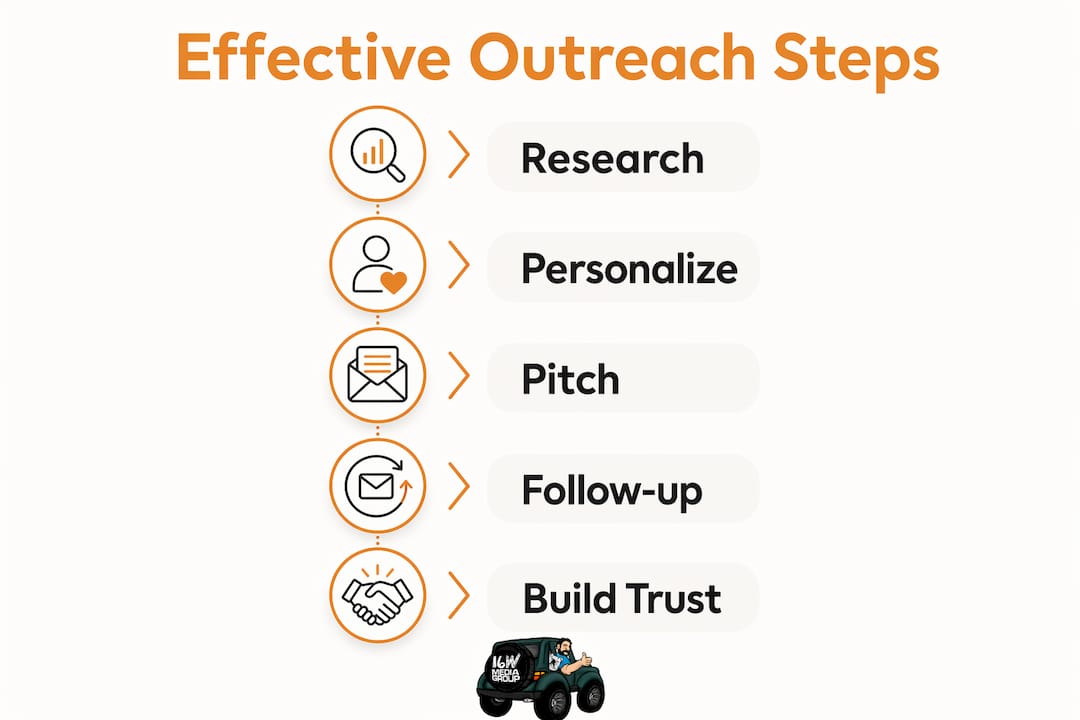
Pitch personalization is the single most important factor in whether a journalist opens your email or deletes it. 86% of reporters reject pitches that are irrelevant to their beat, and 49% say a unique story angle is required before they will consider coverage. Those numbers define the standard your pitch must clear before it even gets read.
Personalization starts with research. Read the journalist’s last five articles. Understand their audience. Know what topics they have already covered so you do not pitch a story they published two months ago. When your pitch references their specific work, it signals that you respect their time and understand their beat.
The mechanics of the pitch itself also matter. Personalized outreach boosts open rates by up to 50%, with optimal subject lines running 61–70 characters and email bodies staying within 200–300 words. Those are not arbitrary numbers. They reflect how journalists actually read their inboxes: quickly, on mobile, with limited patience for long-winded pitches.
Apply these techniques consistently:
- Write a specific subject line. Vague lines like “Story Idea” get deleted. Specific lines like “[Pitch:] Tampa Restaurant Cuts Food Waste by 30% with Local Sourcing” get opened. Bracketed prefixes like [Pitch:] also help your email clear spam filters.
- Lead with the story, not your brand. Open with the news angle, not a company introduction. Journalists cover stories, not press releases.
- Include one data point or proof element. A statistic, a case study result, or a named source gives the journalist something concrete to work with.
- Keep the ask clear. Tell the journalist exactly what you want: an interview, a product review, a feature mention. Ambiguous pitches produce no response.
Pro Tip: Before you write a single word of your pitch, find the journalist’s three most recent articles and identify the audience they write for. Your pitch should answer one question: why does this story serve their readers?
How to build and manage a targeted media list for outreach
A targeted media list is the foundation of any outreach campaign that produces results. The quality of your list matters far more than its size. Highly segmented lists produce better engagement because pitch personalization and list size move in opposite directions. The larger the list, the shallower the personalization. The more focused the list, the stronger each individual pitch.
Build your list with this process:
- Identify publications your audience actually reads. For local businesses, this means regional newspapers, community magazines, neighborhood blogs, and local podcasts. Start with the outlets your customers mention or share.
- Find the right contact within each outlet. A pitch sent to a general inbox rarely reaches the right person. Identify the specific editor or reporter who covers your topic area. Check bylines, LinkedIn profiles, and publication mastheads.
- Research each contact’s recent work. Read their last month of published articles. Note recurring themes, preferred story formats, and any stated preferences about pitches. Many journalists post pitch guidelines on Twitter or their personal sites.
- Segment your list by beat and publication type. Group contacts by topic area (food, business, community, lifestyle) and by outlet type (print, digital, broadcast, podcast). This lets you customize pitch angles for each segment without starting from scratch every time.
- Keep the list current. Journalists change beats and outlets frequently. A list that is six months old may have a third of its contacts in the wrong role. Set a quarterly review to verify each contact is still at the same outlet and covering the same topics.
For local businesses, a focused list of 20–30 well-researched contacts outperforms a generic list of 200. Surgical targeting produces better engagement than mass email campaigns every time. Tools like media databases can help you find contacts, but the research behind each entry must be done by a human who has actually read the journalist’s work.
What is the professional cadence for following up post-pitch?
Most pitches do not receive a response on the first send. That is not rejection. It is the reality of a journalist’s inbox. Editors receive 250–600 unsolicited pitches weekly and filter them in seconds based on sender recognition, subject line, and the first sentence of the body. A follow-up sent at the right time with the right content can move your pitch from the bottom of the pile to a reply.
The standard professional cadence is two follow-up emails spaced approximately one week apart, stopping after the third total contact attempt. For time-sensitive news, compress that timeline. For evergreen stories, you can extend it slightly. After three attempts with no response, consider the contact cold and move on.
The content of your follow-up matters as much as the timing. Adding incremental news or a clearer angle in follow-ups is far more effective than a simple “just checking in” reminder. Give the journalist a reason to reconsider. A new data point, a related development, or a fresh angle on the original story all qualify. A bare reminder adds no value and risks being marked as spam.
Relationship building extends beyond active pitching. Send a journalist a note when their article resonates with you. Share their work on your channels. Offer yourself as a source for future stories even when you have nothing to pitch. These small gestures build the familiarity that makes your next pitch land in a different category than the 599 others in that editor’s inbox.
Pro Tip: When writing a follow-up, paste your original subject line and add “Following up:” at the start. Then open the body with one new piece of information. This signals respect for their time and gives them a concrete reason to reconsider.
You can find a detailed media planning checklist that covers follow-up timing and outreach cadence for local advertising campaigns.
Key takeaways
Effective media outreach requires personalized pitches, a focused contact list, and consistent relationship building to earn credible coverage that paid advertising cannot replicate.
| Point | Details |
|---|---|
| Define the goal clearly | Media outreach earns third-party coverage; it is not advertising and should not be treated as one. |
| Personalize every pitch | 86% of reporters reject irrelevant pitches; research each journalist’s beat before writing a single word. |
| Keep your list focused | A targeted list of 20–30 contacts outperforms a generic list of hundreds every time. |
| Follow up with new value | Add a fresh angle or data point in each follow-up; never send a bare reminder. |
| Build relationships between pitches | Consistent, low-pressure contact between campaigns makes your next pitch land with a known sender. |
What most marketers get wrong about media outreach
The biggest mistake I see marketing professionals and business owners make is treating media outreach like a broadcast channel. They build a list of 500 journalists, send the same pitch to all of them, and wonder why the response rate is near zero. That approach misunderstands what outreach actually is.
Journalists are not a distribution network. They are professionals with specific audiences, editorial standards, and limited time. Success depends on prioritizing the journalist’s audience interests over your brand’s messaging. The moment your pitch reads like a press release written for your CEO rather than a story idea written for a reporter’s readers, it is done.
The inbox problem is also worse than most people realize. An editor receiving 400 pitches a week has developed a fast, almost unconscious filtering system. Sender domain recognition matters. Subject line specificity matters. The first sentence of the body matters. If any of those three elements fail, the pitch is gone before it is read. I have seen well-crafted pitches fail simply because they came from a free email domain or had a subject line that started with the company name.
What actually works in 2026 is patience combined with precision. A list of 25 journalists you have genuinely researched, pitched with a story that serves their specific audience, and followed up with new information will outperform any mass campaign. The media exposure strategies that produce lasting results are built on this principle: fewer contacts, deeper relationships, better stories.
The brands that earn consistent coverage are not the ones with the biggest budgets. They are the ones that show up with relevant stories, respect the journalist’s time, and treat every interaction as the beginning of a long-term professional relationship.
— Mike
How 16wmediagroup supports your local media outreach
Local businesses in competitive markets need more than a pitch template. They need a media strategy built around their specific community, audience, and goals.
16wmediagroup works with local businesses to develop personalized media plans that combine earned media outreach with traditional advertising, digital campaigns, and community-focused publishing. The team understands the Tampa market and the media contacts that reach high-value local consumers. Whether you need help building a targeted media list, crafting pitches that get opened, or planning a full local advertising campaign, 16wmediagroup offers the expertise to move your brand from invisible to covered. Reach out for a consultation and get a media plan built for your market.
FAQ
What does media outreach involve?
Media outreach involves researching journalists, crafting personalized pitches, and following up to earn editorial coverage. It focuses on building relationships with media professionals rather than purchasing ad placements.
How long should a media pitch email be?
A media pitch email should be 200–300 words with a subject line of 61–70 characters. Shorter, specific pitches consistently outperform long, detailed ones because journalists scan quickly.
How many follow-up emails should you send after a pitch?
Send two follow-up emails spaced approximately one week apart, stopping after the third total contact attempt. Each follow-up should include a new angle or data point, not just a reminder.
Why is earned media more valuable than paid advertising?
Earned media carries third-party credibility because a journalist or editor independently chose to cover the story. Paid advertising is recognized as promotional content and does not carry the same level of reader trust.
How do you build a media list for local outreach?
Identify publications your local audience reads, find the specific reporter or editor covering your topic, research their recent work, and segment contacts by beat and outlet type. A focused list of 20–30 well-researched contacts outperforms a generic list of hundreds.