
If Buzzsprout’s upload-hour caps are slowing you down, here are the best alternatives matched to your actual goal:
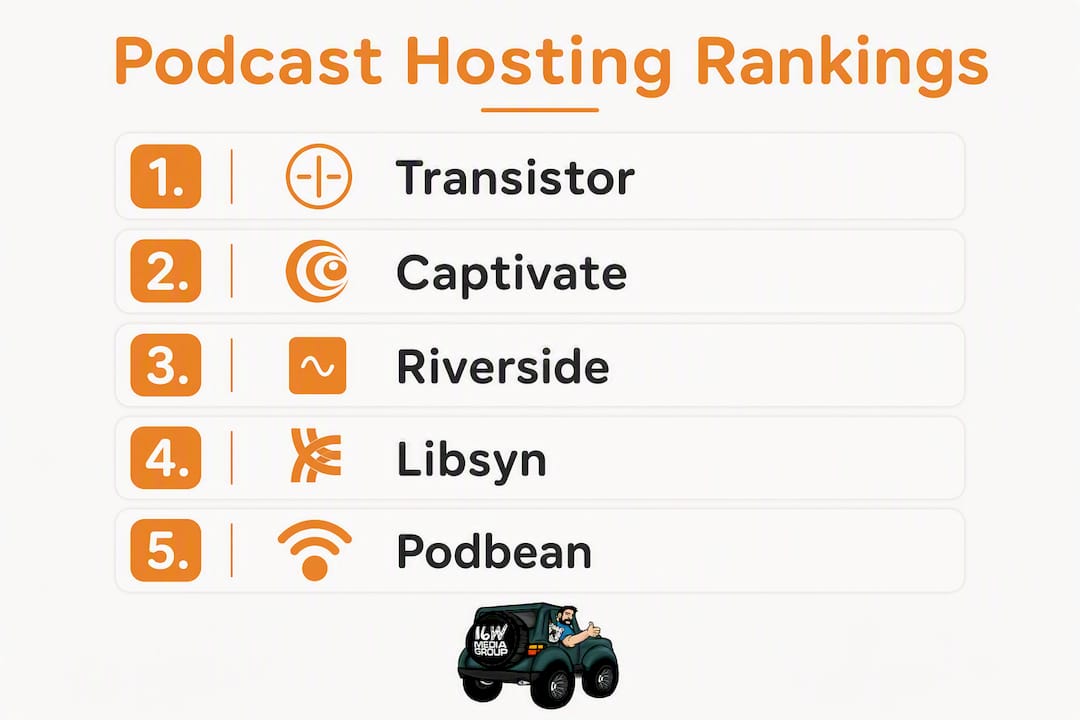
- Unlimited storage on a budget: Podbean or Spotify for Creators (Anchor)
- Growth analytics and sponsorships: Captivate or Transistor
- Multi-show team management: Transistor or Libsyn
- All-in-one video and audio production: Riverside
- Private or members-only feeds: Hello Audio
- Established distribution and monetization: Libsyn, Acast, or Simplecast
Buzzsprout has helped a large number of podcasters launch since 2009, and its beginner-friendly setup is genuinely good. But its hour-based pricing model creates a real ceiling: long-form shows and daily publishers outgrow lower tiers fast. When you hit that ceiling, the right move depends on what you need next, not just what costs less.
Three signals that it’s time to switch:
- You’re regularly hitting your monthly upload-hour limit
- You need video podcast support or AI-assisted editing
- You want to monetize through private feeds, dynamic ad insertion, or direct sponsorships but your current plan gates those features
Pro Tip: Before you evaluate any alternative, write down your publishing cadence (episodes per week, average length), your monetization path, and whether you need team access. That single exercise eliminates half the options on any list.
Podcast hosting is ultimately a business decision. Define whether your priority is monetization, team collaboration, or hobbyist simplicity before you compare platforms.
Table of Contents
- How do the top Buzzsprout alternatives compare at a glance?
- How do you choose the right podcast host for your goals?
- Platform profiles: which host fits your show?
- How do you migrate from Buzzsprout without losing subscribers?
- What fine print do creators usually miss on free and paid plans?
- When should a local business self-host vs. hire a podcast agency?
- Key Takeaways
- The platform is not the strategy
- 16wmediagroup helps local creators go further than any hosting plan can
- Useful sources and platform docs
How do the top Buzzsprout alternatives compare at a glance?
The table below maps the platforms creators most commonly evaluate against Buzzsprout. Pricing reflects publicly listed entry-level paid plans; free tiers are noted where available.
| Platform | Free Tier | Entry Paid Price | Storage Model | Monetization | Analytics | Video Support | RSS Redirect | Team / Multi-Show |
|---|---|---|---|---|---|---|---|---|
| Buzzsprout | Yes (2 hrs/mo) | ~$12/mo | Hour-based | Limited | Standard | Yes (basic) | Yes | Limited |
| Podbean | Yes (5 hrs/mo) | ~$9/mo | Hour-based then unlimited | Ads, subscriptions | Standard | Yes | Yes | Limited |
| Libsyn | No | ~$7/mo | Storage-based (MB/mo) | Ads, AdvertiseCast | Standard–Advanced | Yes (Spotify) | Yes | Yes |
| Transistor | No (14-day trial) | $12/mo | Unlimited episodes | Limited direct | Advanced | No | Yes | Yes (unlimited shows) |
| Captivate | No (7-day trial) | — | Unlimited | Ads, subscriptions | Advanced (IAB) | No | Yes | Yes |
| Simplecast | No (14-day trial) | $13/mo | Unlimited | Limited | Standard–Advanced | No | Yes | Yes |
| Blubrry | No | ~$12/mo | Storage-based | PowerPress, ads | Standard (IAB) | No | Yes | Limited |
| Acast | Yes | Free then % revenue | Unlimited | Ads, subscriptions | Advanced | No | Yes | Limited |
| Riverside | Yes (limited) | $13/mo | Unlimited audio | Limited | Basic | Yes (4K) | No (hosting add-on) | Yes |
| Hello Audio | No (7-day trial) | — | Unlimited | Private feeds | Basic | No | Limited | Limited |
| Spotify for Creators | Yes (unlimited) | Free | Unlimited | Spotify ecosystem | Basic | Yes | Limited | No |
Note: Captivate offers IAB-certified analytics. Blubrry’s PowerPress plugin integrates directly with WordPress. Pricing is subject to change; verify current rates on each platform’s pricing page.
Two tradeoffs stand out immediately. Cost versus features: free and low-cost plans (Acast, Spotify for Creators) trade ownership and monetization flexibility for zero upfront cost, while mid-tier platforms like Transistor and Captivate charge more but give you the analytics depth sponsors actually want. Ownership versus convenience: Spotify for Creators is genuinely free and unlimited, but your show lives inside Spotify’s ecosystem, which limits how you distribute and monetize independently.
How do you choose the right podcast host for your goals?
The single most important move is to identify your primary constraint first, whether that’s storage, revenue, team size, or format, and let that filter your shortlist before you compare anything else.
Work through this checklist in order:
- Publishing cadence and episode length. If you publish more than two hours of audio per month or run episodes longer than 60 minutes, eliminate any hour-based plan immediately.
- Monetization path. Dynamic ad insertion, private membership feeds, and direct subscription tools are often locked behind higher tiers. Confirm availability before signing up.
- Team size and multi-show needs. Transistor and Captivate include unlimited shows per account. Most other platforms charge per show or per seat.
- Video or clips strategy. Only Riverside and Buzzsprout (basic) and Spotify for Creators offer meaningful video support. Audio-only hosts won’t serve a video-first strategy.
- Private feeds. If you plan to gate content for paying members, Hello Audio is purpose-built for this. Most general hosts treat private feeds as an add-on.
- Analytics for sponsorships. Granular metrics like listener geography and retention matter far more to sponsors than raw download counts. Prioritize platforms with transparent, detailed reporting.
- WordPress or third-party integrations. Blubrry’s PowerPress plugin is the strongest native WordPress integration in the market. Castos also connects directly.
- Support and SLAs. Email-only support is fine for hobbyists. If your show drives business revenue, you want live chat or phone access.
Pro Tip: When pitching sponsors, analytics depth beats raw download numbers. A host that shows listener retention curves and geographic breakdowns lets you charge more per spot than one that only reports total plays.
Three creator profiles mapped to these priorities:
- Hobbyist: Prioritize ease of use, free tier, and basic distribution. Spotify for Creators or Podbean’s free plan covers this well.
- Growth-focused indie: Prioritize advanced analytics, unlimited shows, and monetization tools. Transistor or Captivate is the natural fit.
- Local business or agency client: Prioritize distribution reach, sponsorship-ready analytics, and professional support. Libsyn, Captivate, or a managed agency setup through 16wmediagroup delivers the most complete package.
Platform profiles: which host fits your show?
Buzzsprout
Buzzsprout is the benchmark here, not the recommendation. Its clean interface and step-by-step onboarding make it the easiest starting point for new podcasters. The tradeoff is structural: hour-based pricing penalizes growth. A daily show or a long-form interview series will outgrow the $12/month tier within months. Distribution to Apple Podcasts, Spotify, and other directories is automatic. Video support exists but is basic. Migration out is straightforward with RSS redirect support.
Podbean
Podbean suits creators who want a familiar Buzzsprout-style experience with a slightly lower entry price and a path to unlimited storage. Its built-in monetization tools include a listener donation system and a podcast ad marketplace. Analytics are adequate for hobbyists but lack the granularity sponsors expect. The free tier gives you five hours per month, which is enough to test the platform. RSS redirect is supported, making migration from Buzzsprout low-friction.

Libsyn
Libsyn is the oldest major hosting platform still in active development, and its longevity reflects genuine reliability. Plans are storage-based rather than hour-based, so a 50MB monthly plan suits a weekly 30-minute show indefinitely. Its AdvertiseCast marketplace connects mid-size shows to national advertisers. Spotify video distribution is now available. The interface feels dated compared to newer platforms, but the distribution network and monetization infrastructure are hard to match at the entry price. RSS redirects are fully supported.
Transistor
Transistor is the clearest choice for creators who run or plan to run multiple shows. One account, unlimited podcasts, and advanced analytics built for sponsorship conversations. The platform doesn’t offer a free tier, but a 14-day trial gives you enough time to import episodes and test the workflow. Both Transistor and Captivate emphasize analytics depth as a core differentiator. No native video support. RSS redirect is clean and well-documented.

Captivate
Captivate competes directly with Transistor on analytics and multi-show management, with IAB-certified download reporting that holds up under sponsor scrutiny. Its growth tools include a built-in call-to-action system and episode-level analytics. The 7-day trial is short, so import your episodes early. No video support. Captivate’s pricing is slightly lower than Transistor’s at the entry level, making it the better starting point for budget-conscious indie creators who still need serious data.
Simplecast
Simplecast positions itself on clean design and reliable distribution. Its Recast feature lets listeners share audio clips directly to social media, which is a genuine differentiator for shows that rely on organic discovery. Analytics are solid but not as deep as Captivate or Transistor. No video support. The 14-day trial is generous. RSS redirect is supported. Best for creators who prioritize a polished listener experience and social sharing over raw analytics depth.
Blubrry
Blubrry’s strongest card is its PowerPress WordPress plugin, which gives WordPress-hosted shows a native embed and feed management experience no other platform matches. Its hosting plans are storage-based, and IAB-certified analytics are available. The interface is functional rather than beautiful. For any creator whose show lives on a WordPress site, Blubrry removes a layer of technical friction that other platforms require workarounds for. RSS redirect is supported.
Acast
Acast runs on a revenue-share model: free hosting in exchange for a percentage of ad revenue generated through its marketplace. For shows with a growing audience that aren’t yet earning enough to justify a monthly fee, that’s a reasonable trade. Analytics are advanced, and the ad marketplace is one of the larger independent networks. The catch is that monetization outside Acast’s ecosystem is limited on the free tier. RSS redirect is supported, so exiting is possible if the revenue share stops making sense.
Riverside
Riverside is the all-in-one option for creators who record, edit, and distribute from a single platform. It records up to 4K video, includes AI-driven editing tools, generates transcripts, and supports content repurposing. Hosting is available as an add-on rather than the core product, so Riverside works best for creators whose primary pain point is production quality rather than distribution infrastructure. RSS redirect support is limited compared to dedicated hosting platforms. Best for video-first or multi-format creators.
Hello Audio
Hello Audio is purpose-built for private and members-only podcast feeds. If you sell a course, run a membership community, or want to gate content behind a paywall, Hello Audio handles access control and member delivery far more cleanly than any general-purpose host. It integrates with tools like Kajabi, Teachable, and Zapier. No public RSS distribution. Not the right tool for a public show, but the right tool for premium content.
Spotify for Creators (Anchor)
Spotify for Creators offers truly free, unlimited hosting with no episode cap and basic video support. The tradeoff is ecosystem lock-in: your show lives inside Spotify’s infrastructure, independent monetization is limited, and RSS portability is less flexible than dedicated hosts. For a hobbyist or a creator just starting out, the zero-cost entry is hard to argue with. For anyone building a show as a business asset, the ownership limitations matter.
Choosing a host based on price alone is the most common mistake creators make. The platform you start on shapes your monetization options, your analytics credibility with sponsors, and how painful it is to leave. Pick for where you’re going, not where you are.
Pricing snapshot:
| Platform | Starting Price | Free Tier | Storage Model | Video Support |
|---|---|---|---|---|
| Buzzsprout | ~$12/mo | Yes (2 hrs/mo) | Hour-based | Basic |
| Podbean | ~$9/mo | Yes (5 hrs/mo) | Hour-based / unlimited | Yes |
| Libsyn | ~$7/mo | No | Storage (MB/mo) | Spotify only |
| Transistor | $12/mo | No (14-day trial) | Unlimited | No |
| Captivate | — | No (7-day trial) | Unlimited | No |
| Simplecast | $13/mo | No (14-day trial) | Unlimited | No |
| Blubrry | ~$12/mo | No | Storage-based | No |
| Acast | Free (rev share) | Yes | Unlimited | No |
| Riverside | $13/mo | Yes (limited) | Unlimited | Yes (4K) |
| Hello Audio | — | No (7-day trial) | Unlimited | No |
| Spotify for Creators | Free | Yes (unlimited) | Unlimited | Basic |
Pro Tip: Always verify current pricing directly on each platform’s pricing page. Entry prices shift frequently, and annual billing often cuts the monthly rate by 20% or more.
How do you migrate from Buzzsprout without losing subscribers?
Yes, you can move without losing a single subscriber, provided you set up a proper RSS 301 redirect and follow the steps below in order.
- Export your RSS feed URL and episode files from Buzzsprout. Download all audio files and note your current RSS feed URL before you do anything else.
- Choose your new host and create your account. Set up your show details to match your existing feed (title, description, artwork, categories).
- Import your episodes to the new platform. Most hosts accept a bulk import via your existing RSS URL. Upload audio files manually if the import misses any.
- Verify your new RSS feed. Check that all episodes appear correctly, GUIDs match, and enclosure URLs resolve before you redirect anything.
- Set the 301 redirect on Buzzsprout. Buzzsprout supports RSS redirects on paid plans. This tells Apple Podcasts, Spotify, and every other directory to follow your feed to its new location. A 301 redirect is the reliable way to preserve subscriber access across all directories.
- Update directory listings if needed. Some directories (Amazon Music, iHeart) may require a manual update. Log in to each and confirm the new feed URL is recognized.
- Test playback on at least three directories. Open Apple Podcasts, Spotify, and one other app and confirm episodes play from the new host.
- Update your website, show notes, and any embed players. Replace old Buzzsprout embed codes with your new host’s player.
- Notify your audience. A short episode or email explaining the move prevents listener confusion if any directory lags on the redirect.
- Monitor downloads for 2–4 weeks. A temporary dip in reported downloads is normal as directories re-index. If numbers don’t recover, check that the redirect is still active.
Timeline: Plan for 4–8 hours of active work spread across 3–5 days. Most of that time goes to episode verification and directory checks, not the technical setup itself. Migration fees are rare; the main cost is your time, plus any overlap in subscription billing if you pay for both platforms during the transition.
Pro Tip: Validate episode GUIDs and enclosure URLs before you flip the redirect. Run this quick checklist after switching:
- All episodes appear in the new feed with correct GUIDs
- Audio files play without errors from the new host’s URLs
- The 301 redirect returns the correct HTTP status code
- Apple Podcasts and Spotify show the updated feed within 48 hours
- Your website embed player loads from the new host
What fine print do creators usually miss on free and paid plans?
“Unlimited” is the most overused word in podcast hosting marketing. Read the fine print around bandwidth, file-size limits, private feeds, and dynamic ad insertion on every tier before you commit.
The limitations that catch creators off guard most often:
- Monetization restrictions — Dynamic ad insertion, the feature that lets you swap ads in and out of your back catalog, is frequently locked behind premium tiers. Marketing language often hides this: a plan advertised as “monetization-ready” may only support static mid-roll ads.
“Unlimited” hosting plans almost always have a ceiling somewhere. Check bandwidth, dynamic ad insertion availability, and private feed support in the terms before you sign up, not after.
A daily show publishing 20-minute episodes will burn through an hour-based free tier in a week. A long-form interview show at 90 minutes per episode hits the same limit in two episodes. Private membership content on a general-purpose host usually requires a third-party tool like Memberful or Patreon stitched to your RSS feed, which adds cost and technical complexity that a purpose-built platform like Hello Audio eliminates.
When should a local business self-host vs. hire a podcast agency?
The short answer: DIY hosting makes sense when your show is low-stakes, low-volume, and primarily a content experiment. Hire an agency when your podcast is a direct revenue channel, a local brand-building tool, or part of a cross-channel advertising campaign.
Here’s how to make that call:
- DIY if: You’re publishing fewer than two episodes per month, your audience is small and internal, and you have someone on your team who can handle audio editing and distribution setup.
- Hire an agency if: You want your podcast to generate local leads, attract sponsors, or run alongside a print, radio, or digital ad campaign. The production quality gap between DIY and professional audio is audible, and it affects how listeners perceive your brand.
Agency-managed podcast campaigns should be evaluated on local promotion capability and outcomes, including lead generation, bookings, and local ad impressions, rather than production quality alone.
A local restaurant group in Tampa, for example, might self-host a weekly “behind the kitchen” show on Spotify for Creators at zero cost. That works for brand warmth. But when that same group wants to convert listeners into reservation bookings, they need targeted local ad placements, sponsor outreach, and analytics that prove ROI to their ownership team. That’s where a managed approach pays for itself.
Decision factors to weigh:
- Time cost. Professional podcast production, including editing, show notes, distribution, and promotion, runs 5–10 hours per episode for a solo creator. An agency absorbs that.
- Expertise. Sponsorship negotiation, IAB-standard analytics reporting, and local ad placement require skills most business owners don’t have in-house.
- Expected outcomes. If your goal is local brand awareness and customer acquisition, podcasts help local businesses grow most effectively when paired with targeted promotion, not just published and left to find their own audience.
- Support. A hosting platform’s customer support team helps you fix technical problems. An agency helps you build an audience and convert it.
Pro Tip: For local businesses, the hosting platform is the least important decision. Distribution and promotion drive results. A show on a premium host with no promotion strategy will underperform a show on a budget host with a targeted local ad campaign behind it. Learn more about how podcast marketing works before you invest in production.
16wmediagroup works with local businesses across Tampa and surrounding markets to build podcast campaigns that connect directly to community audiences, local sponsorships, and cross-channel brand storytelling. Platforms are tools. The strategy behind them is what drives growth.
Key Takeaways
The best Buzzsprout alternative is the one that matches your publishing cadence, monetization path, and growth goals, not simply the one with the lowest monthly price.
| Point | Details |
|---|---|
| Match host to creator goal | Transistor and Captivate for analytics; Riverside for video; Hello Audio for private feeds; Libsyn for monetization. |
| Check “unlimited” claims | Verify bandwidth, dynamic ad insertion, and private feed support in the fine print before committing to any plan. |
| Migrate with a 301 redirect | Export your RSS, import to the new host, verify GUIDs, then set the redirect to preserve all subscribers. |
| Free tiers have real limits | Hour caps, episode deletion, and monetization gates affect free and entry plans on most platforms. |
| 16wmediagroup for local creators | Local businesses in Tampa can work with 16wmediagroup for managed podcast production, hosting setup, and targeted local ad campaigns. |
The platform is not the strategy
Here’s the opinion most hosting comparison articles skip: the platform decision is the least consequential choice a podcaster makes. Transistor vs. Captivate vs. Libsyn is a $5–$10/month difference with marginal feature gaps. What actually determines whether your show grows is whether anyone outside your existing network finds it, and whether your content gives them a reason to stay.
The creators who obsess over hosting platforms are often avoiding the harder work: consistent publishing, genuine audience development, and a clear monetization plan. A show on a $7/month Libsyn plan with a disciplined promotion strategy will outperform a show on a $30/month enterprise platform that publishes sporadically and relies on organic discovery.
That said, the platform choice does matter in two specific scenarios. First, if you’re building a private membership product, choosing a general-purpose host and bolting on a third-party paywall creates friction that costs you subscribers. Hello Audio or a similar purpose-built tool is worth the premium. Second, if you’re pitching national or regional sponsors, IAB-certified analytics from Captivate or a comparable platform give your pitch credibility that a basic download count simply doesn’t.
For local businesses, the calculus is different again. A podcast is a brand asset, not just a content channel. The question isn’t which host has the best interface. The question is whether your show is reaching the right local audience and converting that attention into real business outcomes. That’s a promotion and strategy problem, not a hosting problem.
16wmediagroup helps local creators go further than any hosting plan can
Choosing the right hosting platform gets your show online. Getting your show in front of the right local audience, the people who actually become customers, takes a different kind of work.
16wmediagroup offers local businesses in Tampa and surrounding markets a managed approach to podcast production, hosting setup, and targeted local advertising. That means handling RSS migration, episode production, and placing your podcast content inside a broader local ad campaign that spans digital, print, and community channels. For a local business owner, that’s the difference between a show that exists and a show that builds your brand.
If you’re ready to move beyond the hosting decision and put your podcast to work as a real marketing channel, explore our local advertising services or review our full service offerings to see how we build campaigns that connect local brands with local audiences. When you’re ready to talk specifics, reach out through our contact page and we’ll map out a plan built around your market.
Useful sources and platform docs
- The Podcast Host: Best Podcast Hosting Sites in 2026 — Comprehensive hosting comparison with migration guidance and free-tier analysis.
- CreatorStackClub: Podcast Hosting Comparison 2026 — Detailed breakdown of fine print, feature gates, and “unlimited” plan limitations.
- Riverside: Best Buzzsprout Alternatives — Platform-specific profiles covering video, AI editing, and all-in-one production tools.
- beehiiv Blog: Top Buzzsprout Alternatives to Scale Your Podcast — Focus on growth analytics and multi-show management platforms.
- Hello Audio: Best Buzzsprout Alternatives — Private feed and membership podcast hosting options explained.
- Captivate — Platform documentation covering IAB-certified analytics and growth tools.
- Libsyn — Official platform docs covering storage-based plans, AdvertiseCast, and Spotify video distribution.
- Buzzsprout — Official platform documentation including RSS redirect support and pricing tiers.
- Podcast Standards Project — Industry standards for podcast analytics, RSS feeds, and interoperability.
- EE Partner Group: How Podcast Marketing Works — Practical guide to podcast marketing systems and local promotion funnels.