

A content strategy for local businesses is a repeatable system that connects your specific audience to your brand through relevant content on the platforms they actually use. Most local business owners skip the strategy and jump straight to posting, which produces noise instead of results. The difference between a shop that builds real community loyalty and one that burns out after three months of random Instagram posts comes down to one thing: a plan built around your audience, not your schedule. This guide gives you that plan, step by step.
What is a content strategy for local businesses?
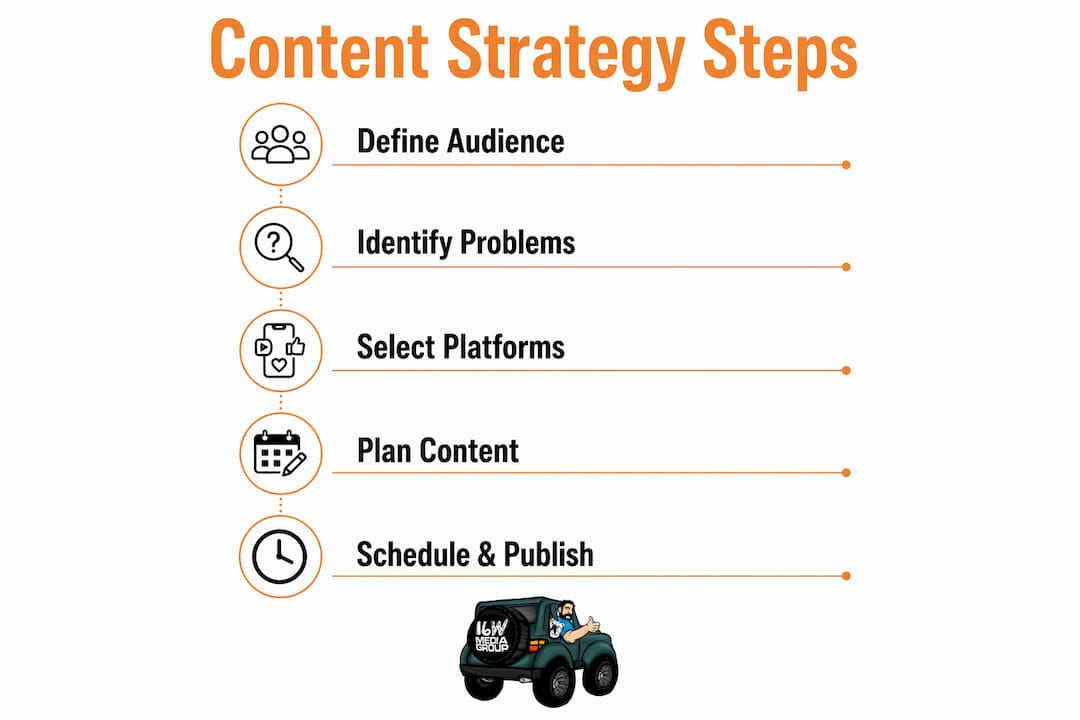
A small-business content strategy starts by defining who you’re helping, the problems you solve, and which platforms your audience uses. That definition is not a formality. It is the filter every piece of content passes through before you create it. Without it, you end up producing content that feels busy but never converts a neighbor into a customer.
The standard industry term for this practice is content marketing strategy, and it applies whether you run a Tampa bakery, a local law firm, or a neighborhood gym. The local version of this strategy differs from a national brand’s approach in one critical way: proximity is your advantage. You can tell stories, reference local events, and speak to community concerns that no national competitor can replicate authentically.
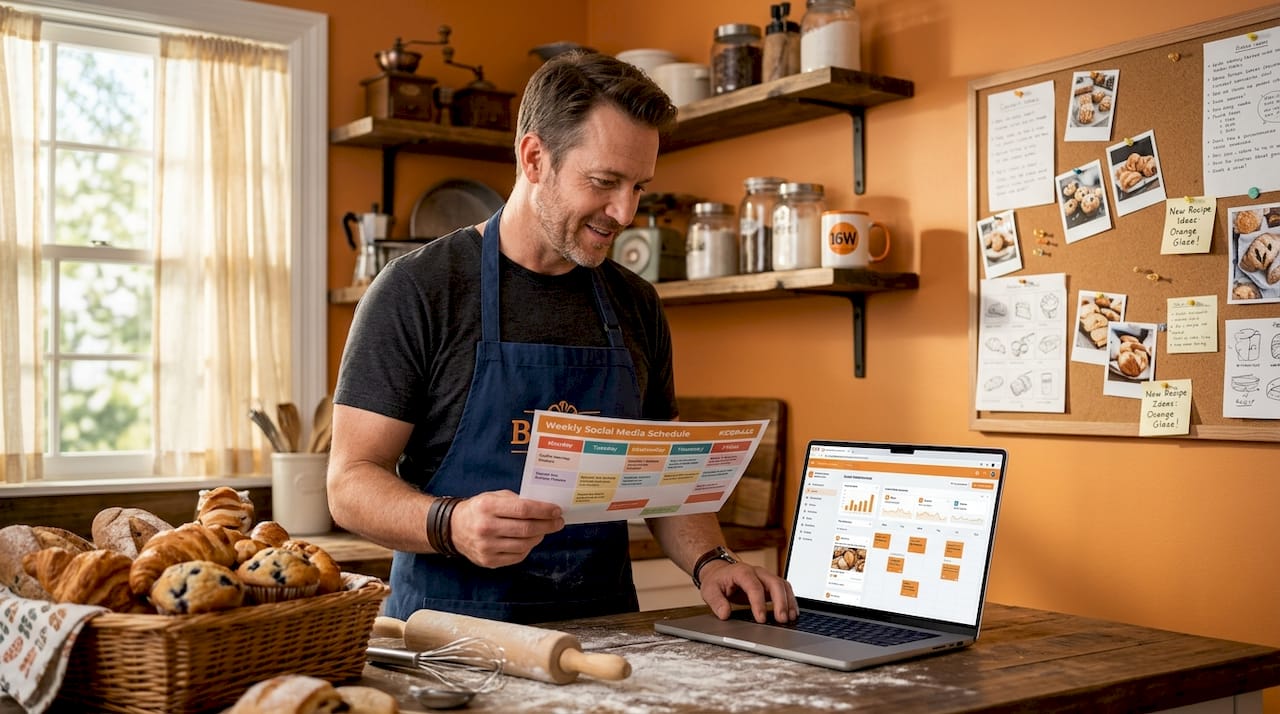
Small businesses fail most often by building posting systems before clarifying audience problems and platforms. The result is unfocused content that does not drive business results. Getting the foundation right means your content calendar, your channel choices, and your creative decisions all point in the same direction.
How do local businesses identify their audience for content?
Knowing your audience at a surface level, “women aged 25 to 45 in Tampa,” is not enough to create content that earns attention. You need to understand what those people worry about, what questions they type into Google at 10 p.m., and what local concerns shape their buying decisions.
Three methods produce the most useful audience data for local businesses:
- Customer surveys: A short five-question survey sent via email or handed out at the register reveals the exact language customers use to describe their problems. That language belongs in your content.
- Google Business Profile insights: This free tool shows what search terms brought people to your listing, which tells you what problems they were trying to solve when they found you.
- Social media comments and DMs: The questions people ask publicly or privately are a direct feed of content ideas for local businesses. Screenshot them. Build content around them.
- Neighborhood forums and local Facebook groups: Platforms like Nextdoor and local Facebook groups surface hyperlocal concerns that align content with real community needs.
Once you have this data, segment your audience by what they need from you, not just who they are demographically. A hardware store might serve weekend DIYers, professional contractors, and first-time homeowners. Each group needs different content, even if they shop in the same aisle.
Pro Tip: Write one “audience persona” document per major customer segment. Include their top three questions, their preferred platform, and one local concern specific to your area. Refer to it every time you plan content.
What types of content work best for local business marketing?
The most effective local business content plan uses a mix of four content types, each serving a different purpose in the customer relationship.
| Content Type | Primary Purpose | Example |
|---|---|---|
| Educational posts | Build trust and authority | “How to choose the right HVAC filter for Florida humidity” |
| Community stories | Create local connection | Featuring a longtime customer or neighborhood event |
| Product or service demos | Drive purchase decisions | Short video showing a before-and-after service result |
| Customer testimonials | Reduce buying hesitation | Video or written review tied to a specific outcome |
Beyond format, your content needs brand pillars, which are three to five recurring themes that define what your brand talks about. A local fitness studio might use pillars like community motivation, nutrition basics, and member spotlights. Pillars prevent the “what do I post today?” paralysis that kills consistency.
Seasonality and local events are underused theme drivers. A local restaurant in Tampa can build content around the Gasparilla festival, hurricane prep season, or the start of snowbird season. This kind of content is impossible for national chains to replicate and signals to your audience that you are genuinely part of their community.
Content aligned with search intent converts better than high traffic to irrelevant pages. That means a blog post titled “Best family-friendly brunch spots in South Tampa” will outperform a generic post titled “Why brunch is great” every single time.
Pro Tip: Plan one piece of content per month that ties directly to a local event, civic moment, or neighborhood story. This content earns shares from people who would never otherwise engage with a business post.
For a deeper look at how to structure your content mix across media types, the local brand growth strategies discussed by 16wmediagroup break down how traditional media, digital content, and community publishing work together.
How do you build a realistic content calendar for local businesses?
A content calendar is not a spreadsheet full of aspirational posts you never create. It is a realistic schedule tied to your actual capacity, your business goals, and your audience’s attention patterns.
Here is a practical process for building one:
- Set your posting frequency first. Local businesses should post about once per week on their Google Business Profile. Google archives posts older than six months, so steady, ongoing content refresh matters more than volume. For social media, two to three posts per week is sustainable for most small teams.
- Map content to your business calendar. List every promotion, seasonal shift, local event, and product launch for the next 90 days. Each one is a content anchor.
- Assign content types to each anchor. One promotional event might generate an educational post, a behind-the-scenes video, and a customer testimonial. That is three pieces of content from one business moment.
- Balance your content mix. A reliable ratio is 60% educational or community content, 30% promotional, and 10% direct calls to action. This keeps your audience engaged without feeling sold to constantly.
- Use repurposing to extend your output. Repurposing content with AI tools can maintain consistent output without reinventing material for every platform. A newsletter becomes a social post. A social post becomes a Google Business Profile update. Human oversight keeps it authentic.
The step-by-step media planning framework from 16wmediagroup offers a structured approach to scheduling content across channels without overcommitting your team.
Which distribution channels should local businesses prioritize?
Choosing the right channels is where most local business owners waste the most time. The instinct is to be everywhere. The reality is that two channels executed well outperform six channels executed poorly.
Start by asking where your customers already spend time. A B2B service in a professional district will find LinkedIn more productive than TikTok. A family-oriented retail shop in a suburban neighborhood will find Facebook and Instagram far more effective than Twitter or LinkedIn.
The channels that consistently deliver results for local businesses include:
- Google Business Profile: This is the single highest-return channel for local visibility. It affects map rankings, review visibility, and local search results directly. Treat it as a content channel, not just a listing.
- Instagram and Facebook: Both platforms support local community building through groups, events, and location tagging. Video content on Instagram Reels now reaches non-followers, which makes it a discovery tool, not just a retention tool.
- Email newsletters: Email delivers the highest conversion rates of any digital channel for small businesses. A list of 500 engaged local subscribers is worth more than 5,000 passive social media followers.
- Local SEO content: Blog posts and FAQ pages that answer local search questions clearly state who you serve, what you do, where you operate, and why you are trusted. This structure helps both search engines and AI tools identify your relevance in local queries.
Pro Tip: Before adding a new channel, audit your existing ones. If your Google Business Profile has unanswered reviews or outdated photos, fix that before opening a TikTok account.
For social media video specifically, video content production requires planning your format, length, and call to action before you hit record. Short-form video under 60 seconds performs best for local discovery content.
What metrics actually tell you if your content strategy is working?
Follower counts and post likes are not business metrics. They are attention signals, and attention does not pay rent.
Tracking engagement quality, email growth, conversion rates, and repeat purchase behavior shows whether your content marketing reduces customer acquisition costs over time. That is the metric that matters for a local business with a real budget and real overhead.
The metrics worth tracking fall into three categories:
- Engagement quality: Comments, shares, and saves on social content indicate that your audience found the content worth acting on. Passive likes do not.
- Local search visibility: Track your Google Business Profile views, direction requests, and website clicks monthly. These numbers tell you whether your content is driving physical foot traffic.
- Conversions: Define what a conversion means for your business. It might be a phone call, a form submission, a reservation, or an in-store visit. Track how many of those actions originate from content touchpoints.
Focusing on engagement and conversion metrics rather than vanity metrics leads to more useful decisions. For video, watch time and repeated engagement matter more than raw view counts. A video watched fully by 200 local customers is more valuable than one viewed for two seconds by 2,000 strangers.
Review your metrics monthly. Adjust your content mix based on what is actually driving the outcomes you care about, not what feels creative or gets the most likes.
Key takeaways
A local business content strategy works when it is built on audience clarity, realistic scheduling, and channel focus rather than volume or trend-chasing.
| Point | Details |
|---|---|
| Define audience before creating content | Identify customer segments by their questions and local needs, not just demographics. |
| Use brand pillars for consistency | Three to five recurring themes prevent creative paralysis and keep content focused. |
| Post consistently, not constantly | Once per week on Google Business Profile and two to three times per week on social is sustainable and effective. |
| Prioritize two channels over six | Deep execution on the right platforms outperforms shallow presence everywhere. |
| Measure conversions, not followers | Track phone calls, form fills, and foot traffic driven by content, not passive engagement numbers. |
What I’ve learned from working with local businesses on content
Most local business owners I talk to are not failing because they lack creativity. They are failing because they are trying to copy national brand content strategies on a local budget and a two-person team. A national brand can post daily because they have a content team of 12. You have yourself and maybe a part-time helper.
The businesses I have seen succeed with content are the ones that get ruthlessly specific. Not “we serve the Tampa Bay area” but “we serve families in South Tampa who want a dentist that does not feel clinical.” That specificity changes every piece of content they produce. It changes the photos they take, the questions they answer, and the stories they tell.
The other pattern I have noticed is that local businesses underestimate the power of showing up in community spaces, not just digital ones. A local media presence, whether through a community magazine, a podcast feature, or a neighborhood event sponsorship, builds the kind of trust that no Instagram algorithm can replicate. The localized marketing strategies that work long-term are the ones that treat content as a community relationship, not a broadcasting schedule.
Start smaller than you think you need to. One channel, one content pillar, one consistent posting day per week. Build the habit before you build the system.
— Mike
Ready to build a content strategy that grows your local brand?
16wmediagroup works with local businesses to create media and content strategies that connect with real community audiences. Whether you need help planning a content calendar, launching a podcast, or getting featured in a community publication, the team at 16wmediagroup builds plans around your specific market and goals.
If you are ready to stop guessing and start publishing content that builds genuine local visibility, explore the full range of content and media services available through 16wmediagroup. From community-focused publishing to regional advertising packages, every offering is designed to put your brand in front of the right local audience. You can also explore the community advertising approach that has helped local brands in competitive markets build lasting customer loyalty.
FAQ
What is a content strategy for local businesses?
A content strategy for local businesses is a repeatable plan that defines your audience, selects the right platforms, and schedules content that addresses your customers’ specific needs. It differs from a general marketing plan by focusing on community relevance and local search visibility.
How often should a local business post content?
Local businesses should post about once per week on Google Business Profile and two to three times per week on social media platforms. Consistency matters more than frequency. Google archives posts older than six months, so regular updates keep your profile active in local search results.
What content ideas work best for local businesses?
Educational posts, customer testimonials, community stories, and local event tie-ins consistently perform well for local business content marketing. Content tied to local search intent, such as answering specific neighborhood questions, converts better than generic promotional posts.
How do I measure if my local content strategy is working?
Track Google Business Profile views, direction requests, website clicks, email list growth, and direct conversions like phone calls or form submissions. Engagement quality and conversion rates are more meaningful than follower counts or post likes.
Do local businesses need to be on every social media platform?
No. Starting with one or two platforms where your customers already spend time produces better results than spreading thin across every channel. Master one platform before expanding, and always prioritize Google Business Profile as your baseline local content channel.