
A Tampa business can spend thousands on digital clicks and still feel invisible in its own backyard. That is usually the moment the real question shows up: local media buying vs digital ads – which one actually helps your brand become known, trusted, and chosen by the people closest to your business?
The honest answer is not as simple as picking old school or new school. If your goal is fast website traffic, digital ads can move quickly. If your goal is neighborhood recognition, stronger recall, and a reputation that sticks, local media buying often carries more weight than many businesses expect. The smartest path depends on what kind of attention you need, how long you need it to last, and how close you want your brand to feel to the community it serves.
What local media buying really delivers
Local media buying is not just placing an ad and hoping somebody notices. Done well, it puts your business in front of the same local audience again and again through channels they already recognize. That could mean community magazines, local publications, neighborhood-focused media, business podcasts, co-op opportunities, or other placements tied to a specific market.
That repeated local visibility does something digital campaigns often struggle to create on their own. It gives your brand context. Instead of showing up as one more sponsored message in a crowded feed, you appear inside media environments that feel familiar to the audience. That matters when you are trying to win trust before a prospect is ready to buy.
For service businesses, medical practices, law firms, home professionals, and local retail brands, this kind of placement can become a reputation builder. People may not click immediately, but they remember the name. They start seeing your business as part of the local landscape rather than just another advertiser trying to grab a conversion.
Where digital ads shine
Digital ads are built for speed, flexibility, and targeting. If you want to launch a campaign this week, test three offers, retarget site visitors, and adjust spend by zip code, digital gives you that control. You can watch impressions, clicks, form fills, and cost per lead in close to real time.
That level of responsiveness is powerful. It is especially useful when your business has a clear offer, a strong landing page, and a sales process ready to handle leads quickly. Search ads can capture people with high intent. Social ads can create demand and follow prospects across platforms. Display and video can extend reach.
But there is a catch. Digital ads are often better at harvesting existing demand than building deep local brand memory. If people do not know who you are yet, a digital campaign may get seen and forgotten in seconds. The targeting may be precise, but the environment is crowded, attention is short, and trust is not automatic.
Local media buying vs digital ads: the real difference
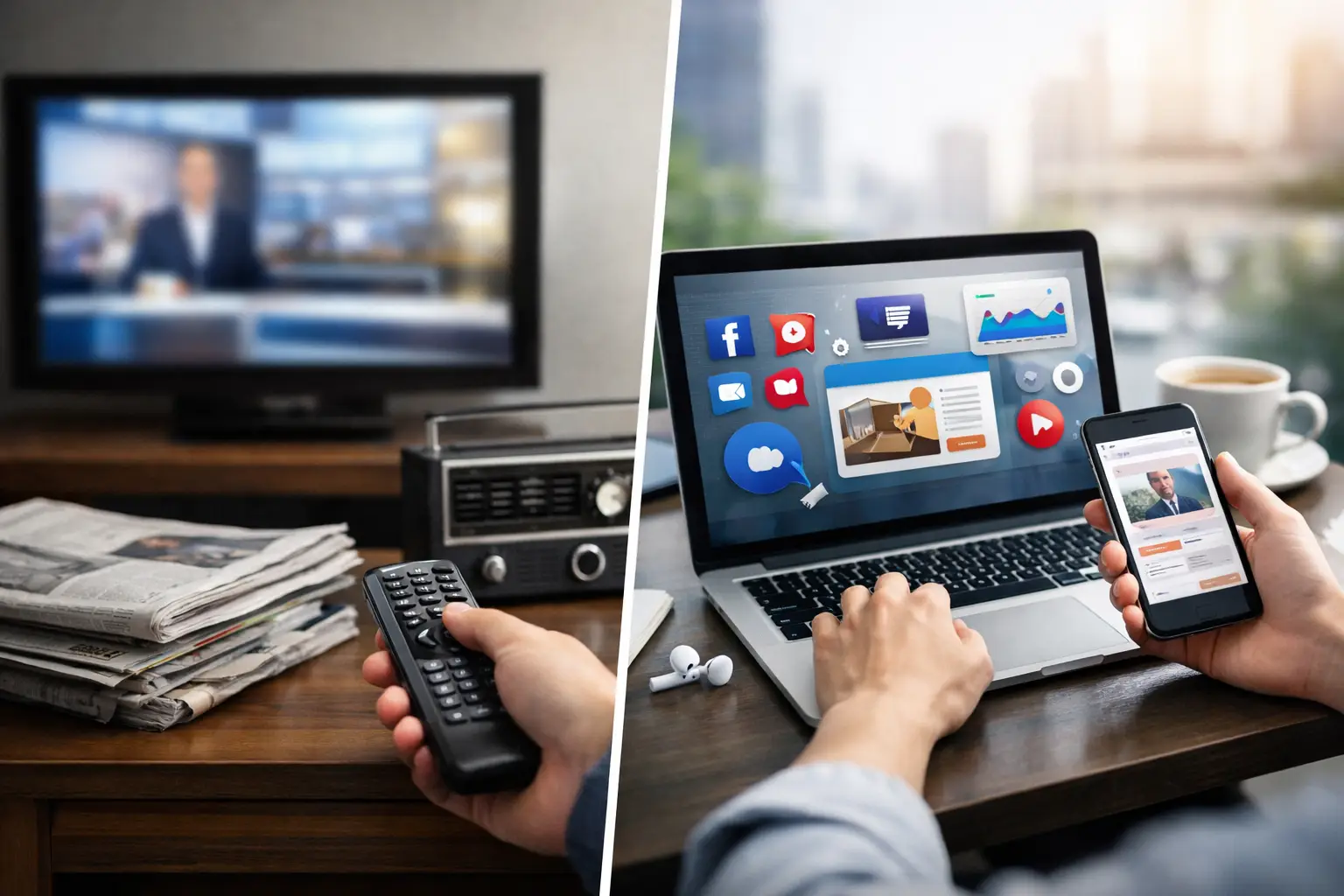
The biggest difference between local media buying vs digital ads is not traditional versus modern. It is durable visibility versus immediate action.
Local media buying helps you own mindshare in a defined geography. It is built for familiarity. It lets your business appear where local audiences already spend attention, and it supports the long game of being recognized before the buying decision happens.
Digital ads are built for motion. They are ideal when you need traffic, leads, event registrations, calls, or online sales now. They can scale quickly and provide useful feedback fast, but they can also disappear the moment the budget stops.
That trade-off is where many businesses get stuck. They want measurable performance, so they lean hard into digital. Then they realize their market still does not really know them. Or they invest only in local visibility and wonder why lead flow is inconsistent. One builds memory. One drives action. Growth gets stronger when those two forces work together.
When local media buying makes more sense
If your business depends on community trust, local media buying deserves serious attention. Think about industries where the customer is not choosing the cheapest option, but the most credible and familiar one. That includes financial services, real estate, legal services, home improvement, luxury retail, healthcare, hospitality, and many professional firms.
In these categories, people often buy from the name they recognize. They ask neighbors. They notice who shows up consistently in local spaces. They respond to businesses that feel established.
Local media buying also makes sense when your target audience is concentrated in specific neighborhoods or affluent communities. Broad digital reach can waste budget if too much of your spend lands on people outside your ideal market. Localized placements can narrow your message to the areas that matter most while reinforcing the idea that your business is rooted there.
Another advantage is message quality. In a thoughtfully chosen local publication or podcast, your brand usually has more room to breathe than it does inside a small display unit or a quick social scroll. That opens the door to stronger storytelling, better positioning, and a more premium perception.
When digital ads are the better fit
Digital ads are the better fit when timing matters more than visibility alone. If you need leads for a seasonal promotion, want to fill appointments this month, or need to test a new market quickly, digital is often the faster lane.
They also work well when your audience behavior is clear. If people search for your service with strong intent, paid search can be highly effective. If your sales funnel is organized and your follow-up is sharp, digital can turn attention into appointments efficiently.
For newer businesses, digital can also provide useful learning. It can help you identify which offers resonate, which audiences respond, and what messaging gets traction. That kind of feedback can sharpen your broader marketing strategy.
Still, speed can create overconfidence. A campaign that generates cheap clicks is not always building a stronger business. If the audience forgets your name right after the interaction, you may be paying repeatedly for attention that never turns into lasting preference.
Why the best strategy is usually both
For most growth-minded local brands, this is not an either-or decision. It is a sequencing and integration decision.
Local media buying creates the road signs. It puts your brand in front of the community in a way that feels anchored, credible, and familiar. Digital ads create the exits. They give interested prospects a direct path to engage, respond, book, or buy.
That combination is where momentum builds. Someone sees your business in a trusted local publication, hears about you on a business podcast, notices your name again in a neighborhood media placement, and then later clicks a digital ad or searches for your company directly. The conversion may happen online, but the trust was built across multiple touchpoints.
This is where many local businesses leave growth on the table. They judge every channel in isolation instead of looking at how channels reinforce each other. A digital campaign often performs better when the audience already recognizes the brand. A local media placement becomes more valuable when digital retargeting keeps the brand in motion.
For brands in Tampa and surrounding Florida markets, this matters even more. Competition is active, customer attention is fragmented, and local trust still carries real value. Businesses that want to dominate local attention need more than clicks. They need presence.
How to choose the right mix for your business
Start with your actual goal, not the trendiest tactic. If you need immediate lead generation for a short window, digital should probably carry more of the load. If you want stronger market awareness, better recall, and a more established local profile, local media should play a larger role.
Then look at your buying cycle. If customers make quick decisions, digital may produce faster returns. If they research, compare, ask around, or wait until a need becomes urgent, local visibility becomes more valuable because it keeps your name top of mind.
Budget matters too, but not in the way many people think. A smaller budget does not automatically mean digital only. In some cases, a well-placed local campaign can produce better long-term value than a scattered digital budget that burns through impressions without building recognition.
Most of all, think about the kind of brand you want to become in your market. If you want to be just another option when someone searches, digital alone can keep you in the race. If you want all roads to lead back to your business, you need a strategy that builds both visibility and memory.
That is why the strongest local brands do not just chase attention. They earn their place in the community, stay visible where it counts, and use every channel with purpose. When your advertising works that way, marketing stops feeling like a gamble and starts acting like a growth engine.