

Brand engagement is defined as the depth of emotional, cognitive, and behavioral connection between a person and a brand, expressed through ongoing interactions, loyalty, and advocacy over time. This goes far beyond awareness or a single purchase. According to Personizely, highly engaged customers deliver 20% to 40% higher revenue per transaction compared to disengaged buyers. That gap is not a rounding error. It is the difference between a brand that grows through repeat business and word-of-mouth, and one that bleeds acquisition costs every quarter. For marketing professionals and business owners, understanding the brand engagement meaning in full is the foundation of every loyalty and community strategy worth building.
What is the definition of brand engagement?
Brand engagement is the ongoing, multidimensional relationship between a brand and its audience, built across emotional, cognitive, and behavioral layers. It is the industry standard term used in academic research, media planning, and customer experience strategy. The concept is distinct from brand awareness, which only measures whether someone recognizes a name. Brand engagement measures patterns of interaction such as mentions, comments, shares, repeat purchases, and recommendations over time.
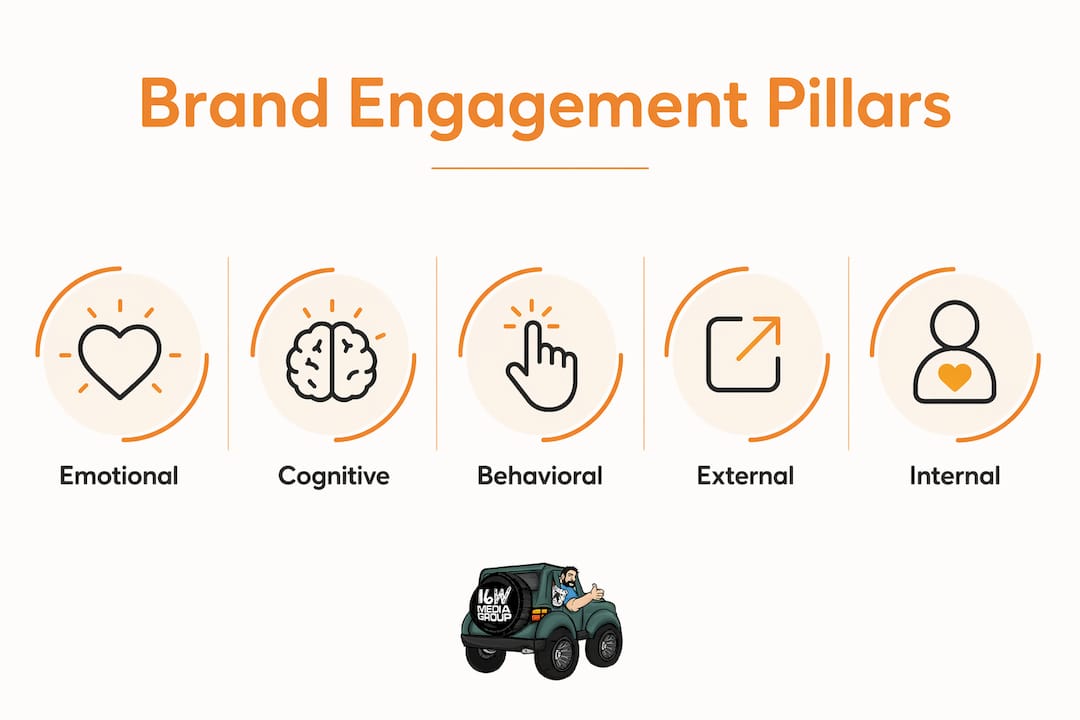
The emotional layer covers how people feel about a brand. Do they trust it? Do they feel understood by it? The cognitive layer covers what people believe about a brand’s values, purpose, and relevance to their lives. The behavioral layer covers what people actually do: buying again, recommending to a friend, posting about an experience, or joining a loyalty program. All three layers must work together. A brand that earns strong feelings but never converts them into action has an audience, not a community.

Brand engagement also splits into two directions: external and internal. External engagement covers customers, prospects, and the general public. Internal engagement covers employees and stakeholders. Internal brand engagement is a prerequisite for external success. Employees who do not believe in the brand cannot authentically represent it, and that disconnect shows up in every customer interaction.
What are the key components of brand engagement?
The three pillars of brand engagement each play a distinct role in building lasting loyalty.
Emotional engagement is the feeling a customer carries between purchases. Brands like Apple and Nike have built emotional engagement so strong that customers defend them in public conversations without any prompting. This layer is the hardest to build and the hardest to lose.
Cognitive engagement is alignment between what a brand stands for and what a customer believes. When a brand’s stated values match a customer’s worldview, the relationship deepens. When they conflict, no amount of advertising recovers the gap.
Behavioral engagement is the visible output: clicks, purchases, reviews, referrals, and social shares. It is the most measurable pillar and the most commonly tracked. It is also the most misleading when tracked in isolation.
- Social media comments and shares signal emotional and cognitive resonance.
- Repeat purchases confirm behavioral loyalty.
- Unprompted recommendations indicate all three pillars are firing together.
- Employee brand ambassador behavior reflects internal engagement strength.
- Community participation, such as attending brand events or joining forums, shows deep behavioral commitment.
Pro Tip: Track all three pillars separately before drawing conclusions. A spike in clicks with no increase in repeat purchases usually means cognitive or emotional engagement is missing, not that the campaign failed.
The interplay between these components is where the real value lives. A customer who feels good about a brand, believes in its values, and buys repeatedly is the definition of a brand advocate. That person costs nothing to acquire for the next sale and brings others with them.
How is brand engagement measured and why does it matter?
Measuring brand engagement requires going beyond traditional marketing metrics like reach and impressions. Those numbers tell you how many people saw something. Engagement metrics tell you how many people cared.
| Traditional Marketing Metric | Brand Engagement Metric |
|---|---|
| Reach / Impressions | Mentions and share of voice |
| Click-through rate | Repeat purchase rate |
| Ad frequency | Net Promoter Score (NPS) |
| Cost per acquisition | Customer lifetime value |
| Page views | Comments, saves, and shares |
The distinction matters because reach without engagement produces no loyalty. A brand can run a campaign seen by 2 million people and generate zero repeat customers if the emotional and cognitive layers were never activated.
Effective brand engagement reduces churn, increases repeat purchase rates, and boosts ROI by amplifying word-of-mouth organically. That last point is critical. Organic word-of-mouth is the most trusted form of marketing and the least expensive. Brands that build genuine engagement earn it automatically.
For podcast and audio content, podcast engagement metrics such as listen-through rate, episode shares, and listener reviews provide a direct window into audience connection. These signals map directly onto the behavioral and emotional pillars of brand engagement.
The business case for measuring engagement is straightforward. Brands that track engagement patterns can identify which touchpoints generate loyalty and which generate only noise. That knowledge cuts waste and concentrates investment where it compounds.
What nuances and challenges shape brand engagement strategies?
Brand engagement is not a single formula applied uniformly. Engagement patterns vary widely by region, platform, and audience segment, and no single approach works everywhere. A community magazine campaign that drives deep engagement in Tampa may produce flat results in a different market with different cultural norms and media habits.
One of the most underestimated challenges is engagement fatigue. Excessive digital interactions can cause engagement fatigue, actively damaging brand attitude. More outreach does not equal more engagement. Audiences who feel bombarded disengage and sometimes develop negative associations with the brand.
The shift from broadcasting to participating is the mindset change that separates brands with real engagement from those chasing vanity metrics. Successful engagement marketing requires shifting from broadcasting to listening, participating, and rewarding interactions. Brands that respond to comments, acknowledge feedback publicly, and co-create content with their audience build trust that no ad budget can replicate.
Internal alignment is the challenge most business owners overlook entirely. A brand whose marketing team promises one experience while frontline employees deliver another creates cognitive dissonance in customers. That gap destroys engagement faster than any competitor can.
- Audit internal culture before launching external engagement campaigns.
- Segment your audience by platform behavior, not just demographics.
- Set a contact frequency cap to protect against engagement fatigue.
- Measure quality of interactions, not just volume.
Pro Tip: Email newsletters remain one of the highest-engagement channels available. Email newsletters drive engagement because they reach an audience that opted in, which signals existing cognitive and emotional alignment before the first word is read.
How can marketing professionals build stronger brand engagement?
Building brand engagement is a process, not a campaign. The following steps give marketing professionals and business owners a practical framework.
-
Define your emotional promise. Identify the one feeling you want customers to associate with your brand. Every piece of content, every customer service interaction, and every ad should reinforce that feeling consistently.
-
Communicate your values clearly. Cognitive engagement depends on customers understanding what you stand for. Publish your values explicitly and demonstrate them through decisions, not just messaging.
-
Create interactive content. Polls, Q&A sessions, user-generated content campaigns, and live events invite behavioral engagement. Passive content consumption does not build community. Participation does.
-
Build a loyalty program with real value. Discounts alone do not create loyalty. Programs that reward customers with exclusive access, recognition, or community membership address the emotional and cognitive layers simultaneously.
-
Use community-based media channels. Connecting brands to communities through local publishing, podcasts, and regional advertising creates the kind of contextual relevance that national campaigns cannot replicate. Customers engage more deeply with brands they see as part of their local world.
-
Measure and adapt continuously. Set a quarterly review of your engagement metrics across all three pillars. Identify which channels produce repeat buyers versus one-time visitors, and shift resources accordingly.
Community-based advertising strategies that prioritize local stories and neighborhood relevance consistently outperform generic digital campaigns for building the behavioral loyalty that sustains a business long term. The reason is simple: people engage with brands that feel like neighbors, not broadcasters.
Brand loyalty is constructed through psychological contracts that address both emotional and economic customer needs. Loyalty programs, consistent quality, and authentic communication each fulfill one side of that contract. Remove any one element and the contract weakens.
Key Takeaways
Brand engagement is the combined emotional, cognitive, and behavioral connection between a brand and its audience, and it directly determines revenue, loyalty, and long-term growth.
| Point | Details |
|---|---|
| Three-pillar structure | Emotional, cognitive, and behavioral engagement must all be active to build genuine loyalty. |
| Engaged customers spend more | Highly engaged customers deliver 20%–40% higher revenue per transaction than disengaged buyers. |
| Internal engagement first | Employees must believe in the brand before external engagement campaigns can succeed authentically. |
| Quality over frequency | Engagement fatigue from excessive outreach actively damages brand attitude and trust. |
| Measure beyond clicks | Track repeat purchases, NPS, and share of voice alongside behavioral metrics to get the full picture. |
Why most brands are measuring engagement wrong
After working with local businesses across competitive markets, the pattern I see most often is this: a brand invests heavily in social media activity, watches the likes and follower counts climb, and then wonders why revenue is flat. The problem is not the platform. The problem is that clicks and follows are behavioral signals without emotional or cognitive backing. They look like engagement. They are not.
The brands that actually grow through engagement are the ones that obsess over the cognitive layer first. They ask: does our audience believe we understand them? Do our values match theirs? When the answer is yes, behavioral engagement follows naturally and compounds over time. When the answer is no, no amount of posting frequency fixes it.
The other mistake I see constantly is treating internal engagement as an HR issue rather than a marketing issue. Your team is your first audience. If your employees cannot articulate your brand’s value clearly and enthusiastically, your customers will feel that gap in every interaction. Fix the inside before you spend another dollar on the outside.
The brands I have seen build the deepest community loyalty are the ones that treat engagement as a two-way relationship. They listen publicly, respond genuinely, and create content that reflects what their audience actually cares about, not what the brand wants to say. That shift from broadcasting to participating is where real loyalty is built.
— Mike
How 16wmediagroup helps brands build real engagement
16wmediagroup works with local businesses and regional brands to build the kind of engagement that translates into loyal customers and community recognition. The agency combines community publishing, podcast production, and targeted media campaigns to create touchpoints that activate all three pillars of brand engagement.

For businesses in competitive markets like Tampa, generic digital campaigns rarely move the needle on loyalty. 16wmediagroup’s approach centers on local relevance, authentic storytelling, and media channels that reach high-value consumers where they already pay attention. The local advertising best practices guide published by 16wmediagroup outlines exactly how to build campaigns that generate repeat customers, not just impressions. If you are ready to turn your brand’s visibility into genuine community connection, the team at 16wmediagroup is the right starting point.
FAQ
What is brand engagement in simple terms?
Brand engagement is the strength of the relationship between a brand and its audience, measured through emotional connection, shared values, and repeated actions like purchases and recommendations.
How does brand engagement differ from brand awareness?
Brand awareness measures whether someone recognizes a brand. Brand engagement measures how deeply they connect with it, reflected in repeat behavior, advocacy, and loyalty over time.
Why is brand engagement important for revenue?
Highly engaged customers deliver 20%–40% higher revenue per transaction than disengaged buyers, making engagement one of the strongest predictors of long-term business growth.
What are the best metrics to measure brand engagement?
The most reliable metrics include repeat purchase rate, Net Promoter Score, share of voice, and customer lifetime value. These go beyond clicks to capture genuine loyalty signals.
What causes low brand engagement?
Low brand engagement typically results from a mismatch between brand values and audience beliefs, excessive outreach that causes engagement fatigue, or internal culture that does not align with external messaging.