

Connecting with your target audience is the process of authentically engaging the right people through tailored messaging, interactive communication, and consistent presence that builds trust over time. Audience engagement, the recognized industry term for this practice, goes far beyond follower counts or ad impressions. The brands that win in 2026 are the ones that treat every interaction as a two-way conversation, not a broadcast. This article walks you through the exact methods, from building customer personas to running live interactive events, that turn passive viewers into loyal participants.
How to connect with your target audience through deep audience research
The foundation of reaching your audience is knowing precisely who they are, including who they are not. Defining both an ideal customer persona and a “negative persona” sharpens your messaging and keeps your resources focused on the people most likely to convert. A negative persona is a profile of the customer who looks like a fit on the surface but consistently drains time without buying. Cutting them from your targeting makes every campaign more efficient.
Once you have both personas mapped, use free research tools to validate them. Instagram Stories polls and direct social listening on platforms like Reddit and Facebook Groups reveal the exact language your audience uses to describe their problems. That language is your messaging raw material. A regular publishing cadence, whether weekly emails, monthly magazine features, or bi-weekly podcast episodes, trains your audience to expect and seek out your content.
| Persona type | Research method | Primary benefit |
|---|---|---|
| Ideal customer | Social listening, surveys | Refines messaging and offer fit |
| Negative persona | CRM data, churn analysis | Reduces wasted ad spend |
| Lapsed customer | Email re-engagement, interviews | Identifies friction points |
| Emerging segment | Instagram Stories polls | Spots new growth opportunities |
Pro Tip: Build your negative persona first. Knowing who you are NOT trying to reach makes every subsequent decision, from ad targeting to content topics, faster and cleaner.
What messaging strategies best resonate with your audience?
Authentic messaging starts with one rule: speak the way your audience already speaks. Mimicking audience communication style rather than defaulting to corporate jargon builds relatability faster than any brand positioning statement. If your customers say “I’m drowning in admin,” your headline should not read “Operational efficiency solutions.” It should say “Stop drowning in admin.”
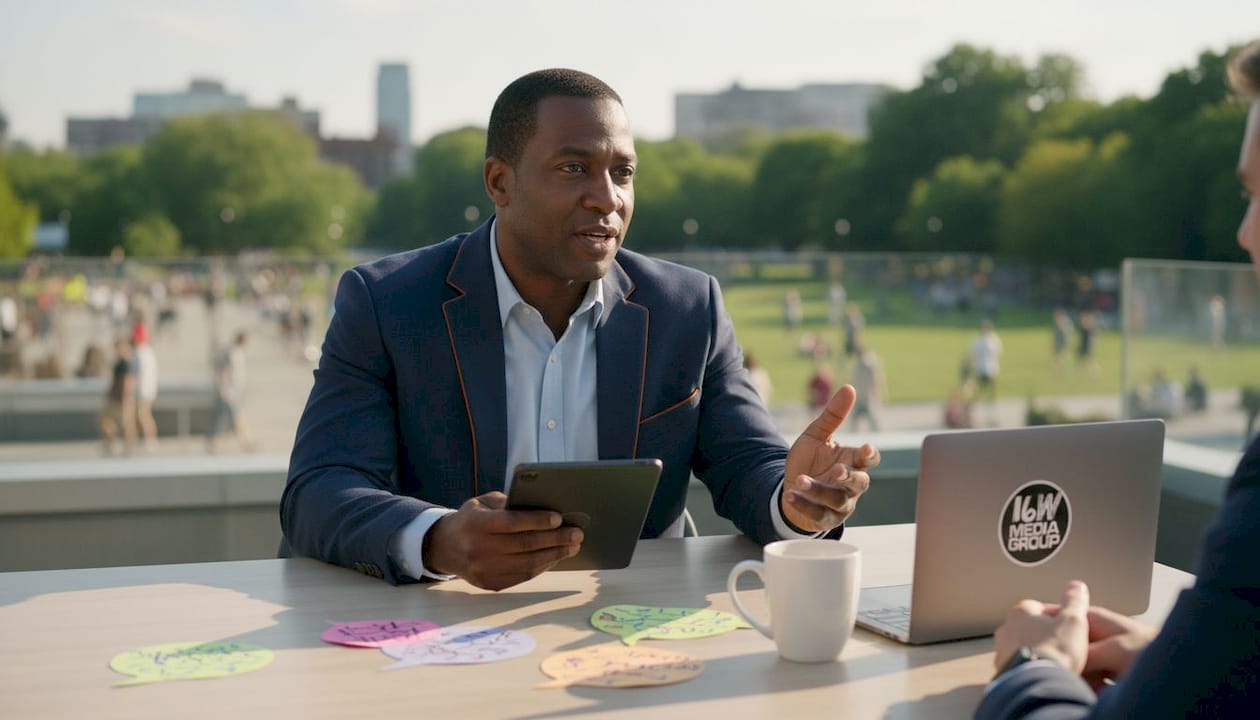
Personalization is the next layer, but it requires discipline. Meaningful segmentation, such as separating new customers from repeat buyers, produces real results. Over-segmenting into dozens of micro-lists creates complexity that collapses under its own weight. The goal is relevance, not granularity for its own sake.
Storytelling is the most underused tool in business messaging. Stories that reflect your audience’s daily frustrations and small wins create emotional recognition. That recognition is what makes someone share your content or reply to your email. Generic benefit statements do not produce that response.
Messaging do’s and don’ts:
- Do use the exact words your customers use in reviews and support tickets
- Do lead with a problem your audience recognizes before presenting your solution
- Do test subject lines and headlines against real audience segments before full rollout
- Don’t open with your company history or award list
- Don’t use passive voice when active voice is available
- Don’t bury the core benefit in the third paragraph
Pro Tip: Copy and paste your last 20 customer reviews into a document. Highlight every phrase that appears more than once. Those repeated phrases are your next campaign headlines.
How do you engage your audience interactively for sustained attention?
Audience attention drops sharply after 8–10 minutes of continuous content without an interaction point. That is not a personal failure. It is a physiological reality. The fix is to structure content in segments of 8–10 minutes, each ending with a reset: a poll, a quiz, a word cloud, or an open question.
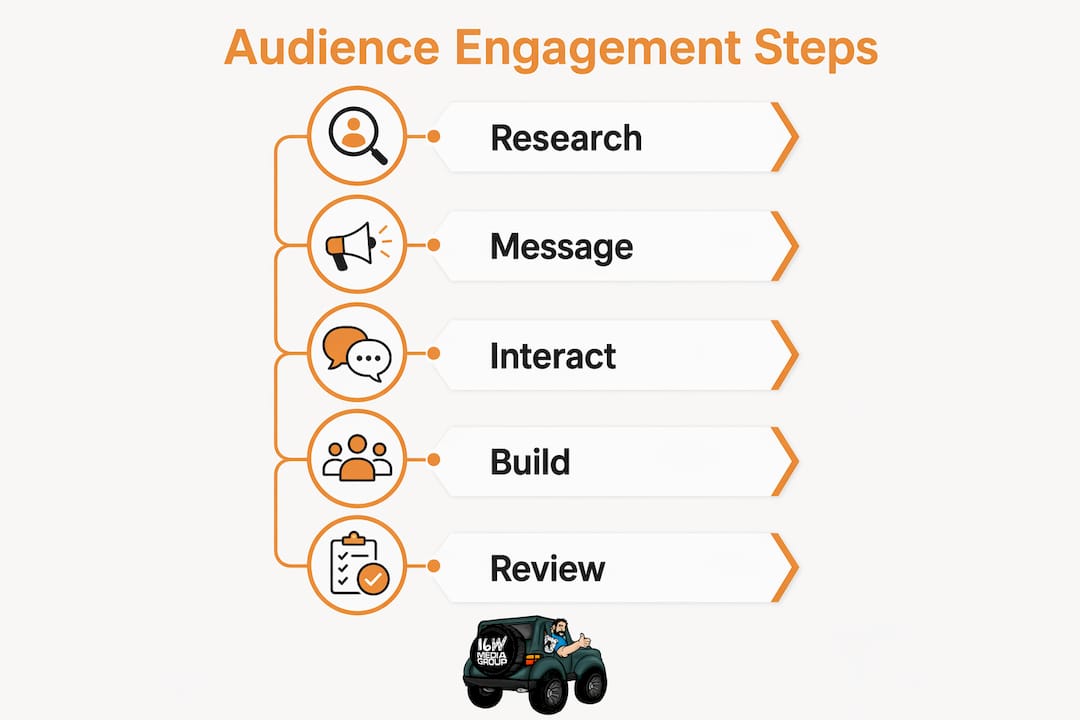
Anonymous participation tools are particularly effective. Anonymous submission channels increase participation rates by 40–60% compared to non-anonymous formats. The reason is social risk. People hold back questions they fear will sound uninformed. Remove the name, and the question gets asked. That question often represents what a large portion of your audience is silently wondering.
Numbered list of interactive engagement techniques:
- Polls — run at the start of a session to establish baseline audience opinion and prime attention
- Live quizzes — use mid-session to reset attention and reward participation
- Word clouds — collect one-word responses to open questions; the visual result sparks discussion
- Anonymous Q&A with upvoting — lets the audience surface the most relevant questions without social pressure
- Breakout discussions — assign small groups a specific question for 5 minutes, then reconvene for shared answers
- Post-event surveys — sent within 2 hours of the event while recall is highest
Assigning a dedicated chat captain during live events keeps the interaction layer running while the presenter focuses on delivery. The chat captain monitors questions, flags the best ones for the presenter, and responds to logistical queries in real time. This single role change dramatically improves the perceived quality of live sessions.
Pro Tip: Before any live event, build a library of 10–15 ready-to-go responses for the most common questions. Your chat captain can deploy them instantly, making your team look prepared and attentive even in high-volume sessions.
Real engagement is measured by interaction depth, not vanity metrics like follower count. A session with 50 active participants asking questions outperforms a broadcast to 5,000 passive viewers every time.
How do you build a community that keeps your audience coming back?
Social platforms drive discovery, but they do not build depth. A community space, whether a private Facebook Group, a member forum, a Slack channel, or a branded hub, is where repeat participation actually happens. The distinction matters because social algorithms control who sees your content on discovery platforms. In a dedicated community, you control the environment.
The most durable communities run on recurring rituals. A weekly “wins thread,” a monthly member spotlight, or a regular peer Q&A session gives members a reason to return on a schedule. These rituals also generate user-generated content naturally, because members contribute to a format they already understand and trust.
| Community format | Best for | Key engagement feature |
|---|---|---|
| Private Facebook Group | Broad consumer audiences | Easy access, familiar interface |
| Slack or Discord channel | Professional or tech audiences | Real-time conversation threads |
| Branded member forum | High-value or niche audiences | Searchable, evergreen discussions |
| Email newsletter community | Owned-channel depth | Direct inbox access, no algorithm |
Managing a community well requires organized workflows. Response templates for common questions, a clear posting schedule, and defined community guidelines reduce the management burden significantly. Without these systems, community spaces become chaotic and moderators burn out. The brands that connect most effectively with local audiences treat community management as a core business function, not an afterthought.
Pro Tip: Pin a “start here” post in every community space that explains the rules, the recurring rituals, and how to get the most value. New members who understand the community immediately are far more likely to participate within the first week.
Common mistakes that break audience connection (and how to fix them)
The most common mistake is treating engagement as a one-way broadcast. Broadcasting without listening erodes audience trust faster than silence does. Audiences notice when their comments go unanswered and their feedback disappears into a void. The fix is a simple rule: every post that receives a comment gets a reply within 24 hours.
Over-segmentation is the second trap. Splitting your audience into too many micro-groups creates messaging so narrow that it loses the emotional resonance that makes content shareable. Start with three to four segments maximum and expand only when data justifies it.
Ignoring negative feedback is the third mistake, and it is the most costly. Negative feedback represents engaged users. A customer who complains is telling you exactly what to fix. A customer who silently leaves gives you nothing. Treat every critical comment as free product research.
Top mistakes and remedies:
- Mistake: Posting without a response plan. Fix: Assign a team member to monitor and reply daily.
- Mistake: Inconsistent messaging across channels. Fix: Create a one-page brand voice guide and share it with every content creator.
- Mistake: Measuring success by follower growth alone. Fix: Track reply rate, click-through rate, and community post frequency instead.
- Mistake: Skipping the follow-up after events. Fix: Send a recap email within 2 hours with key takeaways and a next-step offer.
Pro Tip: Set a weekly 15-minute calendar block to review your top-performing and bottom-performing posts from the previous week. The pattern that emerges in 4 weeks will tell you more than any analytics dashboard.
Key Takeaways
Authentic audience engagement requires combining precise persona research, natural-language messaging, interactive content structures, and dedicated community spaces into one connected system.
| Point | Details |
|---|---|
| Build both personas | Define your ideal customer and negative persona to sharpen targeting and reduce wasted spend. |
| Speak their language | Use the exact words your audience uses in reviews and conversations, not corporate jargon. |
| Structure for interaction | Break content into 8–10 minute segments with polls, quizzes, or Q&A to reset attention. |
| Own your community space | Use dedicated forums or groups for depth; rely on social platforms only for discovery. |
| Listen before you broadcast | Reply to every comment, treat negative feedback as research, and follow up after every event. |
What I’ve learned about authentic audience connection after years in media
Most businesses approach audience engagement as a campaign. They plan it, launch it, measure it, and move on. That is the wrong mental model entirely. The brands I have seen build genuinely loyal audiences treat engagement as an operating system, something that runs continuously in the background and compounds over time.
The single biggest shift I have observed is when a business stops asking “how do we reach more people” and starts asking “how do we serve the people already paying attention.” That question change produces completely different tactics. You stop chasing follower counts and start obsessing over reply rates, event attendance, and community post frequency. Those numbers tell you whether real connection is happening.
Empathy is the variable that no tool or tactic can replace. When a business owner reads their customer reviews with genuine curiosity rather than defensiveness, they find messaging gold. When a marketing team runs a live Q&A and actually changes their next product based on what they heard, the audience notices. That responsiveness is what turns a customer into an advocate. Metrics matter, but the willingness to listen and adapt is what separates brands that grow from brands that plateau.
— Mike
How 16wmediagroup helps local businesses build real audience connections
Local businesses that want to move beyond generic digital noise need a media partner who understands community depth. 16wmediagroup specializes in exactly that, combining community publishing, podcast production, and regional advertising into media plans built around the audiences that matter most to your business.
Whether you are refining your local ad strategy or building a content presence that earns trust over time, 16wmediagroup brings the channel expertise and community relationships to make it work. The team’s local advertising best practices guide covers the full spectrum of what effective local engagement looks like in 2026. For businesses ready to build a media presence that connects, the services overview is the right starting point.
FAQ
What does “connecting with your target audience” actually mean?
Connecting with your target audience means engaging the right people through tailored messaging and two-way communication that builds trust and encourages participation. It goes beyond impressions and follower counts to measure interaction depth and repeat engagement.
How do I find out what my target audience actually wants?
Use social listening on platforms like Reddit and Facebook Groups, run Instagram Stories polls, and analyze your existing customer reviews for repeated language. These free methods surface the exact problems and vocabulary your audience uses to describe their needs.
Why does anonymous participation increase engagement?
Anonymous submission tools increase participation rates by 40–60% because they remove the social risk of asking questions that might seem uninformed. When people feel safe, they contribute more honestly and frequently.
What is the difference between a social media audience and a community?
Social media platforms control who sees your content through algorithms, making them useful for discovery but unreliable for depth. A dedicated community space, such as a private group or member forum, gives you direct access to your audience and drives repeat participation on your terms.
How often should I publish content to maintain audience trust?
Consistency matters more than frequency. A regular publishing cadence, whether weekly, bi-weekly, or monthly, trains your audience to expect your content and builds the habit of engagement. Missing that cadence breaks the pattern and requires effort to rebuild.