


Analytics in media is the process of collecting, analyzing, and interpreting data to improve how media teams make decisions about content, audiences, and budget allocation. The role of analytics in media now extends far beyond basic traffic reports. Media professionals use frameworks like media mix modeling, predictive machine learning, and natural language processing to measure what works and why. Platforms that consolidate audience measurement, content performance analysis, and channel attribution give teams a single source of truth instead of a pile of disconnected spreadsheets. The result is a shift from gut-feel programming to structured, repeatable decision-making that produces measurable outcomes.
How does predictive analytics shape audience engagement?
Predictive analytics gives media teams the ability to forecast audience behavior before content goes live. That changes the entire editorial calculus. Instead of publishing and hoping, teams can model which story formats, posting times, and topic angles will generate the most interaction.
Machine learning models have proven their value here. Extreme Gradient Boosting models achieved a 25.14% mean absolute percentage error (MAPE) on Facebook engagement prediction for a major TV channel. Support Vector Regression pushed accuracy further, reaching 16.56% MAPE on Instagram for the same broadcaster. Those numbers mean predictions are wrong by roughly one in six, which is a meaningful improvement over pure editorial guesswork.
Natural language processing features drive much of that accuracy. Named Entity Recognition identifies which TV personalities appear in a post. Sentiment analysis scores the emotional tone of captions. NLP-derived features like these consistently rank among the top predictors of viewer interaction, which tells you that content variables matter as much as timing.
The limits of these models are real, though. AI predictions struggle to capture nuanced qualitative context, including cultural moments, breaking news, and editorial tone. At India Today, the Audipulse system improved editorial decision-making precision from 52% to 64%. That gain is significant, but it also means 36% of predictions still miss. Human editors must stay in the loop.
- Predictive models work best on high-volume channels with consistent posting cadences.
- Named entity features (personalities, topics, locations) outperform generic engagement metrics as predictors.
- Sentiment scores add signal but require calibration for each audience segment.
- Model accuracy degrades during news cycles with no historical precedent.
Pro Tip: Run your predictive model alongside your editorial calendar for at least 90 days before trusting it for budget decisions. The model needs enough live data to surface patterns specific to your audience, not just the training set.
Media mix optimization: how does budget allocation drive ROI?
Media mix modeling is the practice of measuring how each advertising channel contributes to a business outcome, then reallocating spend to maximize return. The core challenge is saturation. Every channel has a point where additional spending produces diminishing returns, and most media plans overspend past that point on at least one channel.

A 3-step optimization process including saturation analysis and granular touchpoint modeling produced a 5.5% revenue lift for a major consumer brand. That figure represents real incremental revenue from budget that was already being spent. The optimization did not require a larger total budget. It required smarter allocation across existing channels.
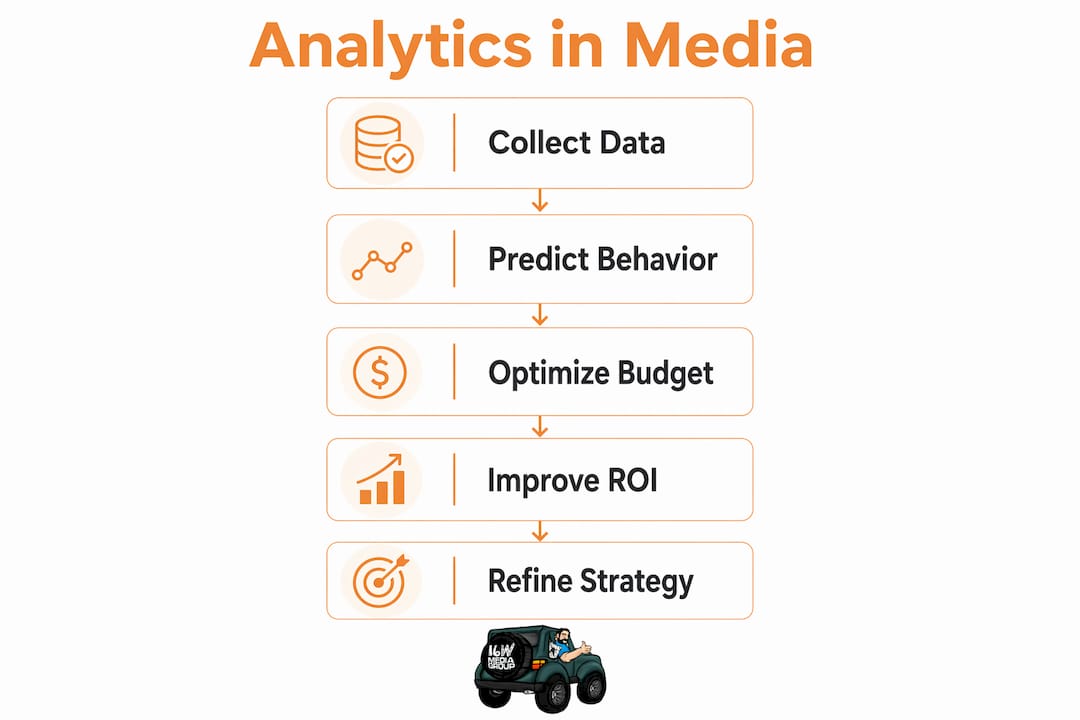
The mechanics involve building three curves for each channel: a response curve showing how revenue changes with spend, a profit curve netting out media costs, and a cumulative profit curve identifying the exact saturation point. Once you have those curves, you can see precisely where each channel stops paying for itself. Reallocation from oversaturated channels to undersaturated ones captures the gap.
| Channel type | Saturation risk | Optimization lever |
|---|---|---|
| Paid social | High at scale | Frequency caps and creative rotation |
| Broadcast TV | Moderate | Daypart and market-level reallocation |
| Digital display | High with broad targeting | Audience segmentation and bid floors |
| Community print | Low to moderate | Geographic concentration |
| Podcast sponsorship | Low | Category and host alignment |
Pro Tip: Build your profit curves at the market or region level, not just nationally. A channel that looks saturated in aggregate may still have headroom in specific local markets, which is exactly the kind of insight that separates a good media mix strategy from a great one.
Bayesian media mix models add another layer of value by making results transparent. Bayesian models facilitate cross-functional collaboration by showing causal relationships rather than black-box outputs. Marketing and finance teams can both read the same model and agree on what the data says. That shared understanding is what moves budget decisions from quarterly arguments to structured planning.
How do analytics platforms improve editorial and media strategy?
Media strategy in 2026 has become an analytical process. Editorial decisions are guided by structured, unified data signals instead of fragmented tools and individual instincts. The shift happened because data proliferated faster than any single team could process manually.
Unified analytics platforms solve the fragmentation problem by aggregating data from multiple sources into a single normalized view. The Outset Media Index is one example of this approach. It aggregates and normalizes 37+ metrics to enable comparable evaluations across different media outlets. That kind of multi-metric benchmarking lets editors compare content performance across formats, channels, and time periods without rebuilding their analysis from scratch each week.
The practical benefits show up in planning efficiency. Unified frameworks reduce research time and ambiguity, which moves teams from reactive reporting to proactive planning. Instead of explaining last week’s numbers, editors can model next week’s content mix. That is a fundamentally different use of an analyst’s time.
The key benefits of integrated analytics platforms include:
- Consistent metric definitions across teams and channels.
- Faster identification of underperforming content before it drains budget.
- Benchmarking against historical baselines rather than subjective standards.
- Clearer accountability for editorial decisions tied to measurable outcomes.
Analytics platforms do not replace editorial expertise. They give editors better information to act on. The data-driven media decisions that produce the best results combine quantitative signals with qualitative judgment about audience context, brand voice, and cultural timing.
What are the best practices for implementing analytics in media?
Implementation is where most analytics initiatives stall. The technical infrastructure, the organizational culture, and the editorial workflow all have to align. When they do not, even well-designed models sit unused.
The most common bottleneck is the data pipeline. Slow ETL processes that move data through multiple intermediate storage layers create dashboards that are days or weeks behind reality. Querying data warehouses directly eliminates that lag and can compress analytics turnaround from months to days. Direct querying also reduces the number of places where data can be transformed incorrectly.
A numbered approach to sustainable analytics adoption:
- Audit your data sources first. Map every feed, API, and manual export before building any model. Gaps in source data produce gaps in insight.
- Start with one high-value use case. Audience engagement prediction or channel saturation analysis both produce visible results quickly. Early wins build organizational trust.
- Build explainability into every model. Editors and executives reject models they cannot interpret. Show which variables drive each prediction and why.
- Establish a continuous refinement cycle. Predictive analytics require ongoing monitoring and manual refinement to stay aligned with audience behavior. Set a quarterly review cadence at minimum.
- Create cross-functional ownership. Media, marketing, and finance teams each hold part of the data picture. Analytics initiatives that live in one department tend to solve that department’s problems while missing the bigger strategic view.
Pro Tip: Assign a named editorial owner to every analytics model in production. When the model’s predictions conflict with editorial judgment, that person decides which signal takes priority. Clear ownership prevents the model from being ignored and prevents it from overriding context it cannot see.
The importance of analytics in entertainment and media extends to organizational culture. Teams that treat analytics as a reporting function rather than a planning function consistently underuse their data. The goal is to get analysts into editorial meetings before decisions are made, not after.
Key Takeaways
Analytics in media produces the best results when predictive modeling, media mix optimization, and unified editorial platforms work together within a culture that values both data and human judgment.
| Point | Details |
|---|---|
| Predictive models reduce guesswork | Machine learning models like XGBoost cut engagement forecast error to as low as 16.56% MAPE on Instagram. |
| Media mix optimization lifts revenue | Saturation analysis and granular touchpoint modeling produced a 5.5% revenue lift without increasing total spend. |
| Unified platforms replace fragmented tools | Multi-metric frameworks like the Outset Media Index normalize 37+ signals for consistent editorial benchmarking. |
| Direct data querying accelerates insight | Eliminating intermediate ETL layers compresses analytics turnaround from months to days. |
| Human judgment remains non-negotiable | AI predictions improve precision but still require editorial oversight to handle cultural and qualitative context. |
Analytics will not save a bad editorial strategy
I have watched media teams buy expensive analytics platforms and then use them to confirm decisions they had already made. That is not analytics. That is expensive validation theater.
The teams that actually benefit from data-driven media decisions share one trait: they let the data challenge their assumptions before they act, not after. When a predictive model says a story format is underperforming, the instinct is to question the model. Sometimes that instinct is right. The model may be missing context. But more often, the model is surfacing something the editorial team did not want to see.
The future of analytics in media is not more dashboards. It is tighter integration between the people who understand audiences and the systems that can process signals at scale. AI-powered editorial tools will get better at capturing qualitative context. Bayesian measurement models will make cross-team budget conversations less adversarial. But none of that matters if the analytics culture inside a media organization treats data as a threat rather than a resource.
My honest advice: start with one question you genuinely do not know the answer to. Build a model around that question. Let the answer surprise you. That experience, more than any platform or methodology, is what builds the trust that makes analytics stick.
— Mike
How 16wmediagroup uses analytics to build local media plans
16wmediagroup applies data-driven media planning to help local businesses in competitive markets like Tampa reach the right audiences through the right channels. Every campaign starts with channel saturation analysis and audience measurement, so budget goes where it produces the most return.
The agency’s approach combines community publishing, podcasts, and regional advertising into plans built on performance data, not assumptions. If you want to see how analytics-informed planning works in practice, the local advertising best practices guide covers the 2026 frameworks 16wmediagroup uses with clients. For businesses ready to build a media plan grounded in real audience data, the campaign planning guide is the right starting point.
FAQ
What is the role of analytics in media strategy?
Analytics in media strategy is the use of data to guide decisions about content, channel selection, and budget allocation. It replaces intuition-based planning with measurable, repeatable frameworks tied to audience behavior and business outcomes.
How does media mix modeling improve ROI?
Media mix modeling identifies the saturation point for each advertising channel, then reallocates spend to channels with remaining headroom. A well-executed optimization process has produced revenue lifts of 5.5% without increasing total media budgets.
What analytics tools do media teams use for content decisions?
Media teams use predictive machine learning models, NLP-based sentiment analysis, and unified editorial platforms that aggregate multiple performance metrics. Tools like the Outset Media Index normalize data across 37+ metrics to support consistent benchmarking.
Can AI replace editorial judgment in media analytics?
AI improves editorial precision but does not replace human judgment. At India Today, the Audipulse system raised prediction accuracy from 52% to 64%, but the remaining gap required editors to apply cultural and contextual knowledge the model could not process.
How do you start implementing analytics in a media organization?
Start by auditing your data sources, then build one model around a high-value question your team cannot currently answer. Assign a named owner to every model in production and establish a quarterly refinement cycle to keep predictions aligned with real audience behavior.