

Media exposure is defined as the total reach your business earns through press coverage, broadcast mentions, and digital features across outlets your customers already trust. For small and medium local businesses, maximizing that exposure means using targeted storytelling and strategic outreach to get noticed by the right journalists, editors, and community platforms. The industry term for this is earned media, and it is one of the most cost-effective ways to build authority without paying for every impression. This article covers the exact strategies, from audience research to digital amplification, that help local business owners improve press coverage and grow their presence in competitive markets like Tampa.
How to maximize media exposure with the right audience research
Every media exposure strategy starts with knowing precisely who you are trying to reach. Pitching a story to the wrong outlet wastes your time and the journalist’s. Before you write a single pitch, map your audience by demographics, interests, and media consumption habits.
Start with these three research steps:
- Identify your customer profile. Age, income, neighborhood, and purchasing behavior all determine which local outlets your audience reads, watches, or listens to.
- Audit local media outlets. List every newspaper, community magazine, podcast, radio station, and local news website that covers your industry or neighborhood. Note which journalists cover small business, retail, food, or whatever beat matches your story.
- Analyze competitor coverage. Search Google News for your top competitors and see which outlets have featured them. Those same outlets are your first-priority targets.
Once you have that data, segment your outreach. A restaurant owner in South Tampa pitching a food writer at the Tampa Bay Times needs a completely different angle than the same owner pitching a community lifestyle podcast. Focused niche targeting is exponentially more effective than mass pitch blasts, meaning one well-researched pitch to five relevant contacts beats a generic email to fifty.
Pro Tip: Use Google Analytics audience reports and Facebook Audience Insights to confirm which media platforms your actual customers use before you build your outreach list.

What makes a story newsworthy enough to attract media attention?
Journalists receive hundreds of pitches daily and prefer angle-driven, pre-researched stories over product announcements. This is the single most important thing to understand about earned media. Your new product launch is not a story. The reason your product solves a problem that 3,000 local families face right now is a story.
Strong local business story angles share four qualities:
- Timeliness. Connect your story to a current event, season, or trend. A landscaping company pitching water-saving techniques during a drought warning has a ready-made hook.
- Human interest. Feature a real customer whose life changed because of your service. Journalists can quote them directly, which reduces the journalist’s workload.
- Local relevance. Tie your story to a specific neighborhood, school district, or community issue. Hyperlocal specificity is what separates you from national brands.
- Data or surprise. A statistic, survey result, or counterintuitive finding gives journalists a headline. Even a simple customer survey of 50 people produces citable data.
“Pre-report your story. Include quotes, data, and high-resolution images in the initial pitch email so the journalist can publish with minimal additional effort.” — Search Engine Land
This approach, called pre-reporting, is one of the most underused tactics in local PR. When a journalist opens your pitch and finds a ready-made story with a quote, a stat, and a photo, you have removed every friction point between your idea and a published article. Pair this with a strong personal brand narrative by studying personal branding strategies that help you communicate your story consistently across every media touchpoint.
How do you build a targeted media list and personalize your pitches?
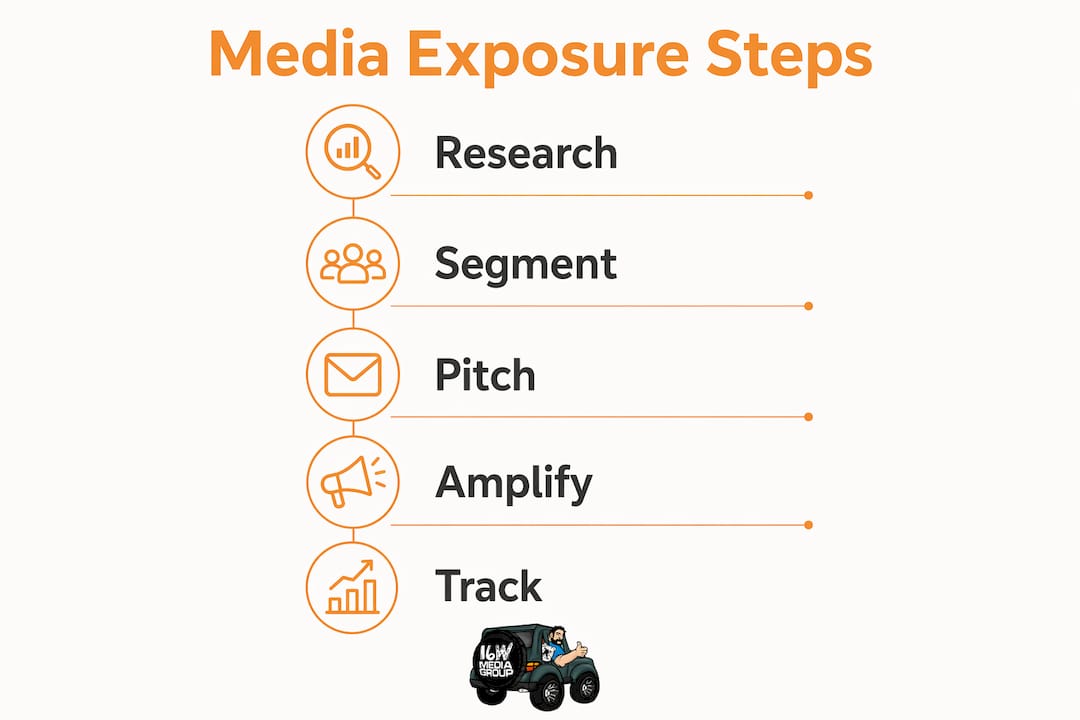
Building a precise media contact list is the operational core of any media outreach strategy. Generic databases are a starting point, but real results come from manual research and personalization.
Follow this sequence to build your list:
- Search by beat. Use Google to find journalists who have covered businesses similar to yours in the past six months. Their bylines are your roadmap.
- Use platforms like Muck Rack or Qwoted. These tools filter journalists by topic, outlet, and coverage style. AI-driven PR platforms improve pitch targeting by filtering journalists based on sentiment and coverage style, which increases acceptance rates and reduces wasted outreach.
- Record contact details and recent work. For each journalist, note their email, Twitter or LinkedIn handle, and the last three stories they published.
- Personalize every pitch. Reference a specific article they wrote. Explain why your story fits their beat. Keep the pitch under 200 words.
The data on personalization is clear. Personalized outreach tailored to journalists’ beats increases pitch response rates by up to 50%. That number means the difference between one callback per twenty pitches and one per ten. For a local business owner with limited time, that efficiency matters enormously.
| Pitch element | Why it matters |
|---|---|
| Journalist’s name and recent article | Shows you did your homework and are not mass-blasting |
| One-sentence story angle | Gives the journalist an instant mental picture of the story |
| Pre-reported assets | Reduces their production time and increases publish likelihood |
| Clear contact and follow-up date | Removes ambiguity and sets professional expectations |
Timing also matters. Responding to journalist requests on Qwoted within two hours greatly increases your chances of securing a quote or feature. Journalists work on tight deadlines, and the first credible source who responds often wins the placement.
Pro Tip: Follow your target journalists on LinkedIn and Twitter for two weeks before pitching. Comment thoughtfully on their work. When your pitch arrives, your name is already familiar.
How can digital channels amplify your earned media coverage?
Earning a press mention is step one. Amplifying it across digital channels multiplies its value by three to five times. Tagging journalists and outlets on social media when you share coverage can expand reach by 3 to 5x through journalist resharing. That reshare exposes your business to the journalist’s entire audience, which is often far larger than your own following.
Here is how to build a digital amplification system around every piece of coverage you earn:
- Post the feature immediately. Share it on Facebook, Instagram, LinkedIn, and Google Business Profile within 24 hours of publication. Tag the journalist and the outlet.
- Create short-form video. Film a 60-second reaction or behind-the-scenes clip referencing the coverage. Video content on Instagram Reels and TikTok reaches audiences who never read the original article.
- Publish a blog post. Write a 400-word post on your website that summarizes the coverage and links to the original article. This builds SEO authority and keeps the story alive.
- Build a digital press kit. Collect your media mentions, high-resolution photos, and a one-page company overview into a single Google Drive folder or dedicated press page. Journalists who discover you later can self-serve all the assets they need.
Media placements in recognized outlets also feed AI training data and digital authority, enhancing brand visibility beyond human audiences. This means a feature in a credible local outlet today can influence how AI tools like ChatGPT and Perplexity describe your business tomorrow. For practical social media execution, the social media tips from 16wmediagroup cover exactly how local businesses can turn digital channels into consistent visibility engines.
Pro Tip: Add a “As Seen In” section to your website homepage with logos of outlets that have featured you. This single design element builds instant credibility with new visitors.
How do you track coverage and maintain media relationships long-term?
Tracking your media coverage and nurturing journalist relationships are what separate businesses that get one feature from those that get featured repeatedly. Consistent engagement with journalists beyond initial coverage builds trust and increases the chances of repeat features. The follow-up is where most local businesses drop the ball.
| Approach | Outcome |
|---|---|
| Monitor coverage with Google Alerts or Mention | Catch every mention in real time and respond quickly |
| Track referral traffic in Google Analytics | Measure which outlets actually drive customers to your site |
| Send a thank-you note after coverage | Opens the door to future pitches without feeling transactional |
| Share journalist content regularly on social media | Keeps you visible to them without asking for anything |
| Pitch a follow-up story within 90 days | Maintains momentum and deepens the relationship |
Tracking media coverage metrics like reach, sentiment, and referral traffic is vital to understanding which placements actually move the needle. A feature in a small neighborhood blog that sends 200 qualified visitors to your site may outperform a mention in a large outlet that sends zero. Use that data to refine your media list and prioritize the outlets that deliver real business results.
Timely response and multi-channel outreach across email, social media, and phone significantly boost long-term success. The businesses that treat media contacts like valued professional relationships, rather than one-time transactions, are the ones that appear in the press consistently year after year.
Pro Tip: Set a quarterly calendar reminder to send each media contact a useful, non-promotional update about your business. A new hire, a community initiative, or a customer milestone all qualify.
Key takeaways
Maximizing media exposure requires audience precision, story-driven pitching, and consistent relationship building across both earned and digital channels.
| Point | Details |
|---|---|
| Start with audience research | Map your customer profile and local media outlets before writing a single pitch. |
| Lead with story angles, not products | Angle-driven pitches with pre-reported assets earn significantly more coverage than product announcements. |
| Personalize every outreach | Tailored pitches referencing journalists’ recent work increase response rates by up to 50%. |
| Amplify every placement | Sharing coverage on social media with journalist tags can multiply reach by 3 to 5 times. |
| Track and nurture relationships | Monitor referral traffic and maintain regular, non-promotional contact with media connections. |
What I have learned from watching local businesses chase press coverage
I have watched dozens of local business owners approach media outreach the same way they approach paid advertising: spray and pray. They blast a generic press release to 200 contacts and wonder why nobody calls back. The businesses that actually get featured consistently do the opposite. They pitch three journalists, not thirty, and they know each journalist’s last five stories by heart.
Small business owners have a structural advantage over PR agencies in media outreach because they can build direct, authentic relationships that no hired intermediary can replicate. A journalist who knows the owner personally will pick up the phone. A journalist who receives an agency-templated pitch will not.
The other thing I have noticed is that local media is genuinely hungry for good stories. Community newspapers, neighborhood podcasts, and regional lifestyle magazines are chronically understaffed. They need content. If you show up with a well-packaged, relevant story, you are solving their problem, not asking for a favor. That mindset shift changes everything about how you pitch.
My honest advice: start with one journalist at one outlet you genuinely respect. Read their work. Understand their audience. Build a real relationship before you need anything. That single relationship, maintained well over 12 months, will deliver more media value than a hundred cold pitches ever will. Pair that with a solid media strategy foundation and you have a system that compounds over time.
— Mike
Ready to put your local business in front of the right audiences?
Building a media presence takes strategy, consistency, and the right channels working together. 16wmediagroup specializes in helping local businesses across Tampa and beyond create media plans that actually get results. From community magazine placements and podcast features to regional advertising campaigns, the team at 16wmediagroup knows how to connect your brand with the audiences that matter most.
Whether you are starting from scratch or looking to scale what is already working, the local advertising campaign planning guide from 16wmediagroup gives you a clear, step-by-step framework for building your media presence. You can also explore the full range of media and publishing services to find the right fit for your business goals and budget.
FAQ
What is earned media and how does it differ from paid advertising?
Earned media is press coverage, mentions, and features your business receives without paying for placement. Unlike paid advertising, earned media carries third-party credibility that audiences trust more.
How many journalists should I pitch at one time?
Start with five to ten highly targeted contacts rather than mass-blasting hundreds. Personalized pitches to a small, relevant list consistently outperform generic outreach at scale.
How quickly should I respond to journalist inquiries?
Respond within two hours whenever possible. Journalists work on tight deadlines, and the first credible source who replies often secures the quote or feature.
How do I measure whether my media coverage is working?
Track referral traffic in Google Analytics, monitor brand mentions with Google Alerts or Mention, and measure whether coverage correlates with increases in leads or foot traffic.
Do I need a PR agency to get media coverage as a local business?
No. Local business owners have a direct relationship advantage that agencies cannot replicate. A focused DIY approach using tools like Muck Rack, Qwoted, and a well-built media list produces strong results without agency fees.