A lot of businesses are still buying local media like it is 2019 – broad targeting, generic creative, and a hope that frequency alone will carry the load. But local advertising trends 2026 are pointing in a different direction. The brands that win next year will be the ones that feel familiar in the right neighborhoods, show up across trusted channels, and give people a reason to remember them before they are ready to buy.
For Tampa-area businesses and growth-focused brands across Florida, this shift is good news. It favors companies willing to build local relevance instead of chasing random impressions. If your goal is stronger visibility, better recall, and more high-value customer attention, 2026 is shaping up to reward strategy over noise.
What local advertising trends 2026 are really signaling
The biggest change is not a new app or a flashy media format. It is a return to local trust, but with smarter targeting and better coordination. Consumers are overloaded with content. They scroll fast, skip faster, and tune out brands that feel distant or interchangeable.
That means local advertising is moving away from isolated tactics and toward connected visibility. A direct mail piece may work better when it is reinforced by neighborhood digital targeting. A podcast feature carries more weight when the audience already recognizes the brand from community publications or local media placements. Repetition still matters, but recognition now depends on context.
This is where many businesses lose speed. They run one campaign here, sponsor one event there, test one digital ad set, and then wonder why nothing sticks. In 2026, the brands that stay on the branding highway longest and most consistently will have an edge, especially in markets where reputation and familiarity drive purchase decisions.
1. Neighborhood-level targeting will beat citywide messaging
Local no longer means simply choosing Tampa, St. Petersburg, or Sarasota as a market. It means understanding which communities matter most to your business and shaping your message to fit those audiences.
Affluent subdivisions, waterfront communities, fast-growing suburban corridors, and business-dense pockets all respond differently. A luxury home services company does not need the same message as a family dental practice or a legal firm expanding into a new part of town. In 2026, stronger campaigns will reflect local lifestyles, local priorities, and local buying behavior.
This does not mean producing dozens of entirely different campaigns. It means building a smart core message and adjusting the language, media mix, and placement so it feels rooted in the communities you want to serve. Precision at the neighborhood level often creates better results than broader reach with weaker relevance.
2. Trust-based media will carry more weight than interruption media
People still buy from businesses they recognize and trust. That sounds obvious, but many advertising plans are still built around interruption first and credibility second.
One of the most important local advertising trends 2026 will accelerate is the shift toward media environments that transfer trust. Community publications, local storytelling platforms, business podcasts, and established regional media all help brands show up with more substance. Instead of appearing as just another ad, your business enters the conversation with context.
This matters most for professional services, healthcare, home services, financial brands, and any business with a higher customer lifetime value. When the decision carries more risk or more money, familiar exposure in trusted settings can outperform pure click-driven tactics.
The trade-off is that trust-based media often requires patience. It may not give you instant attribution the way a short-term lead ad might. But it tends to build stronger memory, better perception, and more qualified demand over time.
3. Multi-channel local campaigns will become the standard
Single-channel advertising is getting harder to sustain. One postcard, one radio spot, one social ad campaign, or one podcast mention rarely does enough on its own.
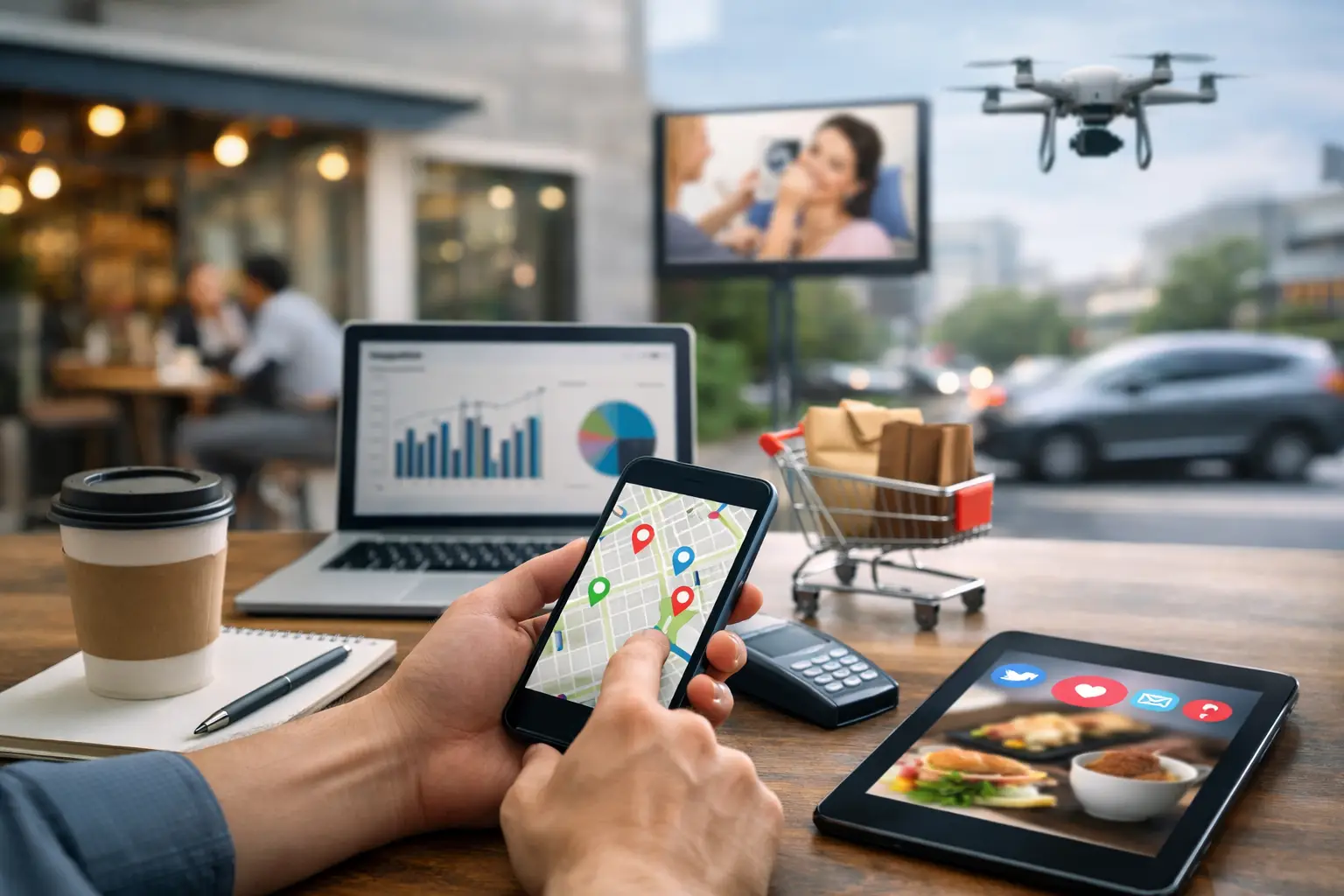
In 2026, local winners will connect the dots. They will combine traditional media, targeted digital exposure, community-driven content, and local authority-building touchpoints into one coordinated push. Not because every business needs to be everywhere, but because customers do not move in a straight line.
A homeowner might hear about a company through a local podcast, see its name in a community publication, notice a digital ad later that week, and finally remember it when a neighbor brings it up. That path is messy, but it is real. The more your channels reinforce one another, the more likely your brand becomes the easy choice.
This is where turnkey strategy matters. Managing fragmented vendors can slow momentum fast. Businesses that want to grow locally need campaigns that run like one vehicle, not a traffic jam of disconnected tactics.
4. Storytelling will outperform polished but generic creative
There is a difference between looking professional and being memorable. In local markets, the most effective creative often feels specific, human, and connected to the community.
That could mean spotlighting the founder’s local roots, showing real customer outcomes, featuring recognizable neighborhoods, or speaking directly to the concerns of the audience you want most. Businesses that sound like they actually live and work in the market will stand out from brands using copy that could belong to anyone in any city.
The key is to keep the story useful, not self-congratulatory. Local audiences respond when they can quickly answer three questions: Do you understand this community, can you solve my problem, and will I feel confident choosing you? If your creative answers those clearly, it earns attention.
5. Brand recall will matter as much as lead generation
Many business owners want advertising to produce immediate calls, clicks, and form fills. Fair enough. But one of the costliest mistakes in local marketing is underinvesting in recall.
Not everyone is in-market today. The person who needs your service six months from now is still a valuable audience if your brand becomes the one they remember first. That is why repeated local exposure matters. It keeps your business top-of-mind so the path to action is shorter when need appears.
In 2026, more businesses will start measuring local advertising with a wider lens. Yes, leads matter. But so do direct traffic increases, branded search lift, referral mentions, engagement from target ZIP codes, and sales conversations where prospects already know your name.
Brand recall is not fluff. In crowded local markets, it is often the difference between being shortlisted and being skipped.
6. Co-op and shared-value advertising models will gain traction
Advertising costs are not getting friendlier, and many local businesses want more exposure without multiplying complexity. That makes co-op and shared-value media models more attractive in 2026.
When done well, these models let businesses align with trusted local platforms, relevant community content, or complementary brands in ways that stretch budget without weakening visibility. A company gets the benefit of association, local context, and repeated audience contact while reducing some of the friction that comes with building every campaign from scratch.
Of course, fit matters. Shared placement only works when the audience, presentation, and surrounding brand environment support your positioning. A premium brand should not force itself into a bargain-bin context just to save money. But for many growth-minded companies, co-op structures can put them in front of high-value local audiences faster.
7. Simplicity in execution will become a competitive advantage
Here is a trend that does not get enough attention: the businesses that execute consistently will outperform the businesses that overcomplicate everything.
Many local brands know they need better advertising, but their plans stall because there are too many tools, too many vendors, and too many decisions. By the time approvals are done, the market has moved and the campaign has lost steam.
In 2026, simple will win more often. Clear audience selection. Clear market coverage. Clear creative. Clear repetition. Clear reporting. Businesses want a fast-track approach that keeps all roads leading to their brand, not a stack of disconnected dashboards and half-finished campaigns.
That is one reason integrated local partners will keep gaining ground. When strategy, placement, storytelling, and execution work together, businesses can stay focused on growth instead of chasing logistics. For a company like 16W Media Group, that local-first model fits where the market is headed.
Where to focus next
If you are planning your next media push, resist the urge to ask only, what is the newest tactic? A better question is, what will make our brand more recognized, more trusted, and more relevant in the communities that matter most?
That answer may include print, podcast exposure, digital reinforcement, direct neighborhood targeting, or a co-op media strategy. It may also require saying no to channels that look exciting but do not align with how your customers actually choose. Not every business needs the same route. The point is to build a media plan that meets people where local trust is formed.
The road ahead belongs to brands that show up with consistency and local purpose. If your business can become the name people hear often, see in the right places, and remember with confidence, 2026 will not just bring more attention. It will bring better customers.