
Local digital media is defined as any online content, advertising, or publishing channel targeted to a specific geographic community to build brand awareness and drive customer action. Understanding why use digital media locally matters because hyperlocal digital platforms deliver conversion rates of 15%–28% for community-focused content, compared to low single-digit averages for national media. That gap is not a rounding error. It reflects a fundamental truth: local audiences respond to content that speaks directly to their streets, their schools, and their daily concerns. For business owners and marketing managers in competitive markets like Tampa, this distinction shapes every dollar spent on advertising.
Why use digital media locally instead of national channels?
Digital media works better at the community level because it targets the right people with the right message at the right moment. National campaigns cast a wide net and accept low conversion as the cost of scale. Local digital campaigns do the opposite. They concentrate reach on the audience most likely to walk through your door or call your number.
Hyperlocal digital platforms achieve conversion rates 3x to 8x higher than national media because they sell civic participation, not just information. Readers of a local news site or community newsletter are not passive consumers. They are invested members of a shared place. When your brand appears in that context, it inherits some of that trust.

Geographic and demographic targeting also separates digital from traditional media. A print newspaper ad reaches everyone who subscribes, regardless of whether they live near your business or match your customer profile. A geo-targeted Facebook post or a Google My Business listing reaches people within a specific radius who are actively searching for what you sell. The difference in relevance is significant.
| Format | Targeting capability | Conversion strength |
|---|---|---|
| National print or TV | Broad, demographic only | Low single digits |
| Local broadcast TV or radio | Regional, limited demographic | Moderate |
| Hyperlocal digital content | Precise geographic and behavioral | 15%–28% |
| Local SEO and Google My Business | Intent-based, location-specific | High |
Pro Tip: Combine geo-targeted social ads with a fully optimized Google My Business profile. Businesses that use both see stronger local search visibility than those relying on either channel alone, according to local advertising strategies research from 16wmediagroup.
Traditional media still has a role in brand awareness, and local media buying vs. digital ads is a comparison worth understanding before you commit your budget. The short answer: digital wins on targeting and measurement, while traditional media can reinforce reach.
How does local digital media build trust with your community?
Trust is the currency of local business. Customers choose a neighborhood restaurant over a chain, or a local insurance agent over a national call center, because proximity creates accountability. Local digital media works the same way.
Local journalists and content creators live and work in the same community as their readers. That proximity makes their reporting more credible and their endorsements more meaningful. When a local news site covers your business, the audience already trusts the source. That trust transfers to your brand.
Digital platforms also enable real-time updates that print and broadcast cannot match. A local news portal can publish a story about a city council vote, a road closure, or a community event within minutes. Local digital media provides timely, reliable information that strengthens transparency and public awareness. Businesses that align their content with this standard of timeliness signal that they are present and paying attention.
“Local media contextualizes economic shifts impacting household employment and business viability. It serves as a critical translator between national trends and the everyday realities of communities, helping residents understand how macro changes affect them directly.”
The accountability function of local media also matters for brand credibility. Hyperlocal newsrooms act as the primary source of accountability for local institutions, covering school boards, city councils, and government meetings that national outlets ignore. Brands that advertise in or partner with these outlets signal community investment. That signal builds loyalty over time.
Key trust-building benefits of local digital media include:
- Proximity credibility: Reporters and creators who share your zip code carry more weight with local audiences than distant national voices.
- Real-time relevance: Digital platforms update instantly, keeping your brand connected to current community conversations.
- Civic alignment: Coverage of local government and events positions your brand as a community stakeholder, not just a vendor.
- Misinformation defense: Reliable local digital outlets combat false narratives that circulate on social media, protecting the information environment your brand operates in.
Understanding how local news functions as market research can also sharpen your targeting. Local news coverage reveals what your community cares about, which issues drive engagement, and where your brand can add genuine value.
What local digital media strategies actually drive engagement?
Knowing the benefits of local digital media is one thing. Knowing how to deploy it is another. The following strategies produce measurable results for local business owners and marketing managers.
-
Claim and optimize your Google My Business profile. This is the single highest-return action a local business can take online. A complete profile with photos, hours, reviews, and posts improves your ranking in local search results. Local SEO and Google My Business directly boost regional search visibility and customer connections.
-
Use hyperlocal social media targeting. Platforms like Facebook and Instagram allow you to target ads by zip code, neighborhood, and behavioral signals. A Tampa restaurant can target users within three miles who have shown interest in dining out. This precision reduces wasted spend dramatically.
-
Create community-focused content. Publish posts, videos, or articles about local events, neighborhood news, and community milestones. Content that references specific streets, schools, or local figures outperforms generic brand content in local markets. This approach also supports digital media for community outreach by making your brand part of the local conversation.
-
Segment your email list by location. If your business serves multiple neighborhoods or districts, send different messages to each segment. A promotion relevant to one part of town may not resonate in another. Location-based segmentation improves open rates and click-through rates.
-
Integrate multiple channels into one cohesive campaign. Multi-channel local digital media strategies combining social, search, email, and community content deliver the strongest brand visibility and customer loyalty. Each channel reinforces the others, creating a consistent presence across the platforms your audience uses daily.
Pro Tip: Publish a monthly community spotlight post featuring a local event, nonprofit, or neighbor. This type of content earns shares from people who would never share a product ad, expanding your organic reach at zero additional cost.
What measurable impact does local digital media have on business growth?
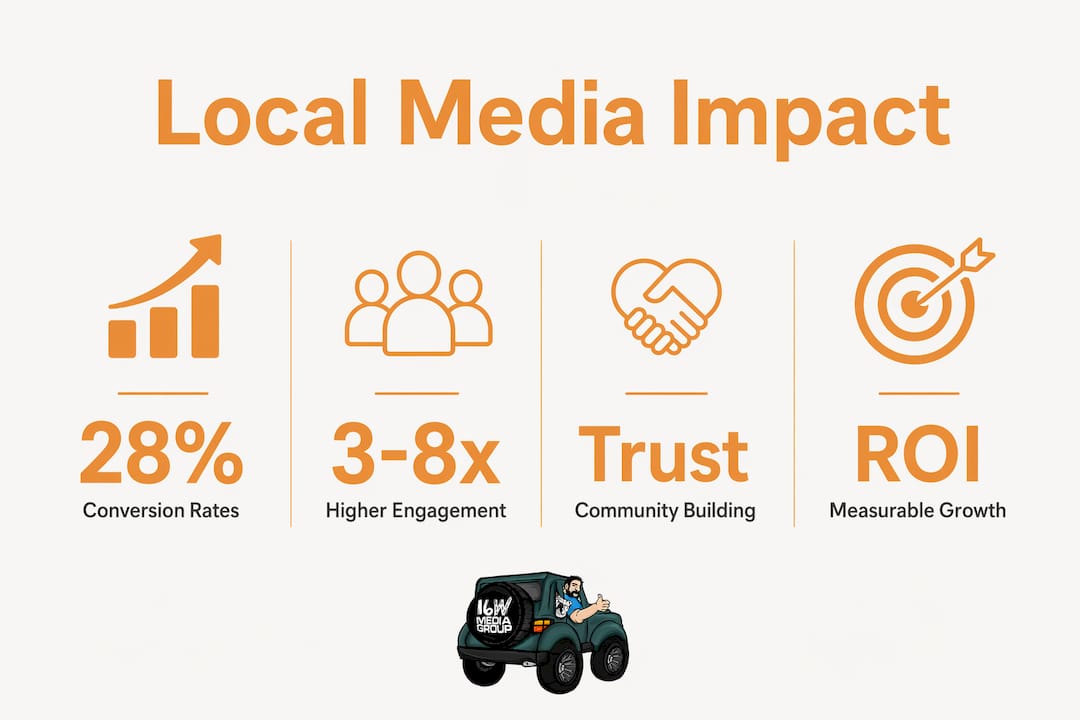
The impact of digital media locally shows up in specific, trackable metrics. Business owners who measure the right numbers can see exactly where their investment is working and where it is not.
Tracking and analytics tools enable local businesses to measure engagement, conversion, and ROI of digital media campaigns precisely. Dashboards and KPIs tailored to local markets maximize campaign effectiveness. Without measurement, you are spending on faith rather than evidence.
The metrics that matter most for local digital campaigns include:
- Click-through rate (CTR): Measures how often people who see your ad or post take action. A strong local CTR signals that your message resonates with the community.
- Conversion rate: Tracks how many clicks become actual customers, calls, or form submissions. Hyperlocal content consistently outperforms national benchmarks here.
- Customer retention rate: Loyal local customers spend more and refer more. Tracking repeat visits or purchases shows whether your community engagement is building lasting relationships.
- Local search ranking: Your position in Google’s local pack directly affects foot traffic and phone calls. Track this monthly.
Community-driven revenue is also a real phenomenon. Consumers pay for the feeling of community membership more than for content alone. This explains why hyperlocal conversion rates remain so high even for small, independent outlets. When your brand is woven into that community fabric, customers choose you by default. They do not shop around because switching feels like leaving the neighborhood.
Brands that invest consistently in local digital media also see compounding returns. A business that publishes community content for 12 months builds an archive of local relevance that new competitors cannot replicate overnight. That depth of presence becomes a durable competitive advantage.
Key Takeaways
Local digital media delivers superior conversion rates, trust, and measurable ROI because it connects businesses directly with the communities they serve, using precise targeting and relevant content.
| Point | Details |
|---|---|
| Hyperlocal conversion rates | Local digital content converts at 15%–28%, far above national media averages. |
| Trust through proximity | Local journalists and creators build credibility that transfers to brands they cover or host. |
| Multi-channel integration | Combining social, search, email, and community content produces the strongest local brand visibility. |
| Measurement drives results | Analytics tools tailored to local KPIs reveal exactly where campaigns succeed or need adjustment. |
| Community content compounds | Consistent local publishing builds a presence archive that new competitors cannot quickly replicate. |
What I’ve learned after years of watching local digital media work
Most business owners I talk to underestimate local digital media because they compare it to national digital advertising and assume the logic is the same. It is not. National digital advertising is a volume game. Local digital media is a relationship game. The rules are different, and so are the results.
The businesses I have seen win consistently in local markets are not the ones with the biggest budgets. They are the ones who show up in the community conversation week after week. They sponsor the little league team and post about it. They share the city council vote that affects their customers. They congratulate the local school on its championship. None of that costs much. All of it builds trust that paid ads cannot buy.
The overlooked opportunity I keep pointing out is the local economic news cycle. When the local economy shifts, residents look to local sources for context. Businesses that are already present in those sources get associated with reliability and stability. That association is worth more than any single campaign.
The pitfall I see most often is inconsistency. Business owners run a local campaign for six weeks, see modest results, and pull back. Local digital media requires patience. The compounding effect I described above takes months to build. The businesses that stay the course are the ones that eventually own their market.
— Mike
How 16wmediagroup helps local businesses win with digital media
Local businesses that want to put these strategies into practice need more than a checklist. They need a media partner who understands the local market, the right channels, and how to measure what matters.
16wmediagroup works with local business owners and marketing managers to build media plans that combine community publishing, digital advertising, and podcast content into campaigns that drive real engagement. The team’s local advertising best practices guide covers the specific tactics that produce results in 2026, from Google My Business optimization to hyperlocal social targeting. If you are ready to build a local digital presence that compounds over time, reach out to 16wmediagroup through the services page and start a conversation about your market.
FAQ
Why use digital media locally instead of national advertising?
Local digital media delivers conversion rates of 15%–28% for community-focused content, compared to low single-digit averages for national campaigns. The precision targeting and community trust built through local channels make every dollar work harder.
What is the biggest benefit of local digital media for small businesses?
The biggest benefit is trust. Local audiences respond to brands that appear in familiar, credible community contexts, and that trust converts to loyal customers who refer others and return repeatedly.
How does local SEO fit into a local digital media strategy?
Local SEO, especially through Google My Business, connects your business to people actively searching for your products or services within a specific geographic area. It is one of the highest-return tactics in any local advertising strategy.
How can a business measure the impact of local digital media?
Track click-through rates, conversion rates, local search rankings, and customer retention rates using analytics dashboards tailored to local KPIs. These metrics show exactly where your campaign is working and where to adjust.
What types of content work best for local community engagement?
Community spotlights, local event coverage, neighborhood news, and content referencing specific local places consistently outperform generic brand content in local markets. Relevance to a shared place drives shares and engagement.