A local business can spend the same budget on audio and get two very different outcomes. One campaign puts your name in front of thousands during a morning drive. The other puts your message in someone’s ears for 30 minutes while they actively listen. That is the real tension in podcast marketing vs radio advertising – reach versus relationship, scale versus specificity, familiarity versus depth.
For Tampa-area brands and growth-minded businesses across Florida, the better option is rarely about which channel is newer or louder. It is about which one moves your business further down the branding highway in your market, with the right audience, at the right moment, and with the right level of trust.
Podcast marketing vs radio advertising: what changes the result?
At a glance, both are audio channels. Both can build awareness. Both can carry your brand into someone’s daily routine. But the way people consume them is not the same, and that difference affects performance.
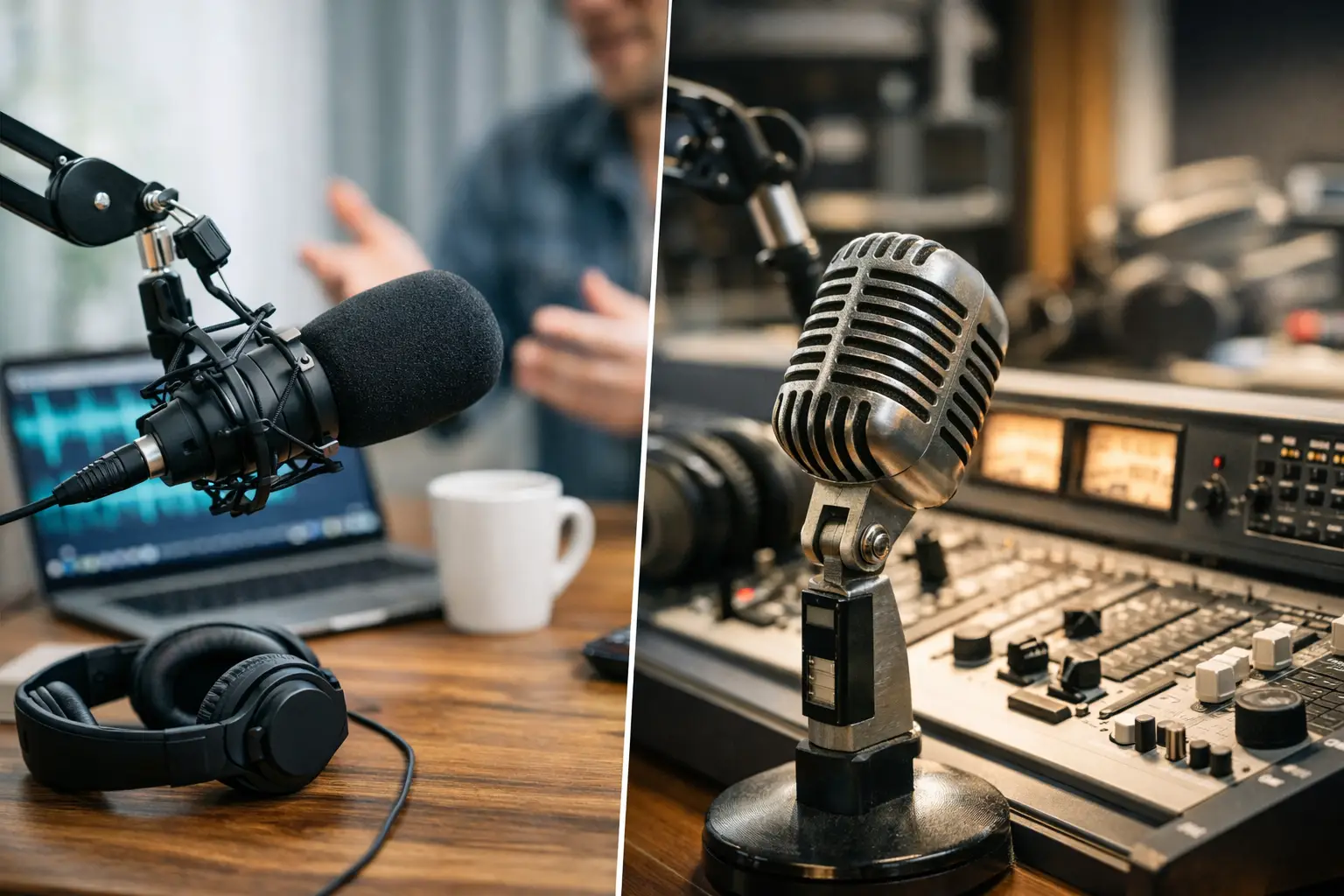
Radio is broad, habitual, and tied to local presence. People hear it in the car, at work, in stores, and during established time slots. It is excellent for frequency. If your goal is to stay visible across a community and become a familiar name, radio still has real horsepower.
Podcast marketing is more intentional. People choose a specific show, host, and topic. They often listen for longer periods, and the host-audience relationship tends to be stronger than what you get in most traditional ad environments. That can make podcast ads feel less like interruptions and more like recommendations.
This is why comparing podcast marketing vs radio advertising is not just a media question. It is a trust-and-context question.
Where radio advertising still wins
Radio remains a strong local visibility engine, especially for businesses that need mass awareness in a defined market. If you want more people in your city or service area to recognize your name, radio can put your brand on repeat in a way few channels can match.
For businesses with broad consumer appeal, that matters. Home services, legal practices, healthcare groups, retail brands, restaurants, and automotive businesses often benefit from being heard over and over again by a wide audience. When someone finally needs your service, they remember the name they have heard all month.
Radio also has an advantage when timing matters. A seasonal offer, local event, grand opening, or short-term promotion can gain traction quickly with the right station and schedule. You are buying momentum, not just impressions.
There is another factor local brands should not ignore: community legitimacy. Being featured on established radio stations can signal that your business belongs in the local conversation. That kind of familiarity helps when your audience values trust, reputation, and neighborhood recognition.
Still, radio comes with trade-offs. Audience targeting is broader, attribution can be harder, and some listeners treat ads as background noise. If your message needs nuance or depends on a highly engaged niche audience, radio may give you plenty of exposure without enough conversion intent.
Where podcast marketing pulls ahead
Podcast marketing shines when your audience is specific and your offer benefits from credibility. If you sell professional services, high-ticket solutions, specialized healthcare, financial services, or premium consumer offerings, podcast advertising can create a stronger connection than a standard radio spot.
That is because podcasts usually attract listeners around shared interests, industries, lifestyles, or local identity. Instead of renting a general audience, you align with a trusted voice that already has attention. A host-read ad can feel conversational, personal, and believable in a way produced commercials often do not.
For many brands, that translates into higher-quality engagement. Not always bigger reach, but better resonance. A smaller audience that trusts the host may outperform a larger audience that barely notices the ad.
Podcasts also give you more room to tell a story. A radio ad often has to get in, make the point, and get out. A podcast mention can explain why your business matters, who it helps, and what makes it different. If your brand wins on personality, expertise, or local storytelling, podcasting gives that message more road to travel.
The trade-off is scale. Podcasts typically do not deliver the same instant market saturation as radio. And not every show is a fit just because the audience size looks attractive. The wrong host, wrong audience, or weak integration can leave your message stranded.
The real decision: awareness or alignment?
Business owners often frame this choice as old media versus new media. That is too simple. A better question is this: do you need wider awareness fast, or do you need tighter audience alignment with stronger trust?
If your business is trying to dominate local mindshare, radio can be a fast-track option. It puts your brand in motion across a broad geography and helps create repetition. If enough qualified people in your area simply do not know you exist yet, radio solves a visibility problem.
If your challenge is not awareness alone but credibility with the right audience, podcast marketing may produce stronger returns. It gives your message a more focused lane. That is especially valuable when the customer journey is longer, the price point is higher, or the decision depends on confidence.
In other words, radio can help people know your name. Podcasts can help them trust why your name belongs on their shortlist.
Cost, ROI, and what “better” really means
When brands compare podcast marketing vs radio advertising, cost is usually close behind. But lower cost does not automatically mean better value, and higher reach does not guarantee stronger ROI.
Radio can be efficient for broad awareness, especially when the offer is simple and the audience is large. If your business benefits from repeated exposure across a metro area, the value may come from frequency and recall, not immediate direct response.
Podcast marketing often delivers value differently. Because the audience is more specific and engaged, a campaign can generate stronger lead quality even if total impressions are lower. That matters for businesses that would rather reach 500 right-fit prospects than 5,000 casual listeners.
Measurement also varies. Podcasts may offer unique promo codes, landing page tracking, and audience-level context. Radio often relies more heavily on branded search lift, call trends, traffic spikes, and market correlation. Neither channel is perfect in isolation. The smartest approach is to judge performance against your actual goal, not a generic benchmark.
If your goal is neighborhood saturation, radio may look stronger. If your goal is qualified conversations with a more defined audience, podcasts may win. Better depends on where your business is trying to go.
Why local strategy changes the answer
For local and regional brands, the market itself should shape the decision. A business serving affluent neighborhoods, specialized service zones, or tightly connected communities needs more than raw exposure. It needs the right exposure in the right circles.
That is where strategy matters more than channel hype. In some cases, radio is the lead vehicle because it builds broad local recognition and keeps your brand top-of-mind. In other cases, podcasts become the better route because they attach your business to trusted voices and highly relevant listeners.
Often, the strongest growth does not come from choosing one lane forever. It comes from understanding what each lane does best. Radio builds local familiarity. Podcasts deepen audience connection. One fuels visibility. The other sharpens relevance.
That is why many brands see the best results from integrated planning instead of one-channel thinking. A business might use radio to create market presence and use podcast placements to reinforce authority with niche audiences. That combination can move people from recognition to trust without forcing your brand to choose between reach and relationship.
For companies focused on community visibility and consistent brand recall, that balanced approach is often where the momentum lives. It is also where a partner like 16W Media Group can help simplify the route, aligning media choices with the neighborhoods, customers, and growth goals that matter most.
So which one should your business choose?
Choose radio when you need broad local awareness, repeated exposure, and a familiar presence across your market. Choose podcast marketing when you need stronger credibility, a more targeted audience, and room for a more persuasive message.
And if your business is ready to grow beyond random ad buys and fragmented vendors, do not treat podcast marketing vs radio advertising like a winner-take-all fight. Treat it like a route map. The smartest path is the one that gets your brand heard by the right people, often enough to be remembered, and clearly enough to be trusted.
The businesses that win local attention are not always the loudest. They are the ones that know when to broadcast widely, when to speak directly, and how to keep all roads leading back to their brand.