

Most marketers know they should be using more than one channel. Far fewer understand how the role of media mix actually shapes whether a campaign compounds or collapses. A media mix is not simply about spreading your budget across a few platforms and hoping something lands. It is a deliberate system where each channel serves a specific job, feeds the others, and creates coverage across the full buyer journey. Done right, it produces brand visibility that no single channel can replicate. Done wrong, it just dilutes your spend.
Table of Contents
- Key takeaways
- The role of media mix in modern marketing
- Designing a media mix that actually works
- Benefits, challenges, and what the data says
- How media mix works in practice
- Emerging trends shaping media mix in 2026
- My take on why most media mixes underperform
- Build a smarter media mix with 16wmediagroup
- FAQ
Key takeaways
| Point | Details |
|---|---|
| Diversification drives returns | Brands using multiple channels achieve 20 to 30% higher return on ad spend than single-channel campaigns. |
| Channel role clarity matters | Every channel should map to a specific funnel stage: awareness, consideration, or conversion. |
| Creative must fit the channel | Running identical ads across platforms without adapting them causes diminishing returns. |
| Traditional media is resurging | Print and radio are delivering strong ROI in 2026 and deserve a seat back at the planning table. |
| Measurement must be ongoing | Media mix modeling and incrementality testing, not last-click attribution, give you the true performance picture. |
The role of media mix in modern marketing
Most people define a media mix as the combination of channels used to reach an audience. That is accurate, but it undersells the concept. The real importance of media mix is that it determines how effectively your brand penetrates a market, across different moments, mindsets, and platforms, all at once.
Historically, the media mix was simpler. You had TV, radio, print, and outdoor. The digital era exploded that into dozens of channels overnight, and most brands responded by chasing the loudest, most measurable signal: performance search, paid social, retargeting. That made sense for a while. Then those channels got crowded, costs climbed, and the marginal return on the next dollar spent started shrinking fast.
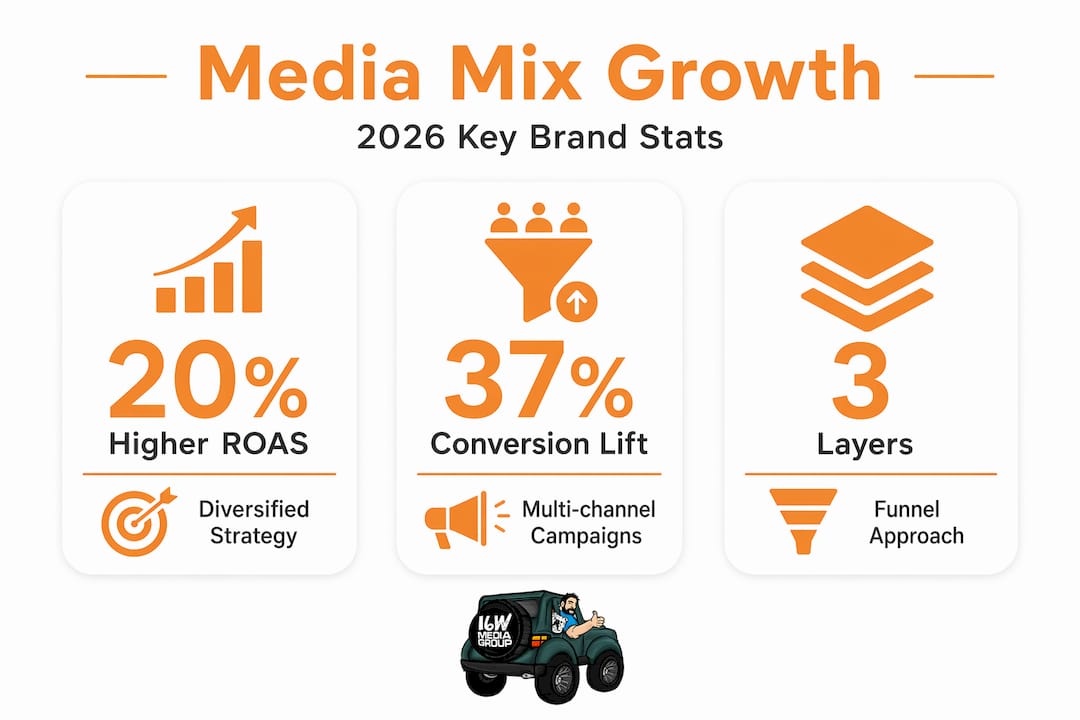
The data from 2026 is telling. Diversified media mix strategies produce 20 to 30% higher return on ad spend compared to single-channel approaches. More specifically, print delivers 66% higher ROI and radio delivers 40% higher ROI per dollar spent than many digital-only alternatives. Those numbers surprise most digital-first marketers, which is exactly why ignoring traditional media is a competitive mistake right now.
Here is what a real media mix can include:
- Digital channels: Paid search, paid social, display, YouTube, connected TV, programmatic
- Traditional channels: Radio, print publications, out-of-home, direct mail, broadcast TV
- Owned and organic channels: SEO content, email, podcasts, social media profiles, community publishing
- Earned media: Press coverage, influencer partnerships, word-of-mouth referrals
The mix you choose is not universal. It is always specific to your audience’s behavior, your funnel gaps, and the competitive environment you are operating in.
Designing a media mix that actually works
Understanding what is media mix is only the first step. The harder part is building one with clear logic behind each channel decision.
Think about your media mix as a system with three layers. Awareness channels fill the top: they introduce your brand to people who have never heard of you. Consideration channels work the middle: they give people reasons to choose you over alternatives. Conversion channels close the deal at the bottom. Channel mix design is a strategic decision, not just a planning formality, and treating awareness channels as optional is the mistake that quietly starves your bottom-of-funnel performance over time. If you stop feeding the top, search volume shrinks, and even your best-performing conversion campaigns start to decline.

| Funnel stage | Channel examples | Primary goal |
|---|---|---|
| Awareness | Podcast ads, display, radio, print, YouTube | Reach new audiences |
| Consideration | Content marketing, social media, email, SEO | Build trust and preference |
| Conversion | Paid search, retargeting, direct mail | Drive purchase or inquiry |
One of the most common failures in channel mix design is the performance-only trap. Brands load up on conversion channels because they are easy to measure and justify, then wonder why their cost per acquisition keeps climbing year over year. Awareness spend is not waste. It is the demand creation that makes your conversion channels efficient.
Pro Tip: Before allocating a single dollar, map your current funnel to identify where you are losing people. If you are getting clicks but not conversions, you likely need more consideration content. If you are not getting clicks at all, you need more awareness investment.
Creative adaptation deserves its own conversation here. Running identical ads across channels without channel-native design leads to diminishing returns. A podcast ad script that works brilliantly sounds completely out of place as display copy. A billboard that stops a driver in three seconds fails as a Facebook ad that needs to tell a fuller story. Design your message for the platform, not just the audience.
Benefits, challenges, and what the data says
The benefits of media mix are not theoretical. Multichannel campaigns show 246% higher engagement rates during consumer behavior shifts compared to single-channel efforts. That is the kind of stat that should end the debate, but many brands still hesitate because multi-channel feels harder to manage and measure.
Let’s address the real challenges honestly:
- Attribution complexity: When a buyer sees a magazine ad, hears a podcast, and then clicks a Google search ad, who gets credit? Last-click attribution says Google. Reality says all three played a role.
- Budget pressure: Multi-channel requires discipline about not just spreading budget thin. More channels need more creative and more management capacity.
- Consistency without uniformity: Your brand voice must stay recognizable across every channel even as the format changes entirely.
On the returns side, the case for diversification within digital alone is strong. Allocating 10 to 20% of Google ad budget to Demand Gen channels doubled return on ad spend compared to brands keeping that allocation at 0 to 5% in Q4 2025. Even within a single ecosystem, variety pays.
Media mix effectiveness is not about being everywhere. It is about being present at every moment that matters to your buyer, with the right message, in the right format.
Adding just one Google channel yields 14% higher ROAS. Adding two yields 37% higher ROAS over campaigns with no additions. These numbers show that diversification does not dilute performance. It amplifies it, because each channel feeds richer behavioral signals back into the system.
How media mix works in practice
Knowing the theory is one thing. Building a media mix that performs requires a repeatable process. Here is a framework you can apply right now:
- Audit your current channels. List every channel you are using, what funnel stage it addresses, what you are spending, and what results you can attribute to it. Gaps and over-concentrations both become visible quickly.
- Define audience behavior by stage. Where does your buyer discover new brands? Where do they research? Where do they make decisions? Your channel choices should follow their actual path, not your comfort zone.
- Prioritize using a formal framework. Formal media selection frameworks improve outcomes by standardizing how you evaluate and weight channels against your goals. This removes the gut-feel bias that tends to favor whatever channel the most vocal person on your team prefers.
- Allocate by funnel stage and brand size. Smaller brands under $50 million in revenue typically benefit from shifting more budget toward top-of-funnel display and social to build demand before investing heavily in search. Larger brands can afford to fund all stages simultaneously.
- Measure with the right tools. Last-click attribution is a lie in a multi-channel world. Use media mix modeling to understand long-term channel contribution. Run incrementality tests to confirm what is actually driving results. Conduct brand lift studies when you launch new awareness campaigns.
Pro Tip: If full media mix modeling feels out of reach, start with a simple channel contribution analysis. Pause one channel for two weeks, hold all other variables constant, and measure what changes. It is not perfect science, but it builds real intuition faster than dashboards alone.
Explore local campaign planning best practices to see how these frameworks apply to real-world regional campaigns.
Emerging trends shaping media mix in 2026
The channels available to marketers keep shifting. Here is where the real movement is happening right now and what it means for your media mix strategies going forward:
- Generative AI in search: AI-generated answer summaries are reducing organic search click-through rates. Brands that relied exclusively on SEO need to compensate with stronger paid and social presence to maintain visibility.
- Traditional media resurgence: Radio and print are not nostalgia plays. They are delivering measurably stronger ROI than they did five years ago because digital saturation has made them relatively less competitive and more attention-capturing.
- Organic multichannel content compounding: Multichannel organic content continues building brand authority long after publication. Paid media stops generating value the moment the budget stops. Organic content keeps working.
- MultiCasting as a production strategy: The MultiCasting approach transforms one core piece of content into multiple platform-optimized formats, a podcast episode becomes a blog post, a short video, a social clip, and an email. This multiplies reach without multiplying production costs.
- Connected TV growth: CTV is closing the gap between the targeting precision of digital and the reach of traditional broadcast, making it a strong awareness channel for brands ready to invest in video creative.
The brands winning in 2026 are not just adding channels. They are building systems where organic, paid, and traditional channels reinforce each other in a way that compounds over time. You can learn more about multichannel strategy in practice through 16wmediagroup’s podcast resources.
My take on why most media mixes underperform
I have reviewed enough marketing plans to see the same pattern repeat. A brand builds what looks like a media mix on paper: paid search, paid social, maybe some display. Then they lock those allocations in at the start of the year and call the job done. That is not a media mix strategy. That is a budget spreadsheet dressed up as one.
What I have learned is that media mix effectiveness comes from treating it as a living system, not a static plan. Channels shift. Audience behavior shifts. Competitors move. The brands I have seen sustain growth year over year are the ones that review channel performance quarterly, ask hard questions about where demand is actually coming from, and are willing to reallocate even when it is uncomfortable.
The other thing that almost nobody talks about honestly is the over-concentration risk. When you put 70 or 80% of your budget into one dominant channel, you are not being focused. You are being fragile. Any algorithm change, cost spike, or platform policy update can gut your pipeline overnight. I have seen it happen to smart, well-funded teams who thought their Google or Meta performance was too strong to justify diversifying. It was not.
The measurement question is where I push back hardest on perfectionism. You will never have a perfectly clean attribution model in a true multi-channel environment. Stop waiting for it. Run your campaigns, use the best measurement tools available, build in incrementality tests where you can, and make honest judgment calls. Momentum beats paralysis every time.
— Mike
Build a smarter media mix with 16wmediagroup
At 16wmediagroup, we work with local businesses and regional brands who are done guessing which channels actually move the needle. Our team builds tailored media plans that span traditional media, digital advertising, podcasts, and community publishing, all mapped to specific awareness and conversion goals. We know the Tampa market and the broader regional advertising space, and we know how to allocate budget in a way that creates real momentum rather than just activity. If you are ready to stop treating your media mix as a line item and start treating it as a growth system, explore our full services or review our media buying resources to see how we approach channel strategy for brands at every stage.
FAQ
What is media mix in marketing?
A media mix is the combination of channels a brand uses to reach its audience across different stages of the buying journey. It typically spans paid, owned, earned, and traditional channels working together as a system.
Why is the importance of media mix so significant in 2026?
Brands using diversified media strategies achieve 20 to 30% higher return on ad spend than single-channel campaigns. With digital saturation rising and AI reshaping search, spreading presence across multiple channels protects visibility and efficiency.
How does media mix effectiveness get measured?
The most accurate tools are media mix modeling, incrementality testing, and brand lift studies. Last-click attribution consistently undercredits upper-funnel channels and gives a distorted picture of what is actually driving growth.
How does media mix work for smaller businesses with limited budgets?
Smaller brands under $50 million in revenue typically benefit most from investing first in top-of-funnel awareness through social and display, which builds the demand that makes bottom-of-funnel search more efficient and less expensive over time.
What is the biggest mistake in media mix strategies?
Locking in static budget allocations at the start of the year and never revisiting them. A media mix should be reviewed and adjusted quarterly based on real performance data, not treated as a set-it-and-forget-it plan.